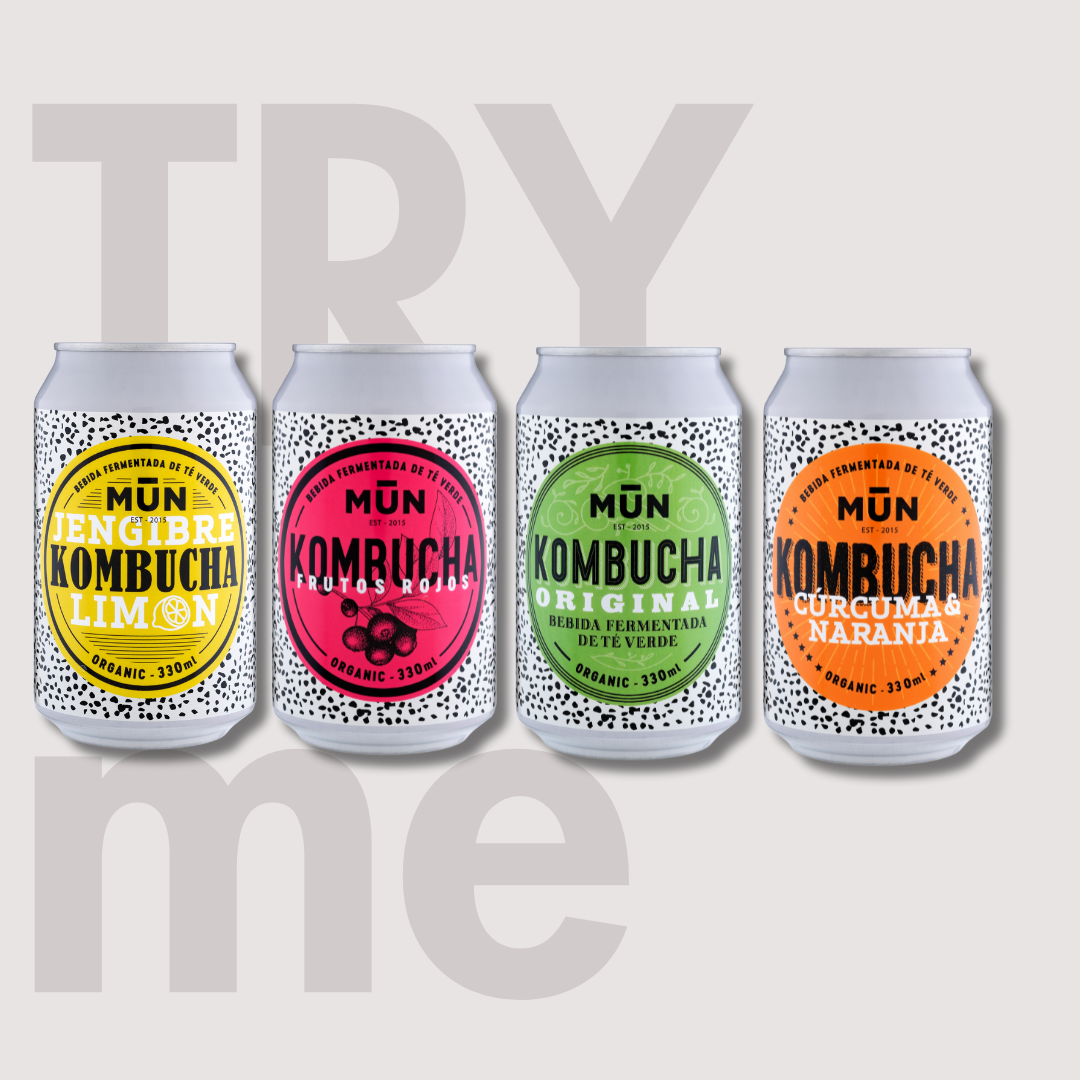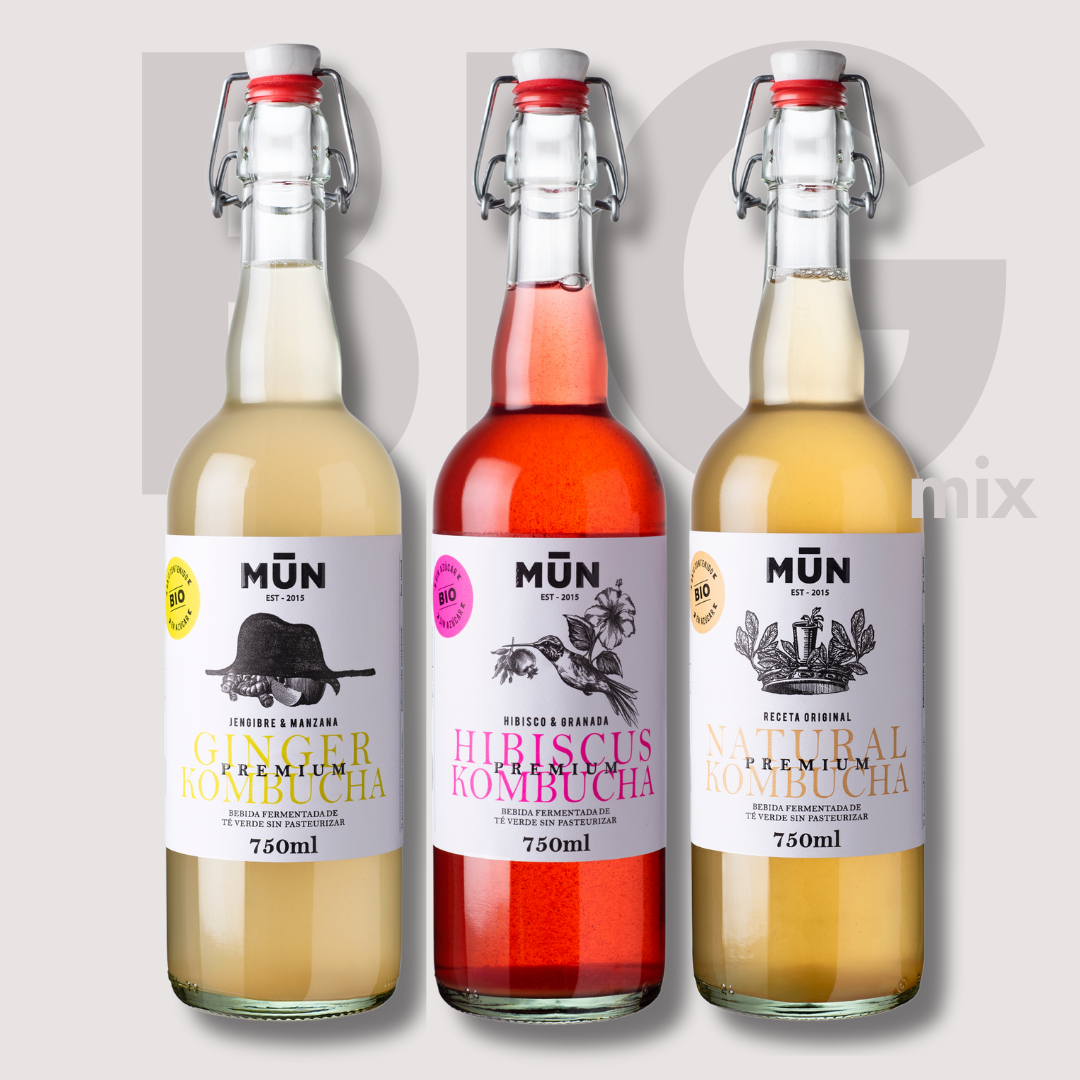
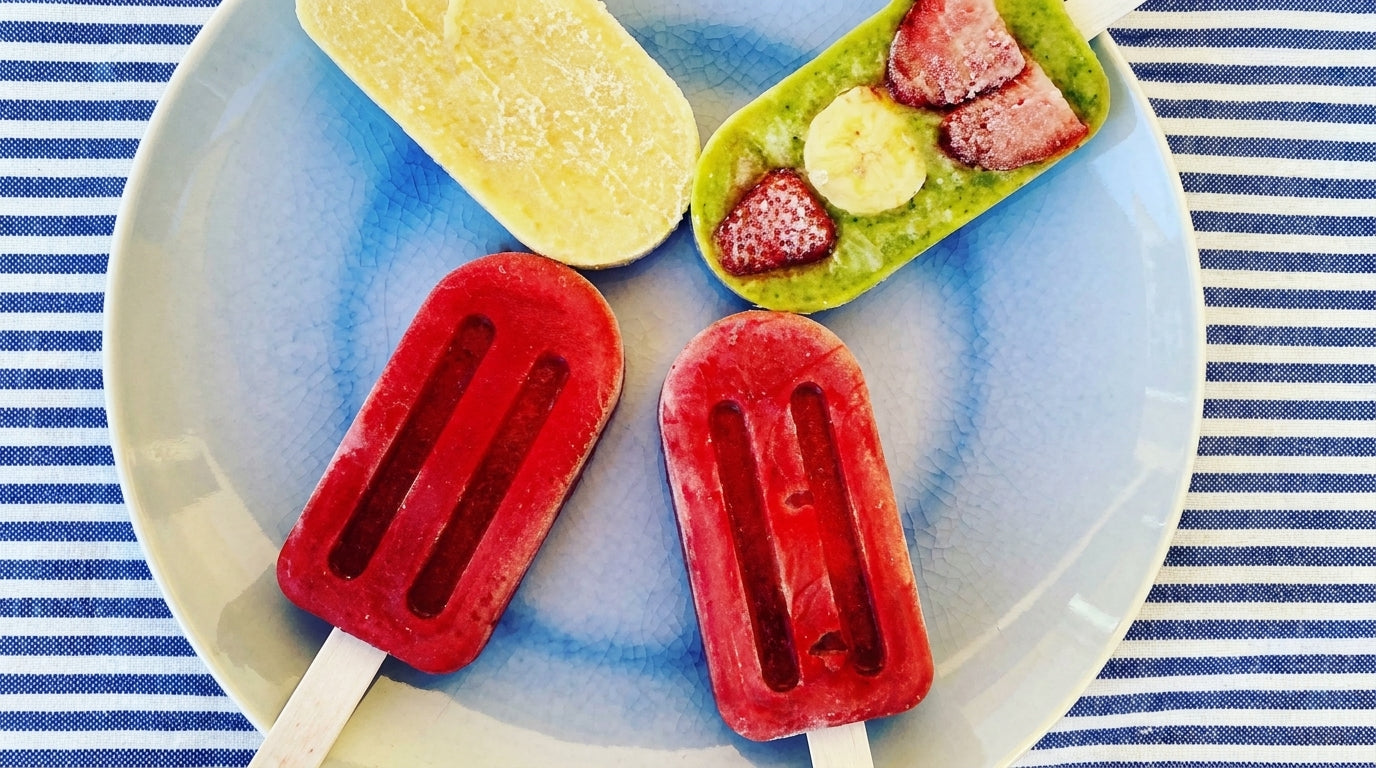
Five recipes for healthy homemade ice creams with no added sugar, dairy-free (except the last one) and suitable for coeliacs. Each one uses a different variety of Mūn Kombucha as a liquid base, which adds live probiotics and organic acids to a dessert that traditionally only provides sugar.
Kombucha replaces syrup or concentrated juice in conventional recipes: it provides acidity, freshness, and natural fizz, reduces the amount of fruit needed, and allows the ice cream to be less sweet without losing flavor. The first three recipes are from Elvira García Arcos (@art_cool_salud); the fourth from @yamifitfood; the fifth from @drabeatiful.
Why make ice cream with kombucha
Standard industrial ice cream contains between 20 and 30 g of sugar per 100 g serving. Commercial fruit popsicles usually contain between 15 and 25 g. Making them at home with whole fruit and kombucha as a liquid base allows added sugar to be reduced to zero: sweetness comes from ripe fruit (banana, watermelon, strawberry, kiwi) and the aromatic complexity of kombucha balances the mix.
Specific advantages of using Mūn Kombucha instead of water, milk, or juice:
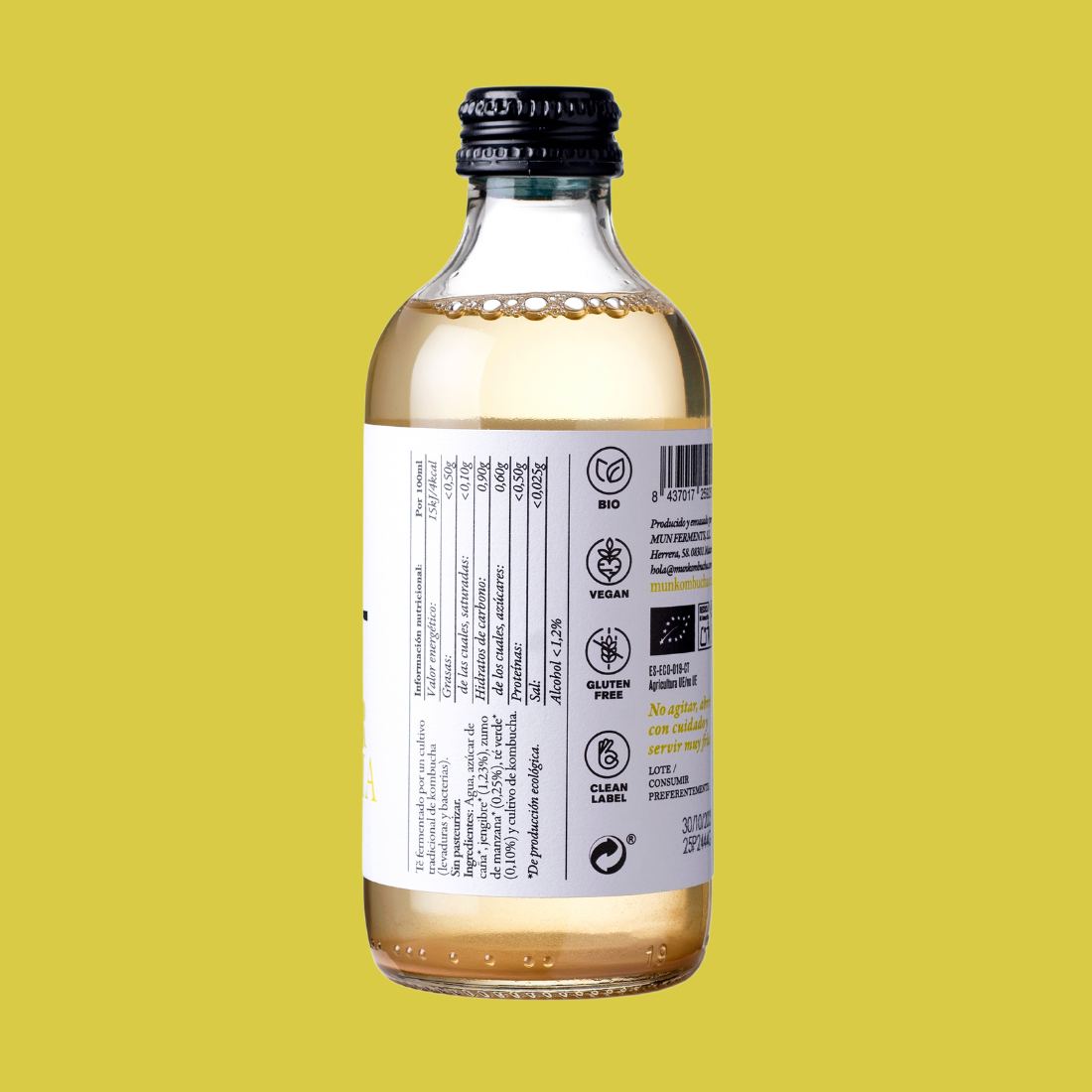
- Zero added sugar: Mūn Kombucha has less than 2 g of residual sugar per 100 ml after a 30-day double fermentation.
- Live probiotics: bacteria and yeasts that survive freezing temperatures (unlike baking, which destroys them).
- Organic acids: acetic, gluconic, and lactic acids that provide acidity and prolong preservation.
- Natural fizz: when frozen, the gases in kombucha create a lighter, sorbet-like texture.
- Lactose-free: compatible with vegan and intolerant diets (except for recipe 5, which includes dark chocolate coating).
General base and equipment
All five recipes follow the same scheme: blend fruit + kombucha + some extra ingredient (coconut, chia, nuts), pour into molds, and freeze. You don't need an ice cream maker: popsicle molds or plastic cups with wooden sticks are enough. Only recipe 5 requires a yogurt maker because it includes a prior fermentation.
Recommended equipment:
- Blender or food processor.
- Silicone or plastic popsicle molds (4-6 cavities).
- Wooden or plastic ice cream sticks.
- Freezer at -18 °C or below.
- Yogurt maker (only for recipe 5).
General times: 7-14 minutes preparation + 4-8 hours freezing. To unmold, run the mold under hot water for a few seconds and gently pull the stick.
1. Probiotic Red Ice: strawberry, watermelon, and Hibiscus Kombucha popsicle
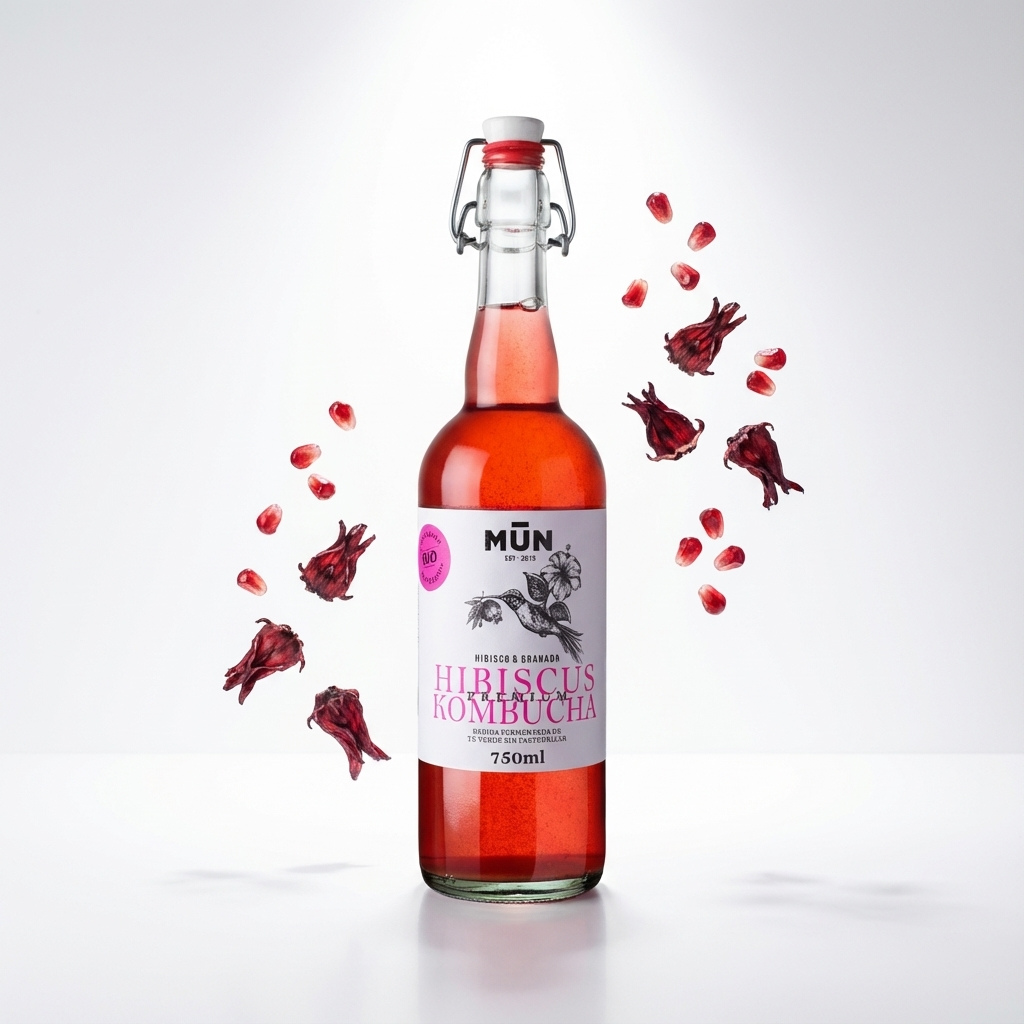
Intense red popsicle with summer fruit flavor. Mūn Hibiscus Kombucha provides floral hibiscus acidity and a natural garnet color that enhances the tone of watermelon and strawberry. Almost no added sugar: the fruit does all the work.
Ingredients (4 popsicles)
- 150 g fresh strawberries
- 1 large slice (~300 g) seedless watermelon
- 30 ml Mūn Hibiscus Kombucha
Preparation
- Wash the strawberries and watermelon thoroughly. Reserve 4 whole strawberries for decoration.
- Cut the watermelon into small pieces, removing seeds if present.
- Add the watermelon, remaining strawberries, and Hibiscus Kombucha to the blender.
- Blend for 30-40 seconds until a homogeneous smoothie is obtained.
- Slice the 4 reserved strawberries and place them at the bottom of the popsicle molds.
- Pour the smoothie over the strawberries, leaving 1 cm free at the top (the mixture expands when frozen).
- Insert the sticks and freeze for at least 4 hours, preferably overnight.
- To unmold, run the mold under hot water for a few seconds and pull the stick.
Time: 7 min preparation + 8 h freezing · Cost per popsicle: ~0.59 € · Added sugar: 0 g
2. Ginger Kombucha Ice Cream with coconut and kiwi
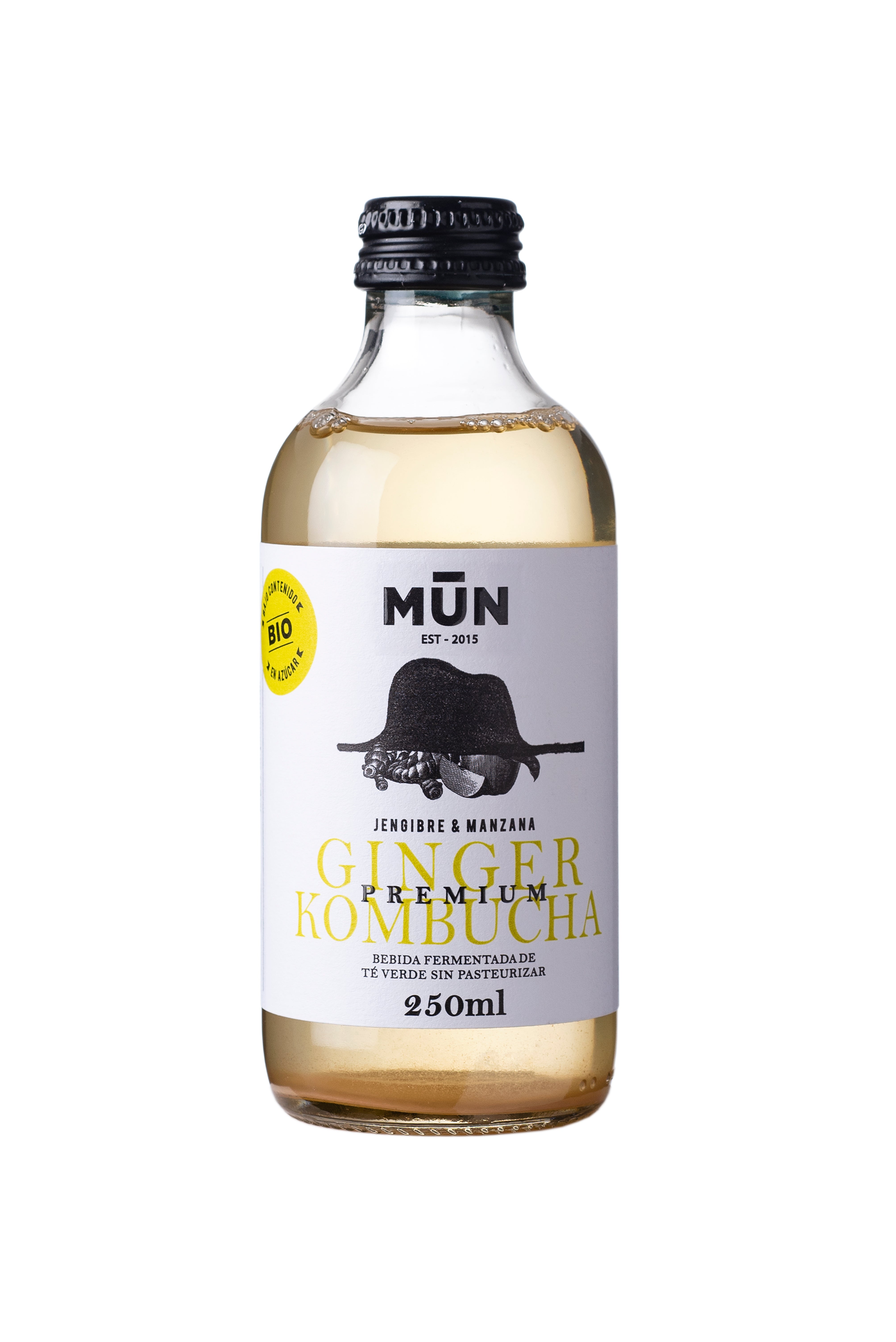
Tropical popsicle with a natural spicy kick from ginger. Mūn Ginger Kombucha provides a spiced warmth that contrasts with the freshness of kiwi and the creaminess of coconut. Ideal for very hot days.
Ingredients (4 popsicles)
- 3 ripe kiwis (240 g)
- 30 g young coconut meat or raw coconut
- ½ glass (120 ml) natural coconut water
- ¼ glass (60 ml) filtered water
- 30 ml Mūn Ginger Kombucha
Preparation
- Wash and peel the kiwis. Reserve half a kiwi for decoration.
- Cut the remaining kiwis into small pieces to facilitate blending.
- In the blender, add the chopped kiwi, coconut meat, coconut water, filtered water, and Ginger Kombucha.
- Blend for 40-50 seconds until a smooth smoothie is obtained. If it's too thick, add a little more filtered water.
- Slice the reserved half kiwi and place it at the bottom of the molds.
- Pour the smoothie and freeze for at least 4 hours.
- Unmold by running the mold under hot water for a few seconds.
Time: 7 min preparation + 8 h freezing · Cost per popsicle: ~0.51 € · Added sugar: 0 g
3. Green Kombucha Ice: spinach, kiwi, and coconut
Sounds strange, tastes amazing. Mūn Green Kombucha is fermented green tea with an herbaceous profile that combines surprisingly well with raw spinach. Banana and strawberries provide sweetness; coconut adds creaminess. A green, refreshing, and nutritious popsicle.
Ingredients (4 popsicles)
- 2 ripe kiwis (160 g)
- 1 small cup (30 g) fresh baby spinach
- 1 small piece ripe banana (20 g)
- 2 strawberries (30 g)
- 30 g young or raw coconut meat
- ½ glass (120 ml) coconut water
- ¼ glass (60 ml) filtered water
- 30 ml Mūn Green Kombucha
Preparation
- Wash spinach, kiwis, and strawberries. Reserve strawberries and banana for decoration.
- Peel the kiwis and reserve half of one for decoration as well.
- In the blender, add coconut meat, coconut water, filtered water, Green Kombucha, peeled kiwis, and spinach.
- Blend for 50-60 seconds until a homogeneous and uniformly green mixture is obtained.
- Slice the reserved strawberries, banana, and half kiwi. Place the slices in the molds to form a pattern.
- Pour the smoothie over the sliced fruit.
- Freeze for 4-6 hours until completely solid.
- Unmold by running the mold under warm water.
Time: 7 min preparation + 8 h freezing · Cost per popsicle: ~0.50 € · Added sugar: 0 g
4. Verbena Kombucha Ice Cream with chia and banana
Intermediate texture between sorbet and gelatinous yogurt thanks to hydrated chia seeds. Mūn Verbena Kombucha provides fresh notes of cucumber and lemon verbena that are maintained after freezing. Ripe banana sweetens without the need for added sugar.
Ingredients (6 ice creams)
- 300 g ripe bananas (about 3)
- 150 g fresh strawberries
- 2 tablespoons (~24 g) chia seeds
- 250 ml Mūn Verbena Kombucha
Preparation
- Peel the bananas and cut them along with the strawberries into small pieces.
- In a separate bowl, mix the chia seeds with the Verbena Kombucha. Stir well to avoid lumps.
- Let stand for 10-15 minutes for the chia to absorb the liquid and form a gel.
- Blend the fruit in the blender until a smooth and homogeneous puree is obtained.
- Add the chia + kombucha mixture to the puree and blend for one more minute to integrate.
- Pour into molds and freeze for at least 6 hours.
- Unmold by running the mold under hot water for a few seconds.
Time: 7 min preparation + 10 min chia rest + 8 h freezing · Cost per ice cream: ~0.82 € · Added sugar: 0 g
5. Mini magnums of nut yogurt, strawberry, and Flowers Kombucha
The most elaborate and indulgent option. Homemade almond and macadamia yogurt fermented with Mūn Flowers Kombucha (white tea with elderflower), crushed strawberries, and dark chocolate coating melted with coconut oil. Requires a yogurt maker and two freezings.
Ingredients (3 mini magnums)
- 30 g raw unroasted almonds
- 30 g natural macadamia nuts
- 60 ml Mūn Flowers Kombucha
- 60 g fresh strawberries
For the coating:
- 100 g dark chocolate 70% minimum
- 1 tablespoon (~20 g) virgin coconut oil
Preparation
- Soak the almonds and macadamias in filtered water for 4 hours to activate them.
- Drain the nuts and blend them in the food processor along with the Flowers Kombucha and strawberries until a homogeneous cream is obtained.
- Pour the mixture into the yogurt maker and ferment for 14 hours at a stable temperature.
- Once fermented, pour the yogurt into the magnum molds and freeze for at least 4 hours.
- Melt the dark chocolate in a bain-marie or in the microwave at low power (30% in 20-second intervals).
- Add the coconut oil to the melted chocolate and mix well until integrated.
- Remove the magnums from the freezer and dip each one in the tempered chocolate, letting the excess drain off.
- Freeze again for 5-10 minutes until the coating hardens.
Time: 14 min preparation + 14 h fermentation + 4 h first freezing + 10 min coating · Cost per magnum: ~1.28 € · Added sugar: that from dark chocolate (~6 g per unit)
Global variations
- Without popsicle molds: use disposable plastic cups with wooden sticks, or serve the mixture as a frozen smoothie without fully freezing.
- To sweeten more: add half a tablespoon of raw honey, agave syrup, or a crushed Medjool date before freezing. Each tablespoon adds ~5-7 g of sugar.
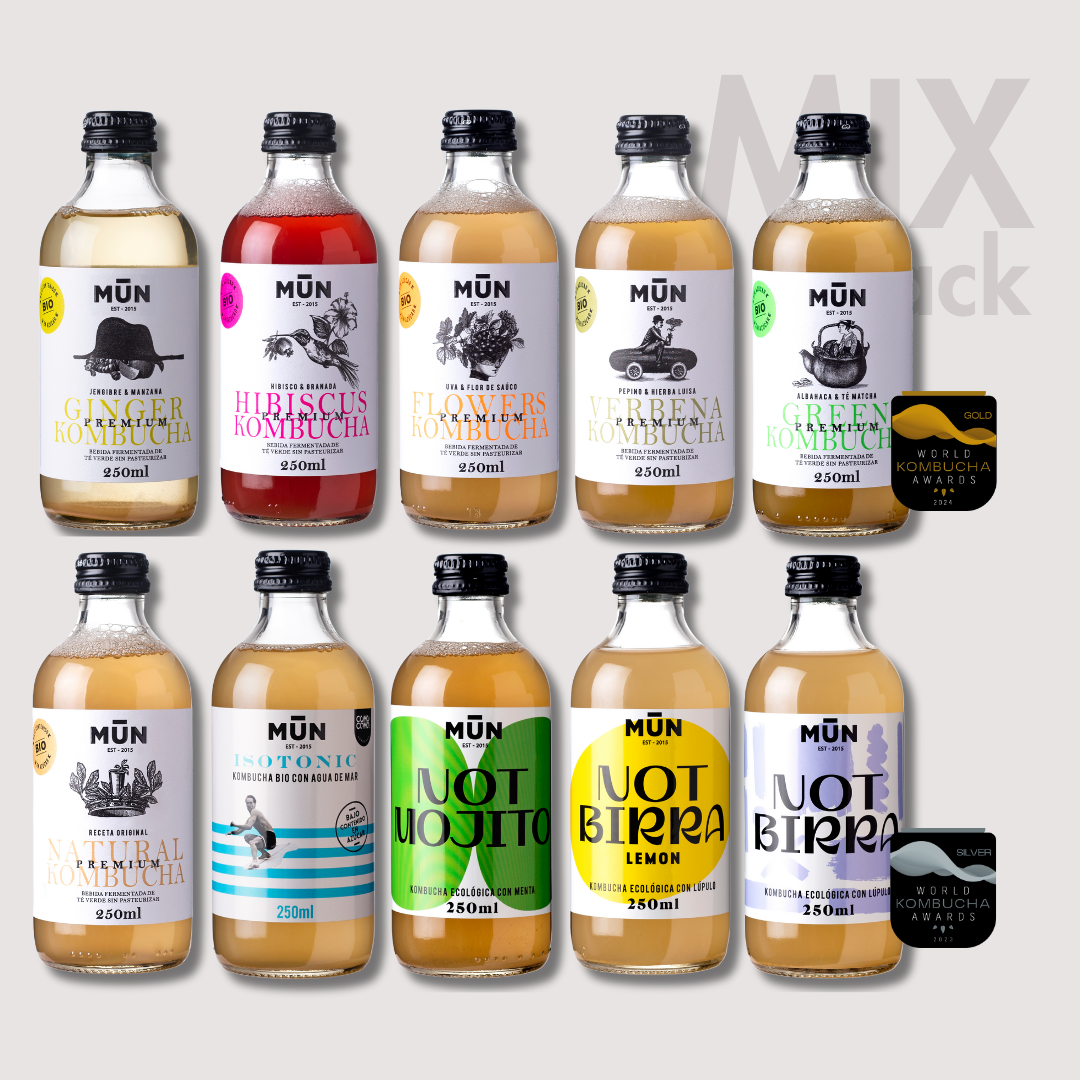
- Any Mūn variety works: Bamboo with watermelon, Garnet with peach, Lime with mint. Experiment according to fruit season.
- Creamy version: replace filtered water with coconut milk (the thick canned type) in any of the first 4 recipes.
- Berries: replace strawberries with frozen blueberries, raspberries, or blackberries (cheaper out of season).
- For children: adjust kombucha to 15-20 ml per popsicle and increase the fruit. The flavor will be sweeter and less acidic.
Common mistakes
- Not leaving space in the mold: the mixture expands when frozen. Always leave 0.5-1 cm free at the top.
- Unmolding cold: if you pull the stick right after taking it out of the freezer, it will break. Always run the mold under hot water for a few seconds.
- Under-ripe fruit: if the strawberries or banana are not sweet, the popsicle will be sour. Ripen the fruit at room temperature 1-2 days beforehand.
- Insufficient blending: large pieces create hard spots after freezing. Blend until a completely smooth puree is obtained.
- Very cold kombucha: standard fridge temperature is better; too cold, it loses aroma when blended with warm fruit.
Frequently asked questions
Do kombucha probiotics survive freezing?
Yes. Kombucha bacteria and yeasts enter a dormant state at sub-zero temperatures but are not destroyed, unlike heat (>40 °C) which does inactivate them. When consuming the ice cream and returning to body temperature, they regain some of their activity.
How long do they last in the freezer?
Up to 2 months in a domestic freezer (-18 °C) well covered or individually wrapped. The optimal texture is during the first month; after that, they may crystallize more.
Can I use frozen fruit instead of fresh?
Yes, but the result is more sorbet than popsicle. Reduce the liquid (filtered water) a little and blend with more power.
Can they be made without a blender?
It's difficult to achieve a homogeneous texture without a blender. An alternative is to mash very ripe fruits (banana, strawberry) with a fork and mix with kombucha, but it will be more rustic.
Which Mūn variety is best to start with?
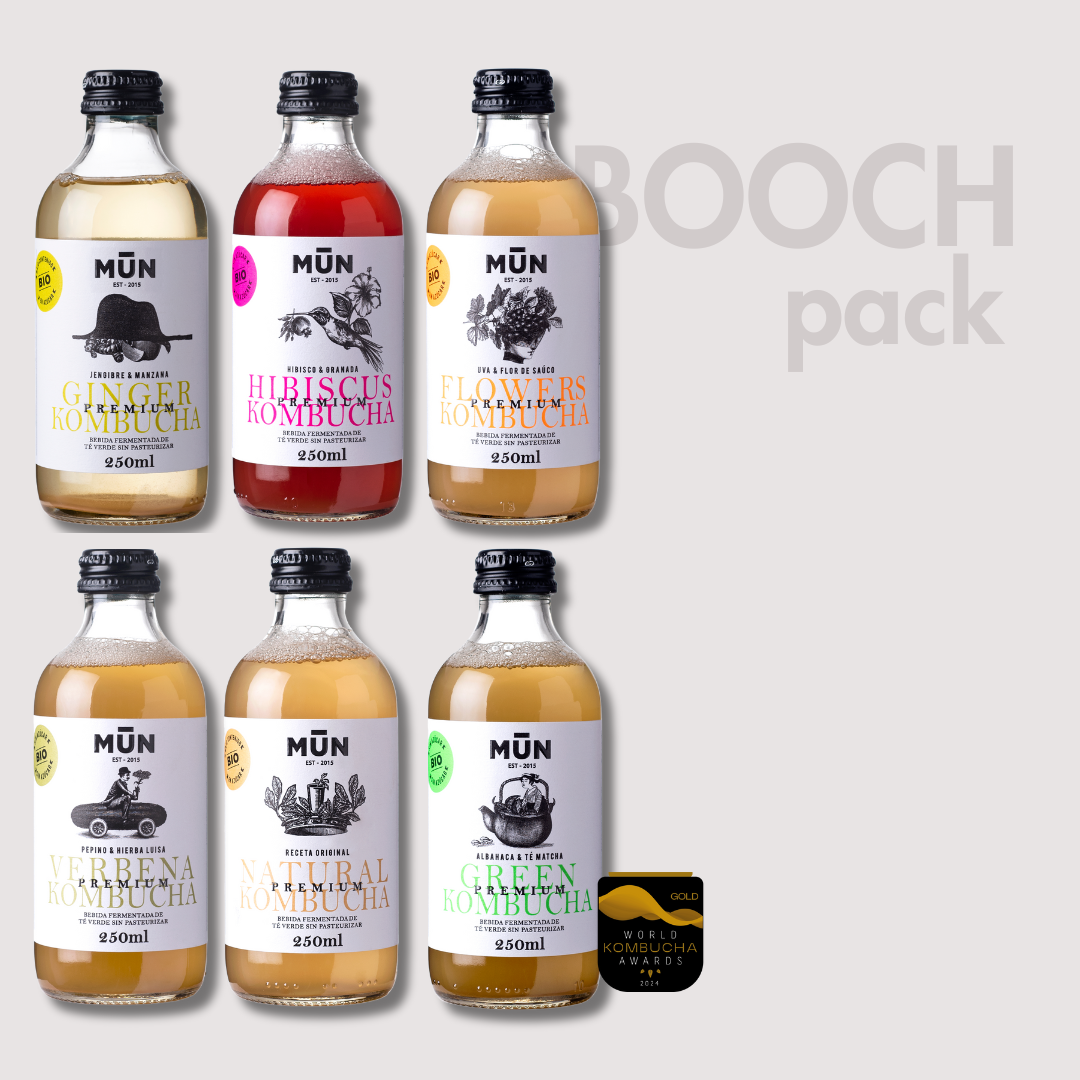
Hibiscus to combine with red fruits, Ginger with tropical fruits, Verbena with citrus and banana, Flowers with nuts and more elaborate desserts, Green with herbaceous flavors.
Are these ice creams suitable for diabetics?
The first 4 recipes have no added sugar, only natural fruit sugars. The glycemic load depends on the quantity. Consult your doctor before including them in a specific diet.
When to serve them
These ice creams work as a summer lunch or dinner dessert, an afternoon snack for children and adults, a refreshment on extremely hot days (>30 °C), and a healthy option for family gatherings or barbecues. Popsicles 1, 2, and 3 are perfect for picnics; 4 and 5 require a plate and spoon or napkin.
Other Mūn recipes
- Homemade probiotic lemonade with Mūn Kombucha
- Kombugin: non-alcoholic cocktail with Mūn Kombucha
- All recipes and blog articles
Original recipes by @art_cool_salud, @yamifitfood, and @drabeatiful. Adaptation and review: Mūn Team.
View the complete Mūn Kombucha range and choose your favorite variety →