More and more people are looking for non-alcoholic drinks that are neither sparkling water nor a sugar-laden soft drink. The sober and sober-curious movement has made it clear that one can have a social life, ritual, and a full-bodied drink without ethanol. Here is an honest guide to the real alternatives that exist, what to expect from each, and which ones are worthwhile.
What Counts as "Alcohol-Free" (and the Small Print)
In Spain, a drink can be labelled "alcohol-free" if it has less than 1% ABV. This is not the same as 0.0%. Therefore, it's important to distinguish:
- 0.0% — completely alcohol-free. Some beers and soft drinks.
- < 1% ABV — legally "alcohol-free", but with traces. Many "alcohol-free" beers and fermented drinks like kombucha fall into this category.
If you need absolutely zero alcohol (pregnancy, breastfeeding, certain medications, or personal reasons), check the label: "alcohol-free" doesn't always mean 0.0%.
Why Most Alternatives Disappoint
Those who give up alcohol aren't just looking "not to get drunk". They're looking for what the drink offered: body, complexity, ritual, and fizz. And that's where the usual options fall short:
- Sparkling water: hydrates, but lacks any ritual or flavour.
- Soft drinks: lots of sugar (a cola contains around 35g per can) and a flat, artificial taste.
- Juices: seemingly healthy, but also very sugary and without the complexity of an adult drink.
The Real Alternatives, One by One
1. 0.0% and "Alcohol-Free" Beer
The most widespread option. 0.0% beers contain no alcohol; "alcohol-free" ones may contain traces. They serve their purpose for social occasions, although many are still pasteurised beer with no added functional value.
2. De-alcoholised Wines and Sparkling Wines
Wine from which the alcohol has been removed. They work for toasts, but the de-alcoholisation process often reduces aromatic complexity.
3. kombucha
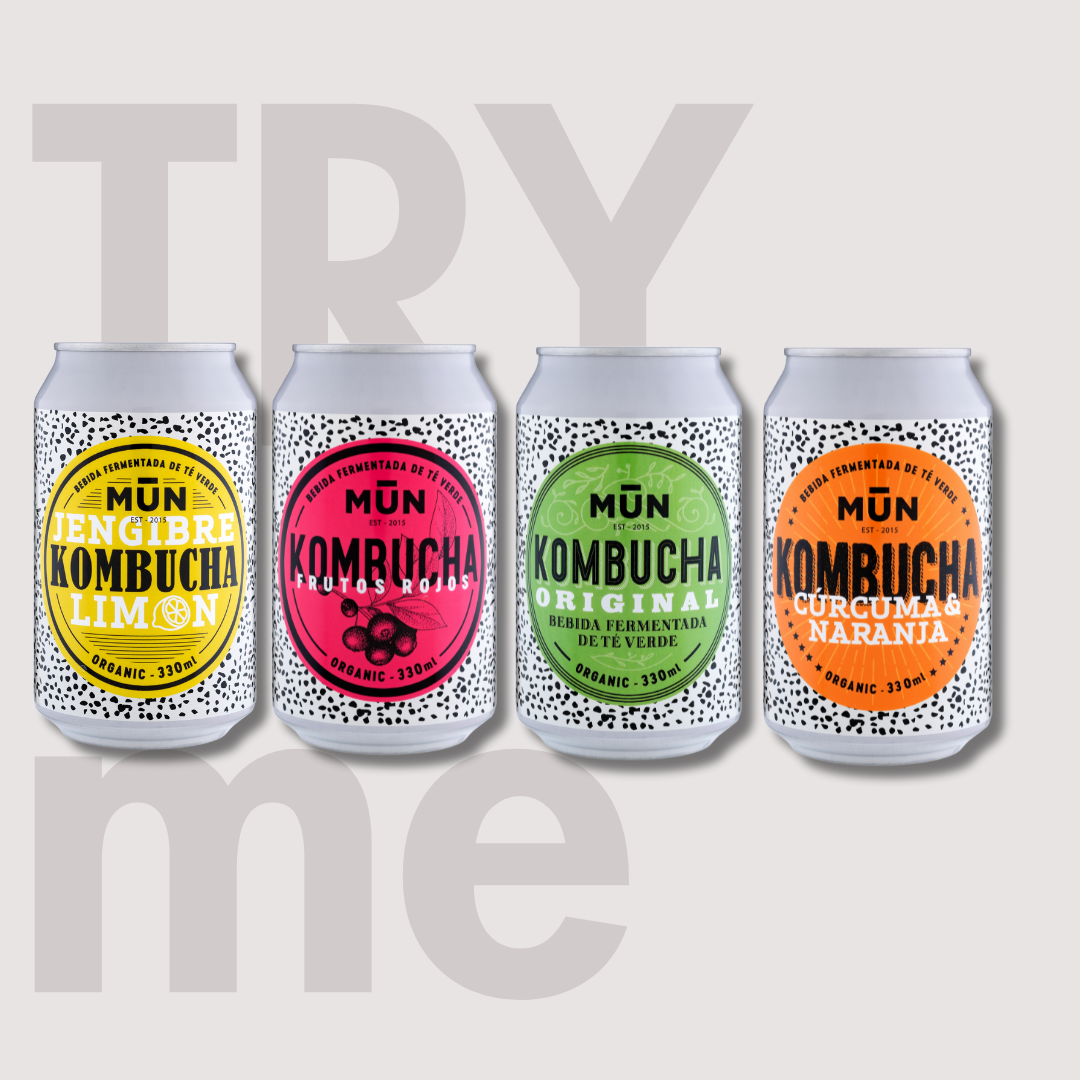
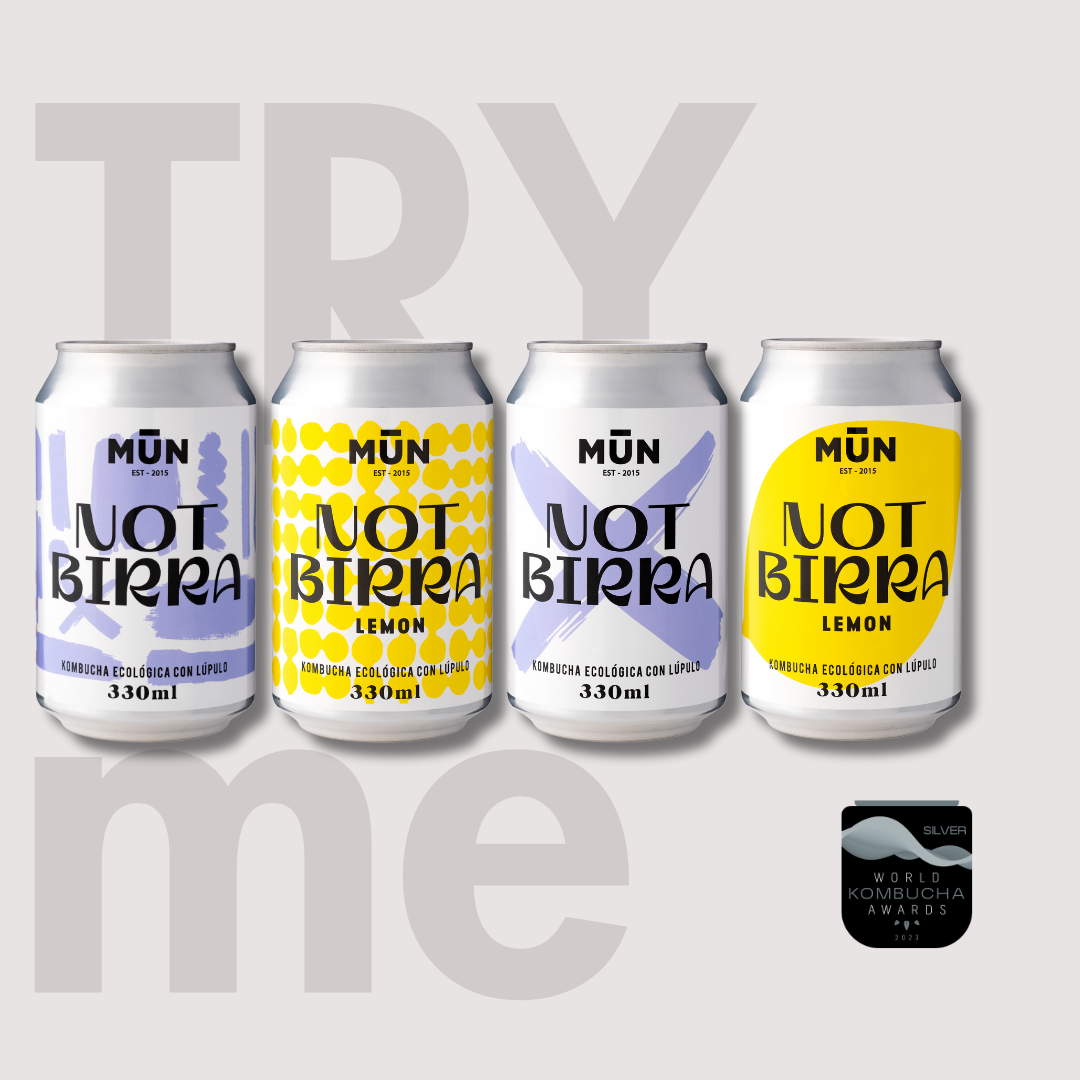
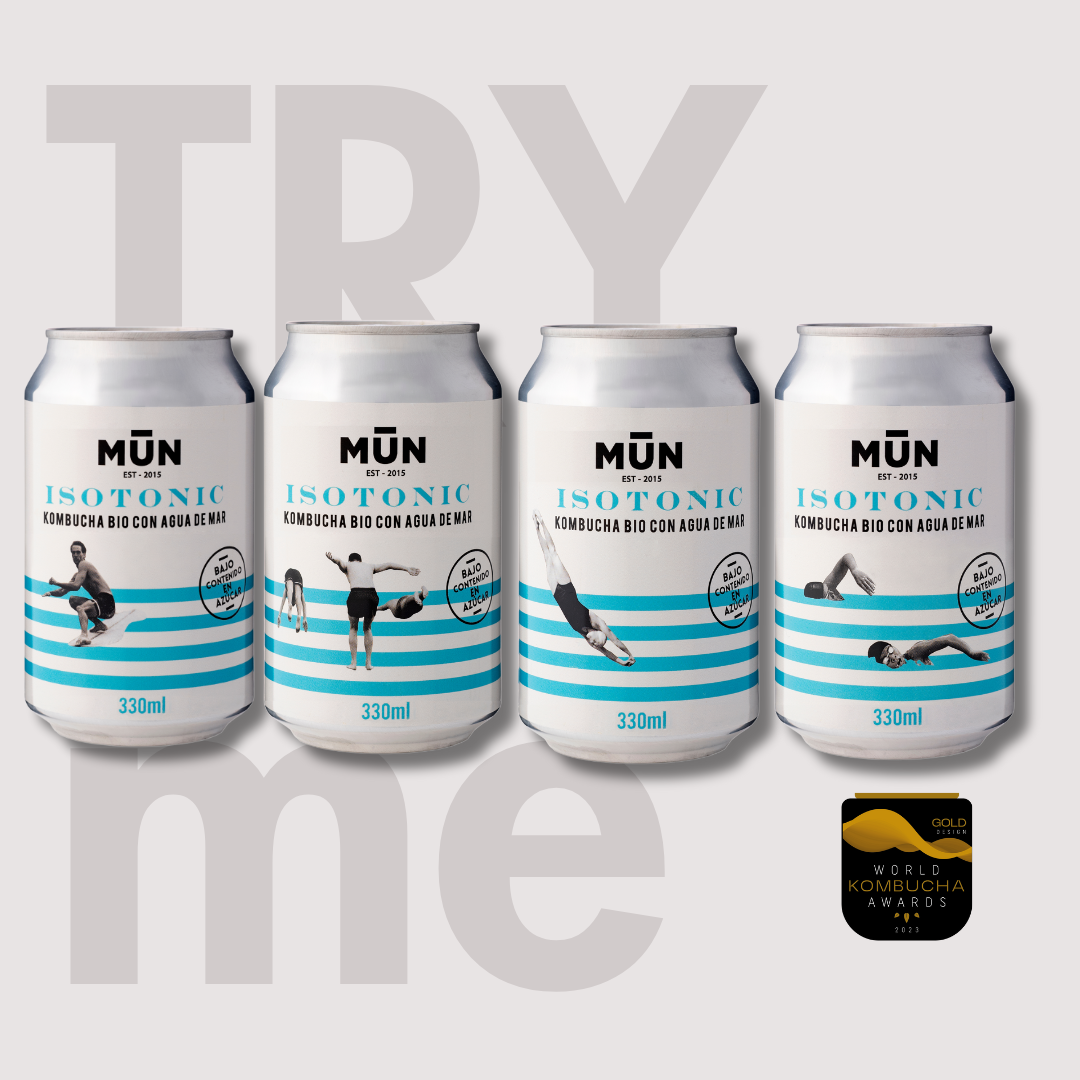
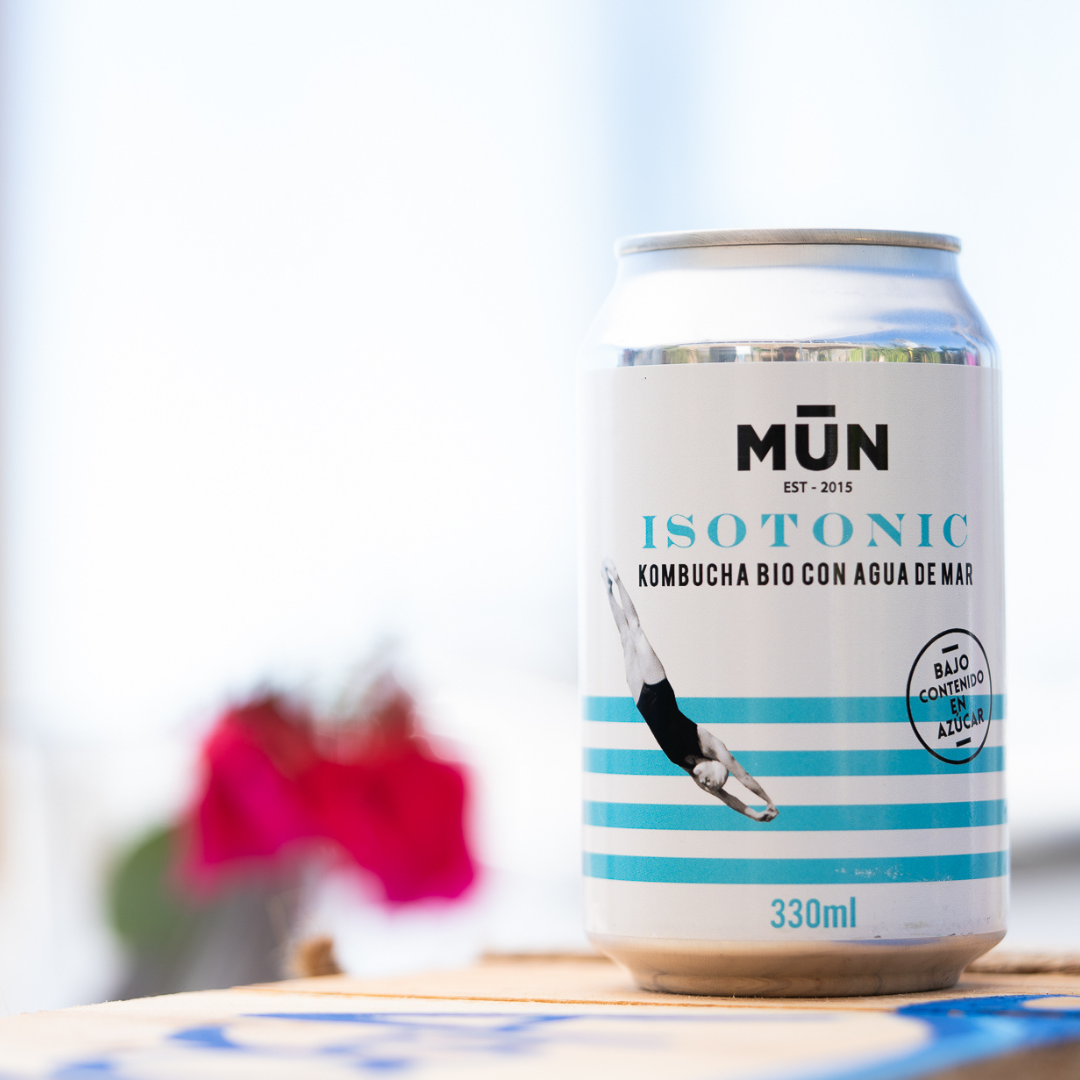
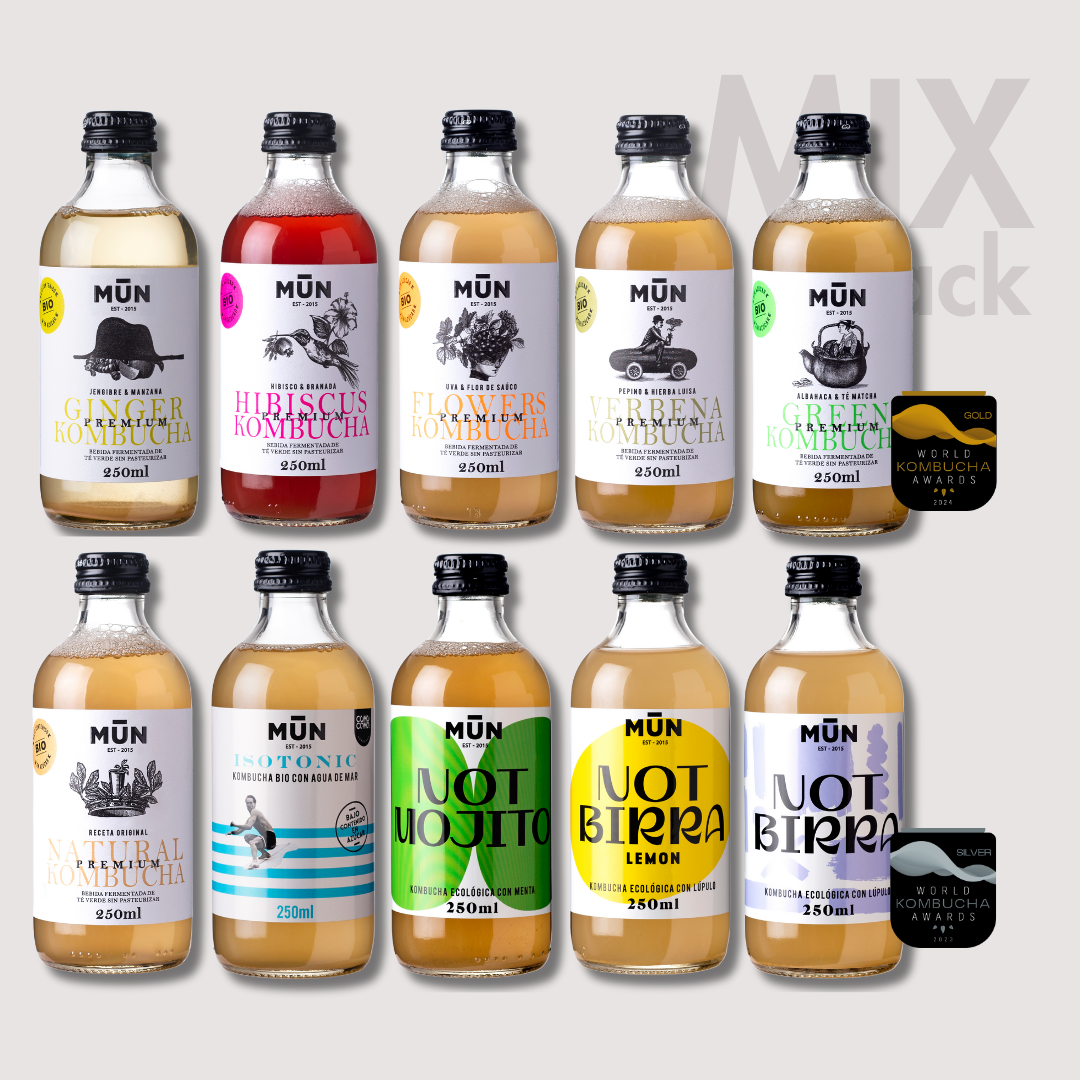
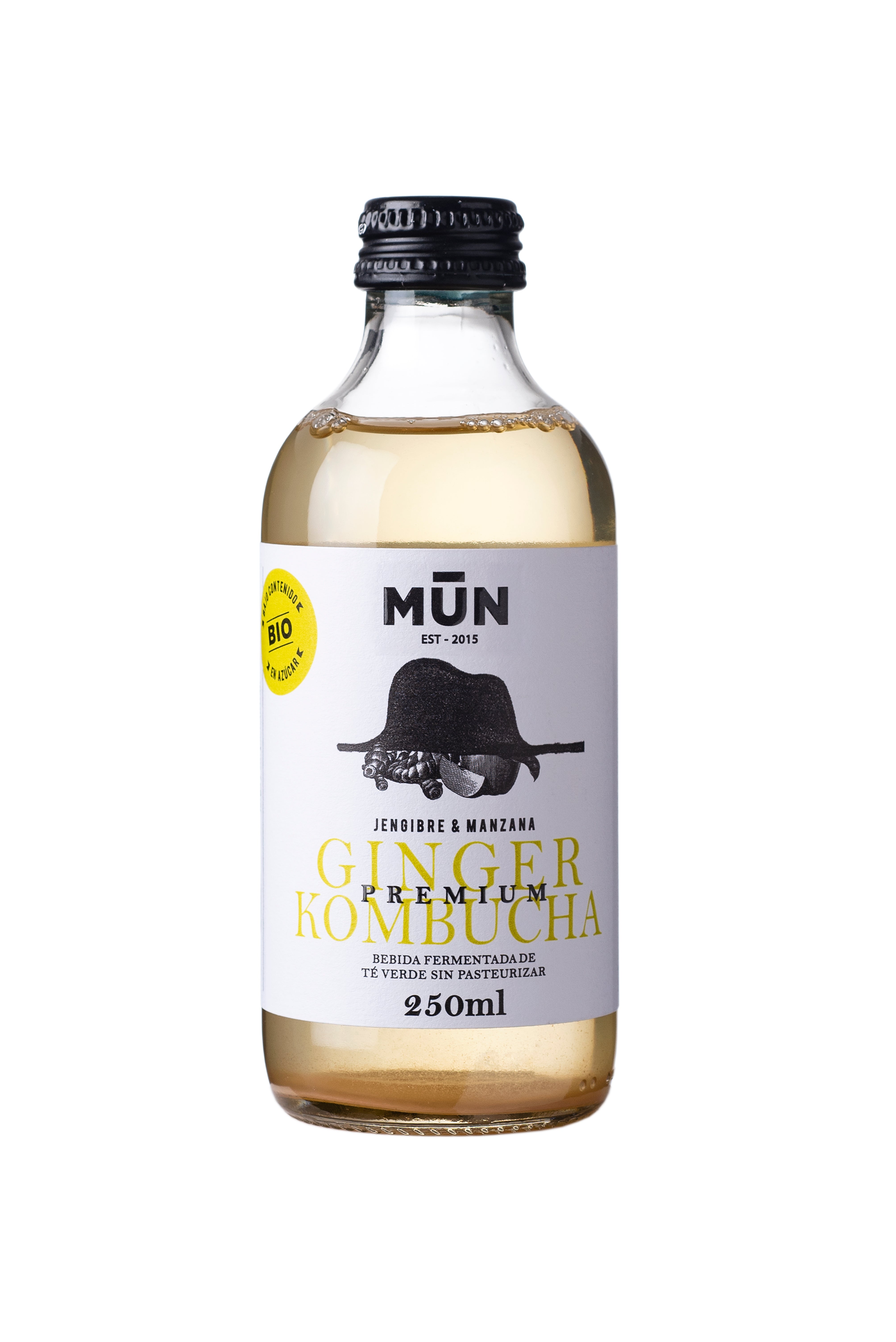
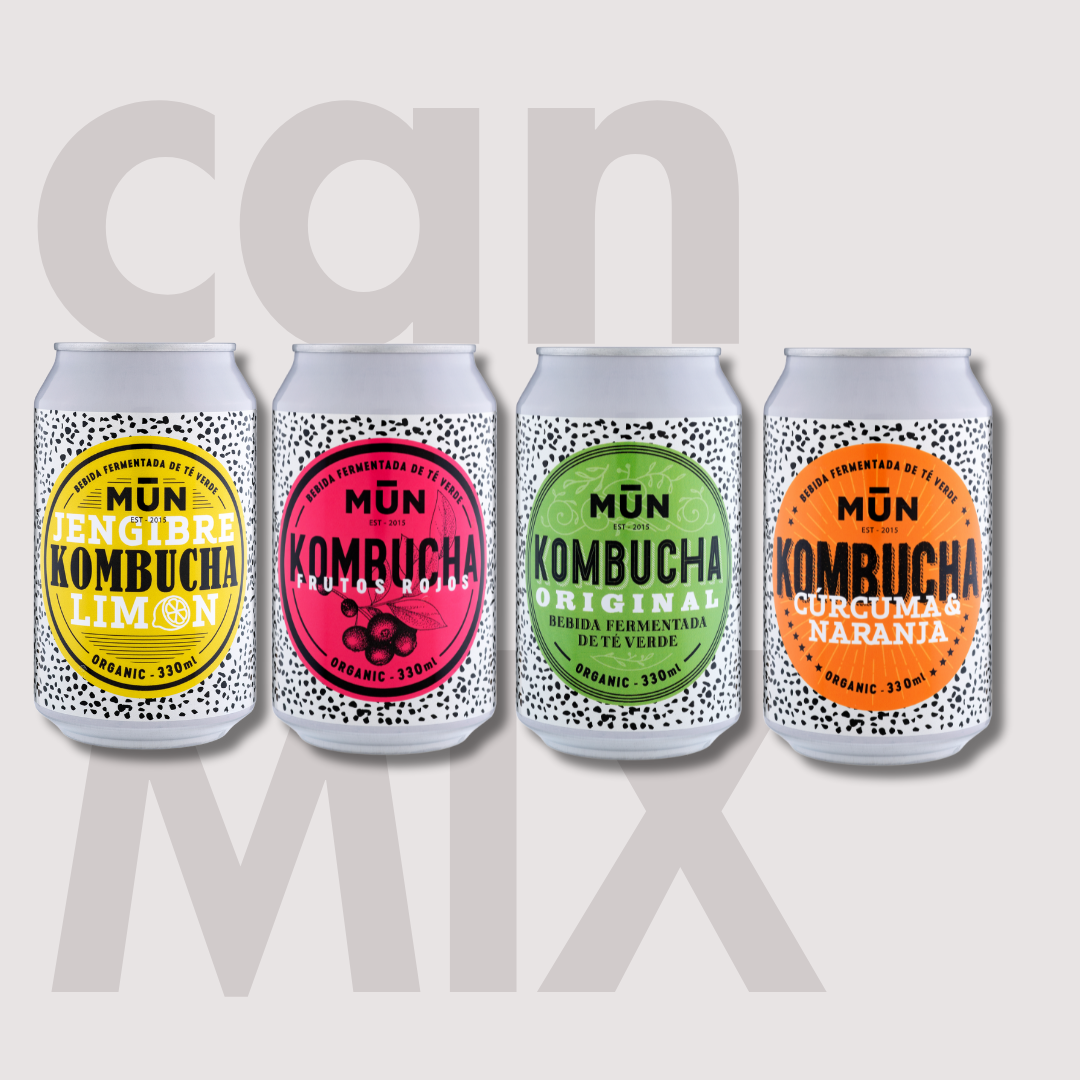
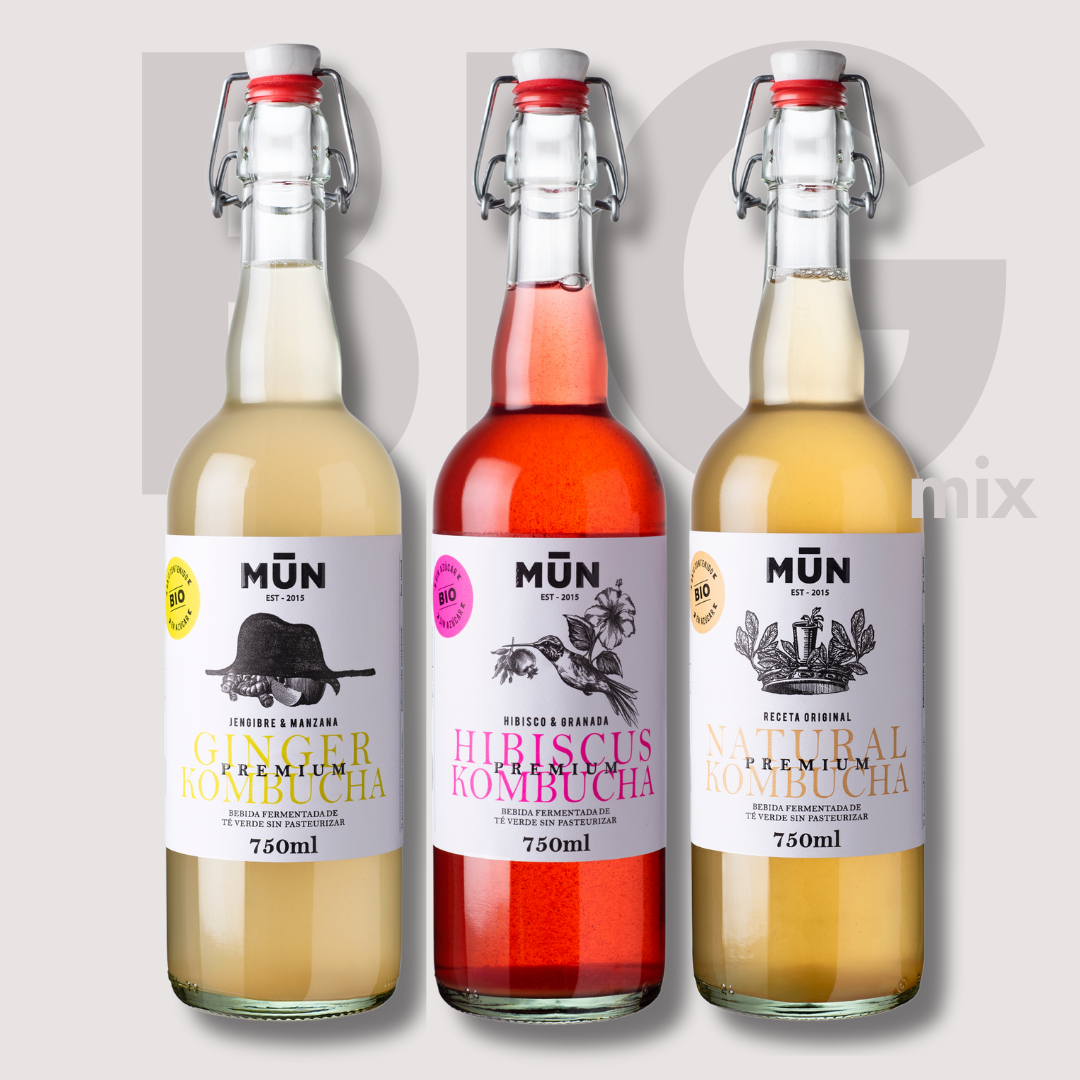
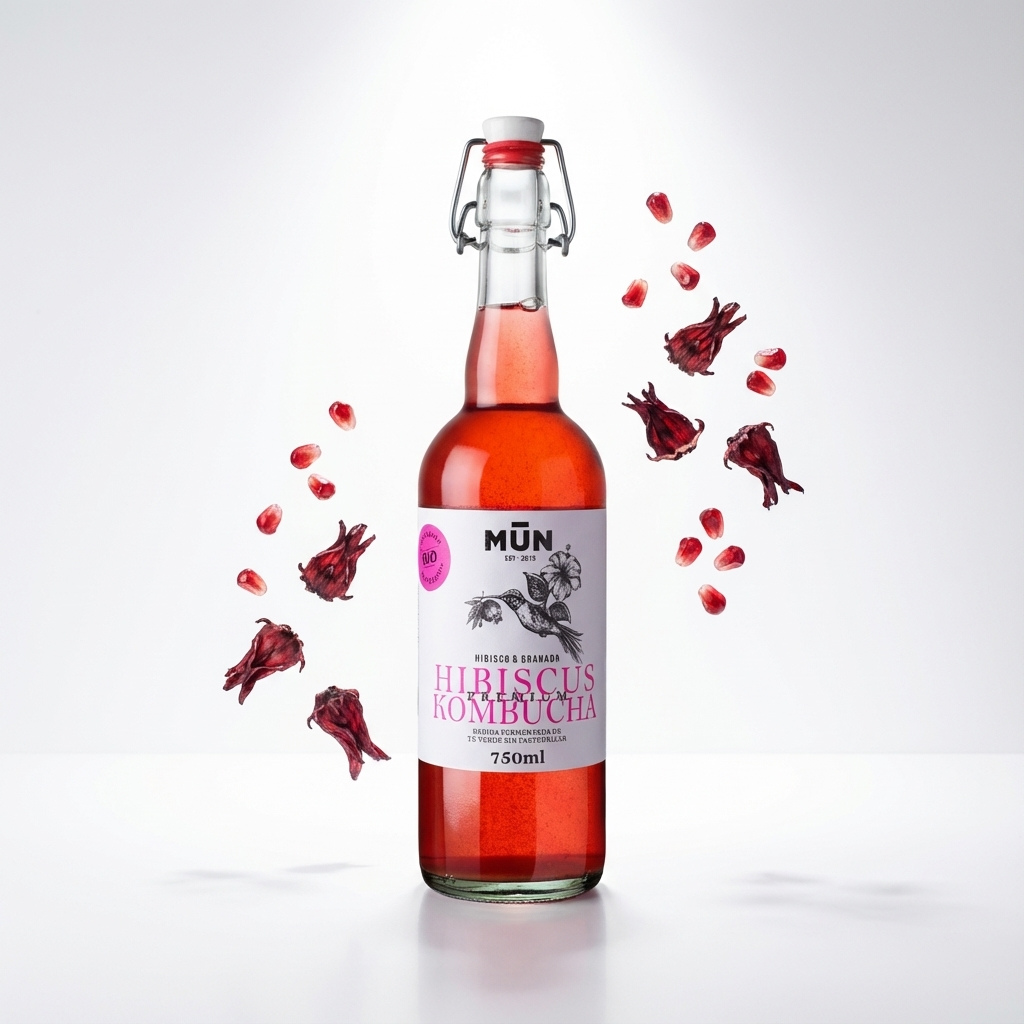
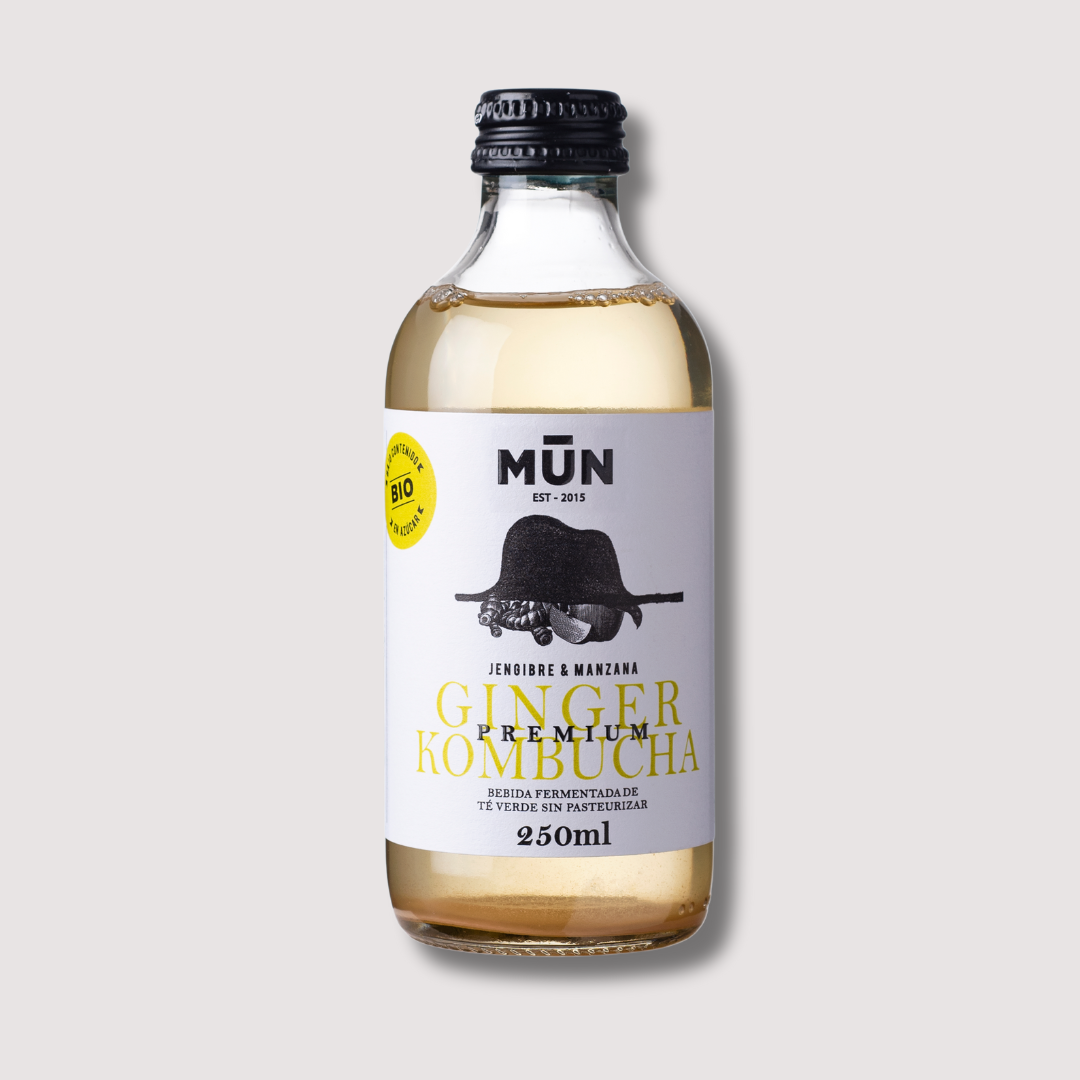
This is where things get interesting. kombucha is fermented tea: it has body, natural fizz, acidic complexity and very little sugar. It provides the ritual of an adult drink without the drawbacks.
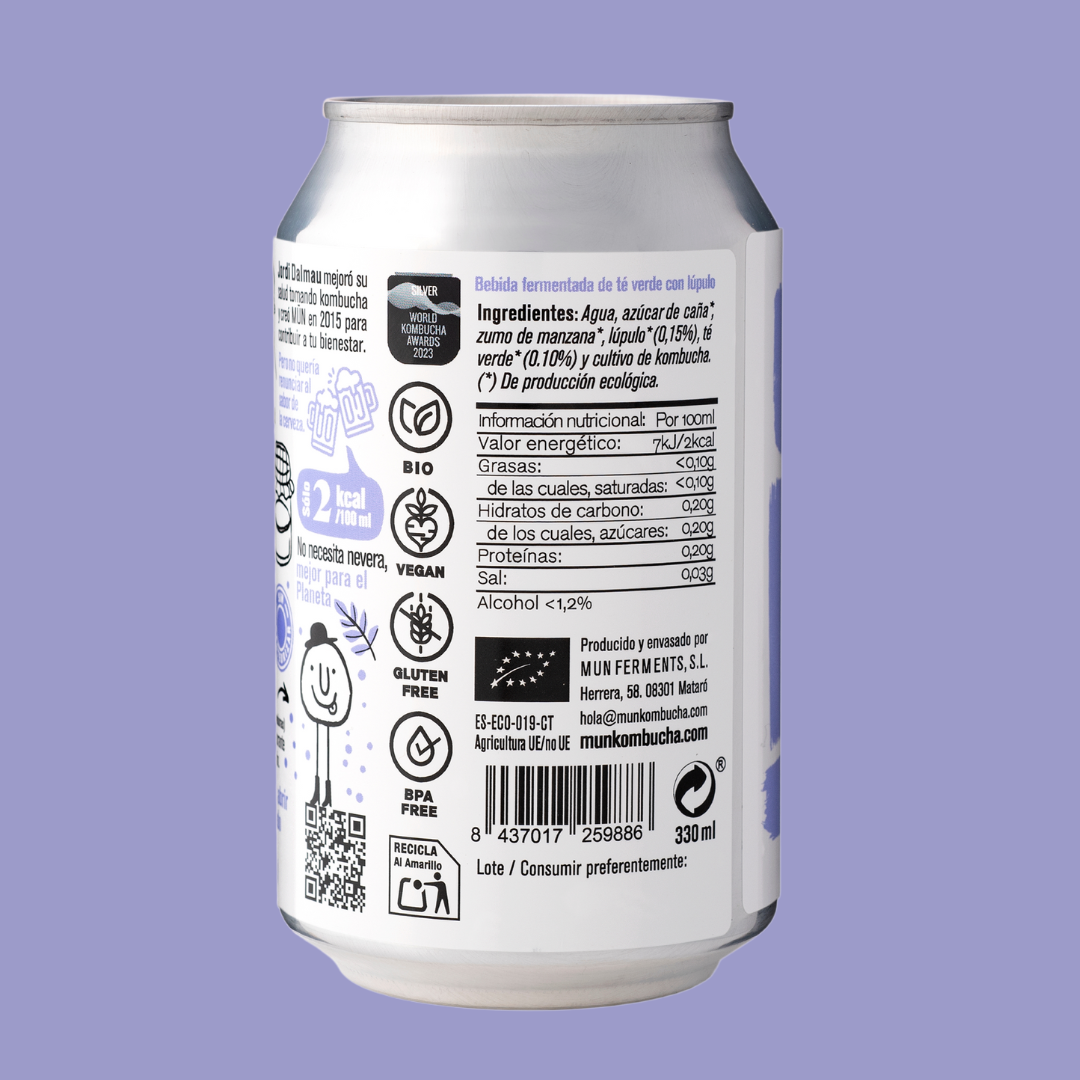
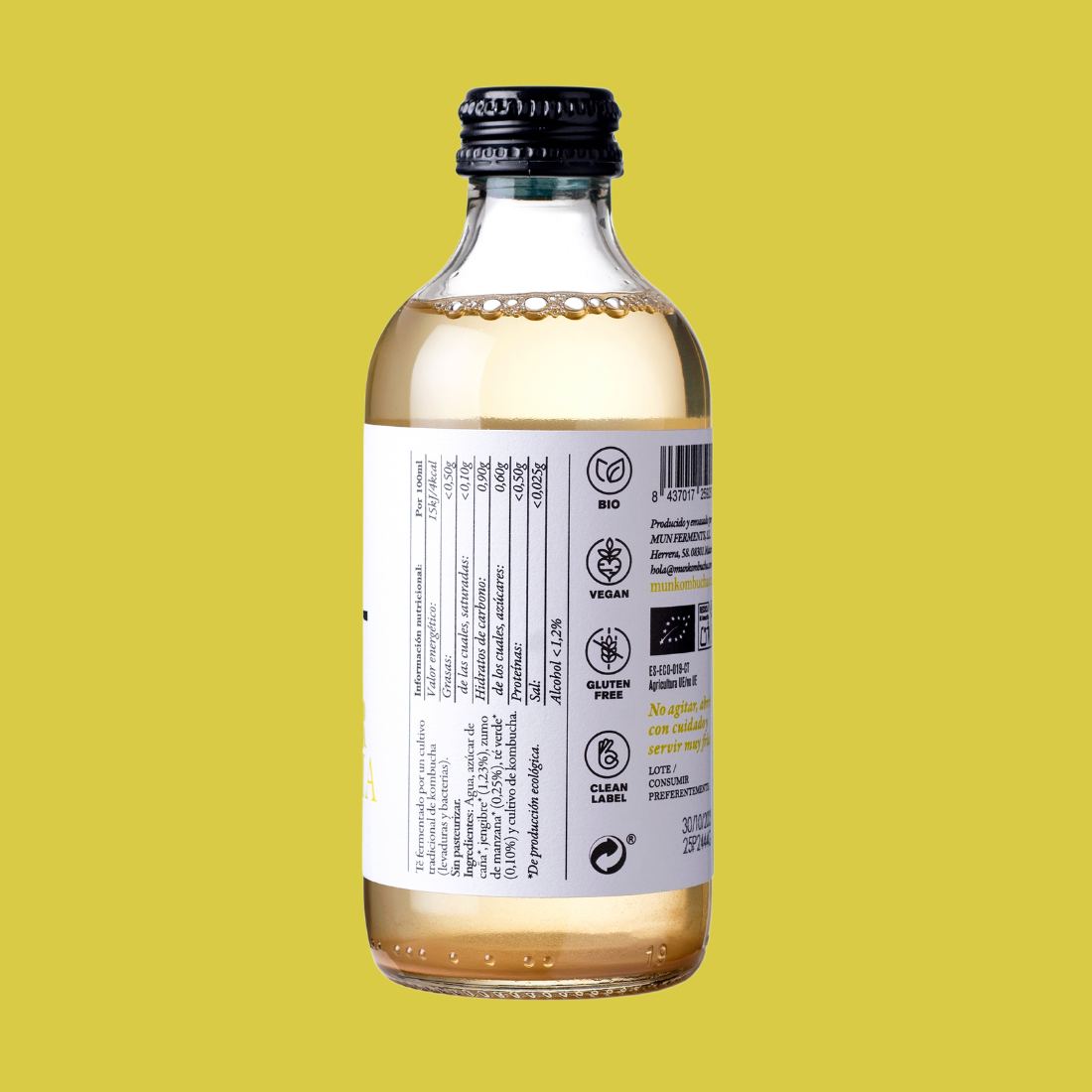
An honest nuance: live kombucha is not 0.0% — it contains less than 1.2% residual alcohol from the fermentation itself. For most, it's perfect as a social alternative; if you need absolute zero, consider your specific situation.
4. Artisan Soft Drinks and Water Kefir
Natural sodas, water kefir, tepache. Quality varies: good ones offer fermentation and low sugar; industrial ones are disguised soft drinks.
5. Mocktails (Alcohol-Free Cocktails)
The most versatile option for an occasion. And with kombucha as a base, they are elevated: they provide fizz and complexity without syrup or alcohol.
kombucha Mocktails to Not Miss Your Drink
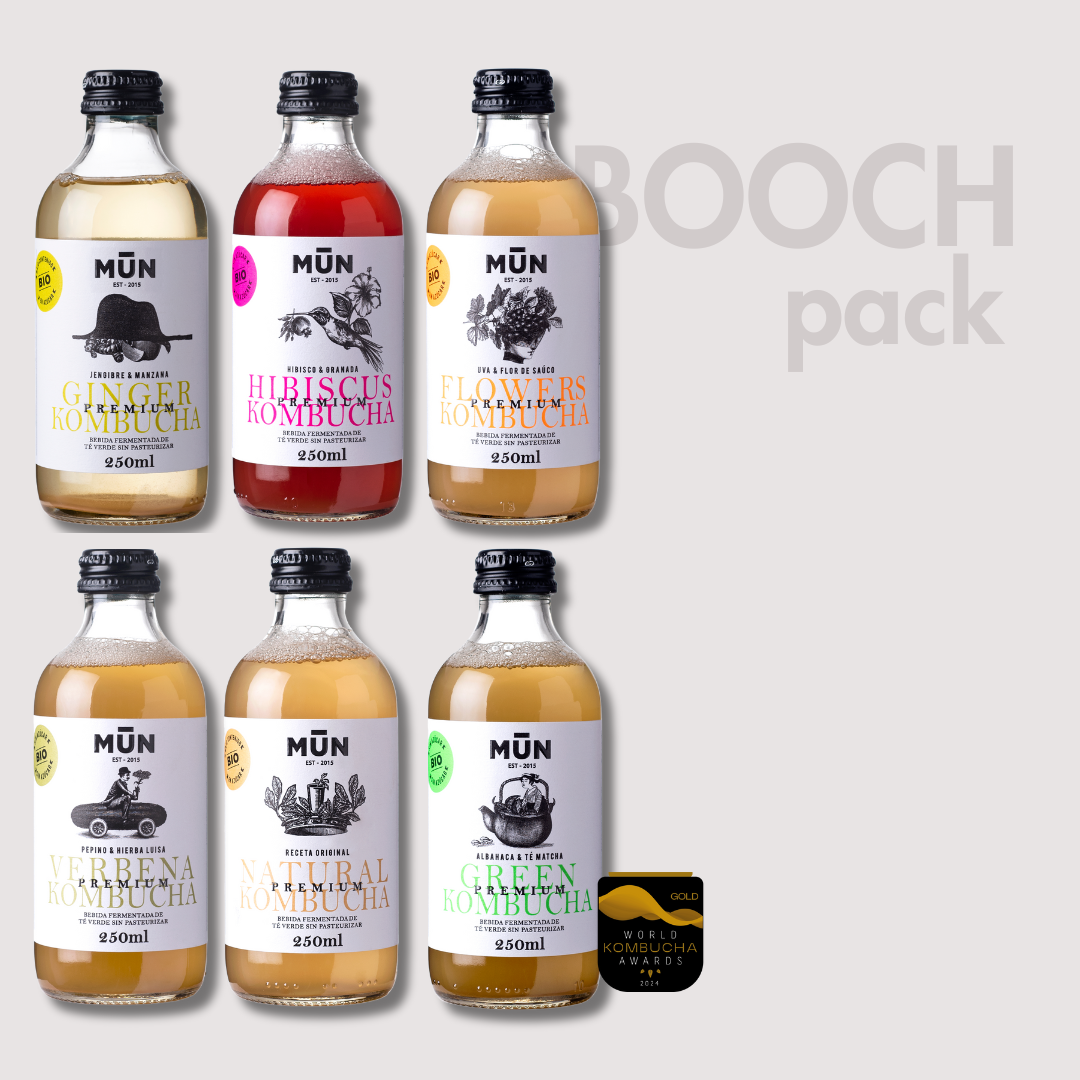
If you want to go beyond opening a bottle, these recipes use Mūn kombucha as a base and fit in perfectly on any table:
- Alcohol-free Gin & Tonic with Kombugin
- Alcohol-free Sangria with Flowers
- Alcohol-free Tinto de Verano with Hibiscus
- Alcohol-free Piña Colada with Flowers
- Alcohol-free Cider with Manzana Jengibre
- Alcohol-free Punch with Hibiscus
- Red & Green Christmas Mocktail
Alcohol vs. kombucha: What the Data Says
The WHO is clear: there is no safe level of alcohol consumption for health. Every non-alcoholic drink that replaces an alcoholic one means ethanol your body doesn't process. And if the alternative is also low in sugar — like kombucha, with 0.09 to 1.80g per 100ml — the change is doubly favourable compared to sugary soft drinks or cocktails.
In summary: the best non-alcoholic drink is one that gives you the ritual of a drink without the alcohol or sugar. Live kombucha ticks both boxes, and on top of that, it provides live cultures. Discover it here.
Frequently Asked Questions about Non-Alcoholic Drinks
Which non-alcoholic drink is the healthiest?
Those that add no sugar or additives. Water and infusions are neutral; among flavoured drinks, live kombucha stands out for its low sugar (0.09-1.80g/100ml) and its live cultures. Avoid "alcohol-free" soft drinks laden with sugar.
Does alcohol-free beer contain alcohol?
It depends. 0.0% beers contain none; those labelled simply "alcohol-free" may contain up to 1% ABV. Always read the label.
Is kombucha an alcohol-free drink?
Live kombucha contains less than 1.2% residual alcohol from fermentation, so it falls into the "alcohol-free" category according to regulations, but it is not 0.0%. For regular social consumption, it's an excellent alternative; for absolute zero alcohol, review your specific situation.
What can I order in a bar if I don't drink alcohol?
Beyond water or a soft drink: a 0.0% beer, a kombucha (more and more bars stock it), or a mocktail. If the bar serves kombucha, ask for it chilled on its own or as a base for an alcohol-free mixed drink.
Are non-alcoholic drinks fattening?
It depends on the sugar, not the alcohol. An "alcohol-free" soft drink can have as much sugar as a regular one. A low-sugar kombucha provides very few calories. Always check the grams of sugar per 100ml.