Jordi Dalmau, co-founder of Mūn Ferments, is an engineer. At 13 he was diagnosed with Gilbert's syndrome, a hereditary, benign but persistent liver condition. Those who live with it know that when they sleep poorly, eat poorly or get stressed, they notice it more.
Entering his forties, the symptoms started becoming hard to ignore: chronic fatigue, frequent headaches, persistent muscle tension. He booked an appointment with a therapist to review his diet.
The plan that came out was sensible: more protein, more quality fat, fewer carbs. And above all, fermented foods.
Kefir, sauerkraut, raw-milk cheese… and kombucha
The therapist's list started with the familiar: water kefir, milk kefir, sauerkraut, pickles, raw-milk cheese. All of that was at the local herbal shop. What wasn't there was the last item on the list: kombucha.
In 2013, in Catalonia, almost nobody knew the word. At the herbal shop nobody knew how to get it. Jordi, who already had experience making kefir at home, decided to ferment it himself.
He got hold of a "mother" —the SCOBY, the gelatinous disc of bacteria and yeasts that runs the fermentation— and started fermenting sweetened tea in his kitchen. Without ever having tasted it, following instructions to the letter. On day 15, he opened the first jar.
The first sip wasn't great. A week later, the headaches had eased.
The flavour was too vinegary. But he decided to drink a glass each morning to see what would happen.
At seven days, the headaches were less frequent. At two weeks, the fatigue had eased. At three weeks, the muscle tension had spaced out. It wasn't placebo: the combination of organic acids, live cultures and low sugar was producing a real effect on digestion and energy.
Friends came back asking for more
What came next was inevitable. He started giving bottles to friends. The pattern was always the same:
- Day one: "It's weird. Tastes like vinegar."
- Day three: "Well, it's not that bad."
- A week later: "Got any more?"
When the ninth person asked for another bottle, Jordi talked to his partner Mercè Pérez and proposed launching a company to make the first kombucha brewed in Catalonia. Mercè said yes.
2015: Mūn Kombucha is born
In 2015 they founded Mūn Ferments. Spoken Catalan adopted the word fast: "kombutxa". The first domain was kombutxa.cat. When demand jumped to the rest of Spain, it became kombutxa.com. Today it's munkombucha.com, but the original name still works.
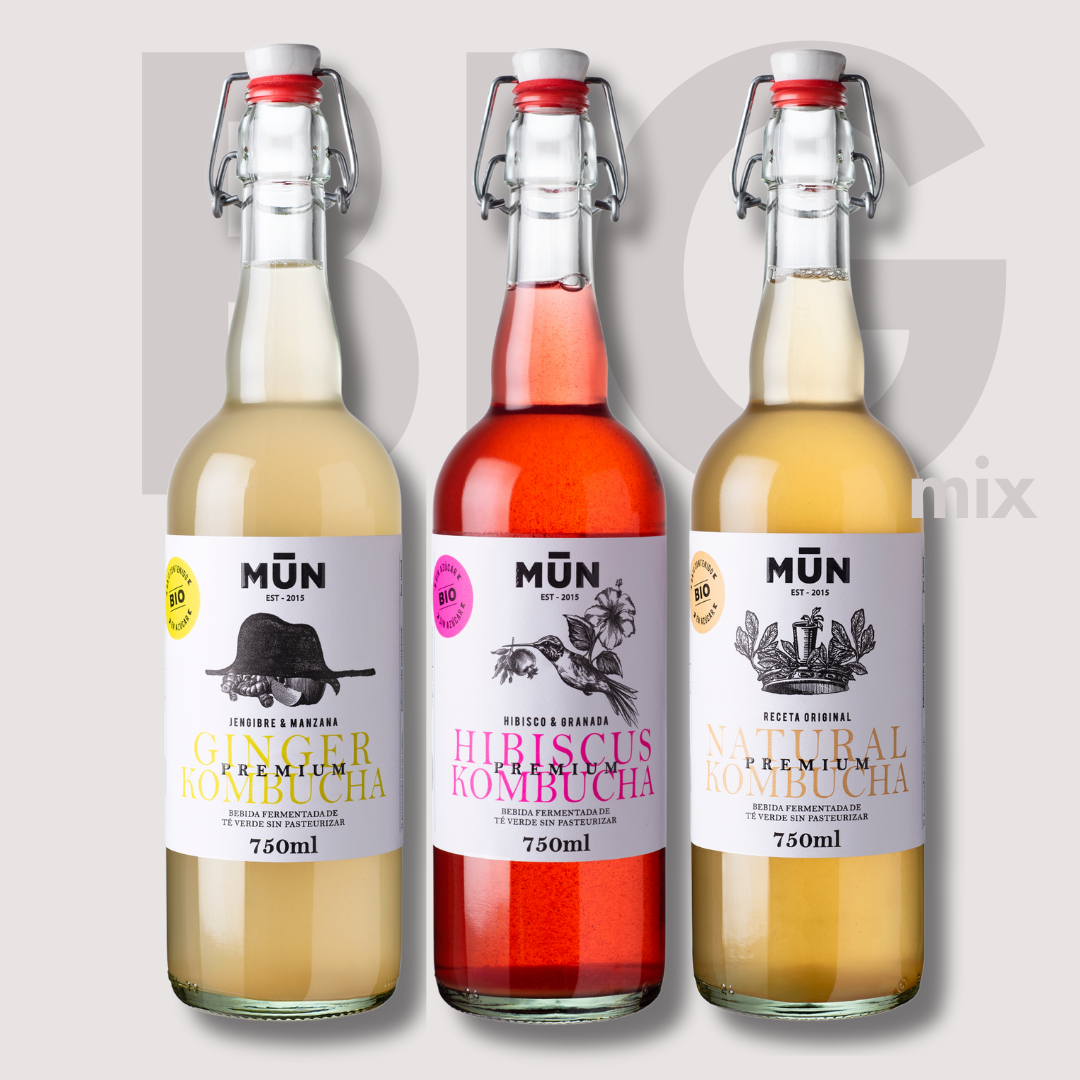
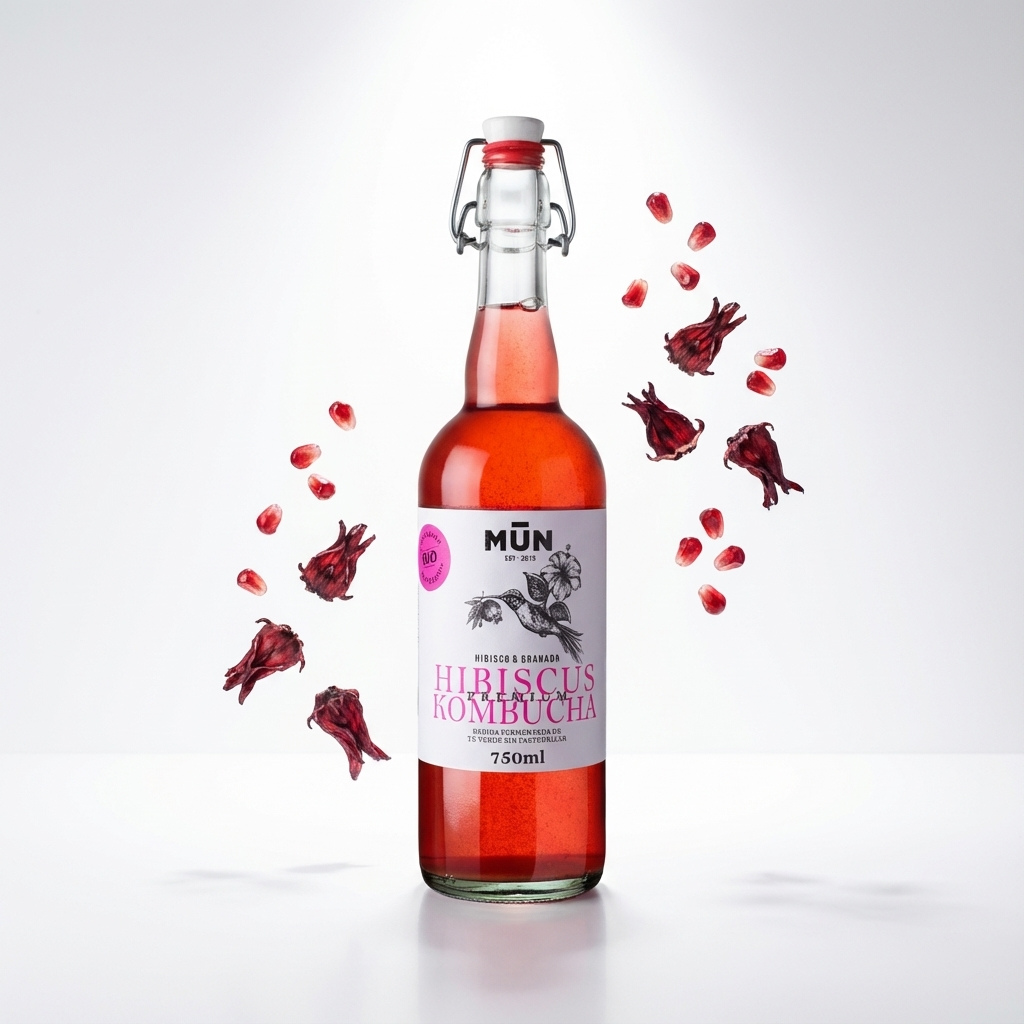
Packaging was the first technical problem. Live kombucha generates natural gas as it rests, and most caps can't handle the pressure. After several tests, they found the bottle that worked: classic Spanish soda-water bottle with ceramic swing-top stopper, which opens and closes without losing gas.
The first two flavours were:
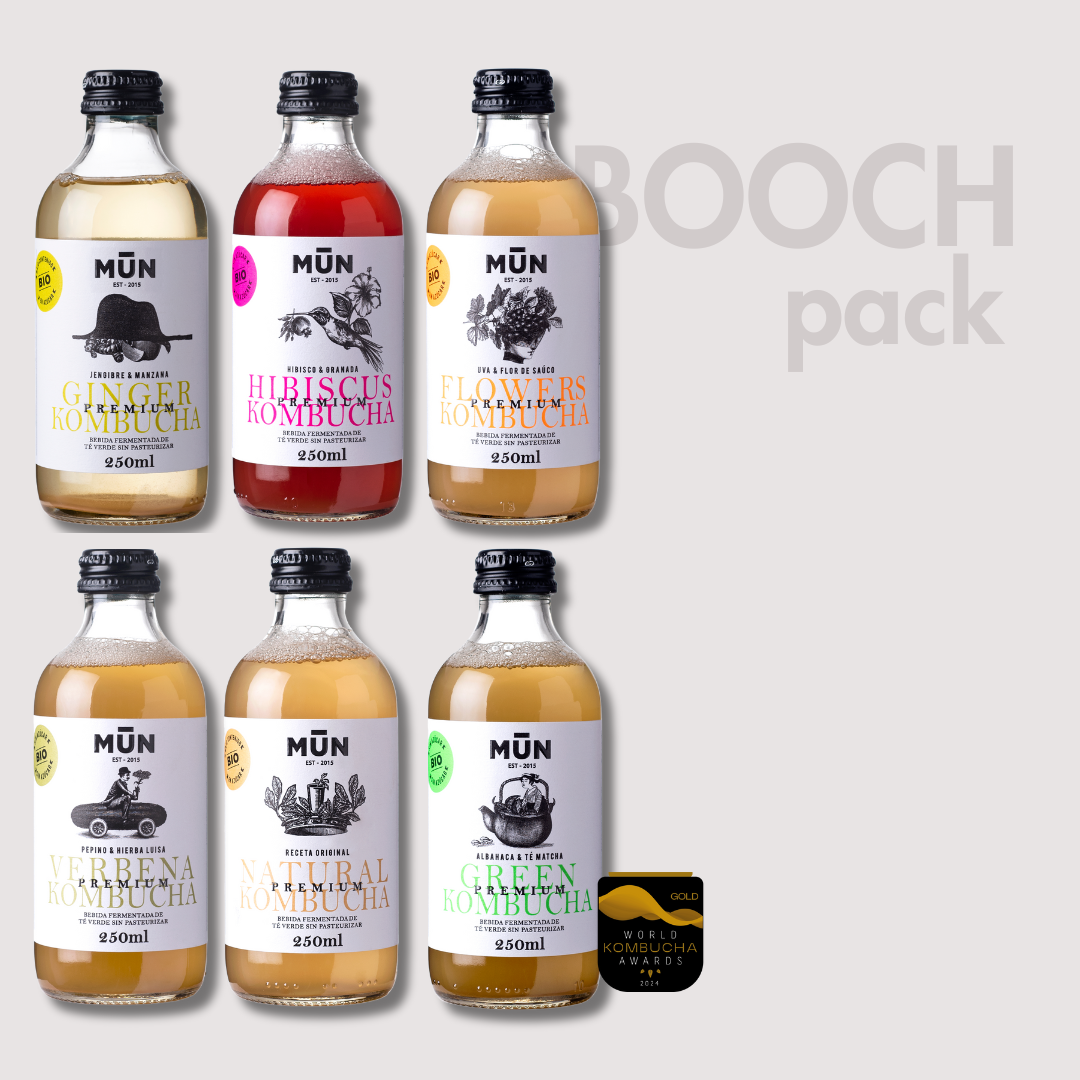
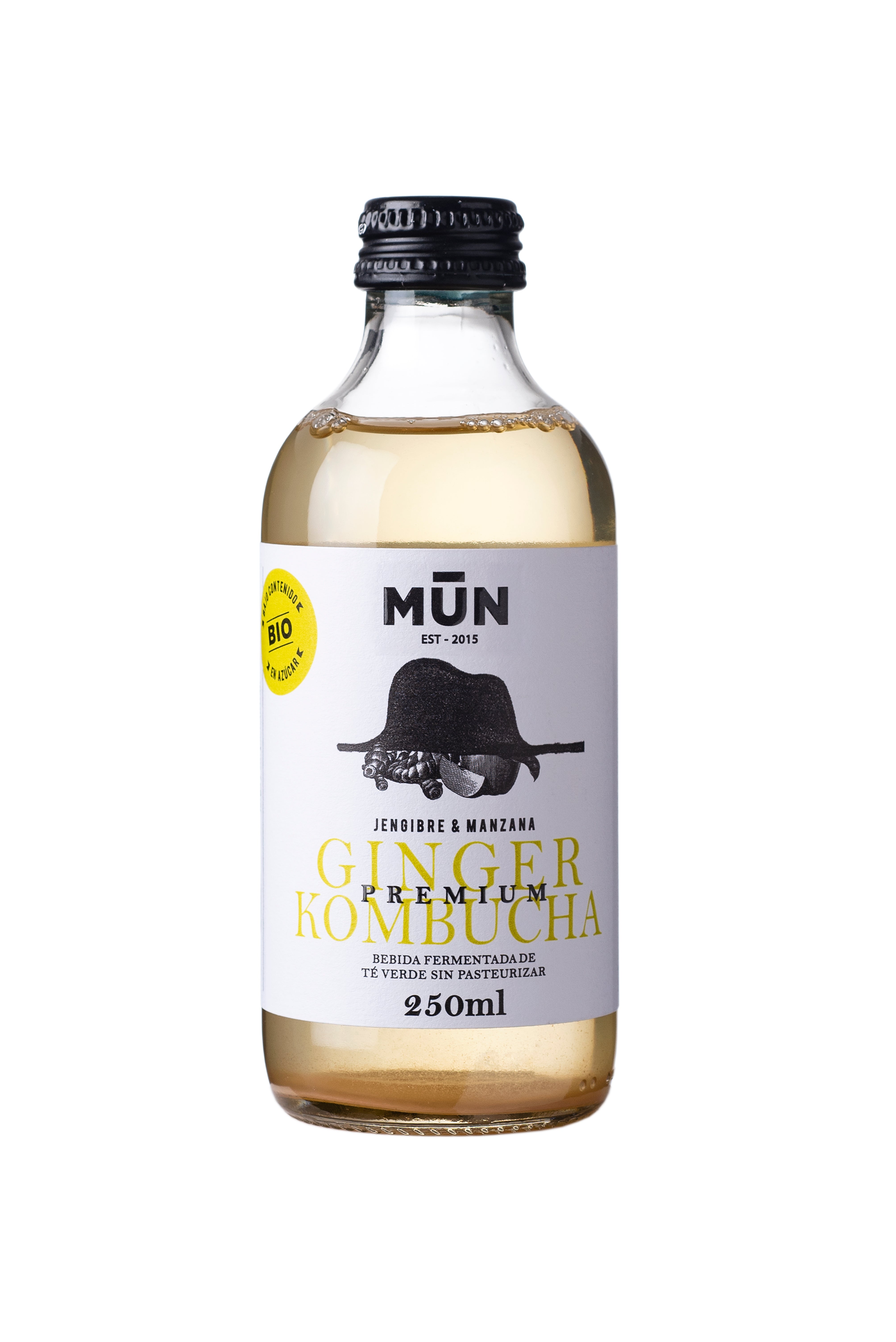
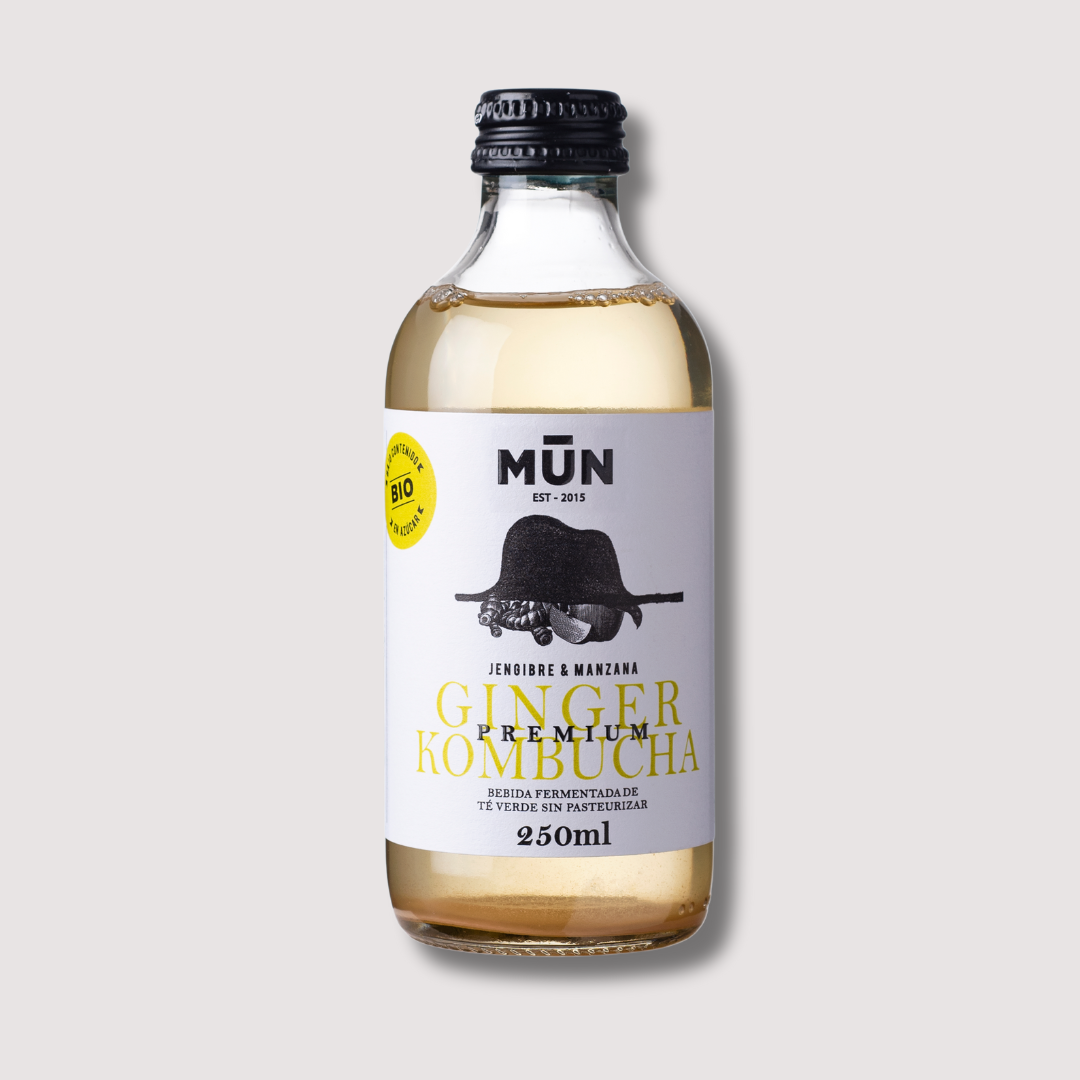
- Apple and ginger
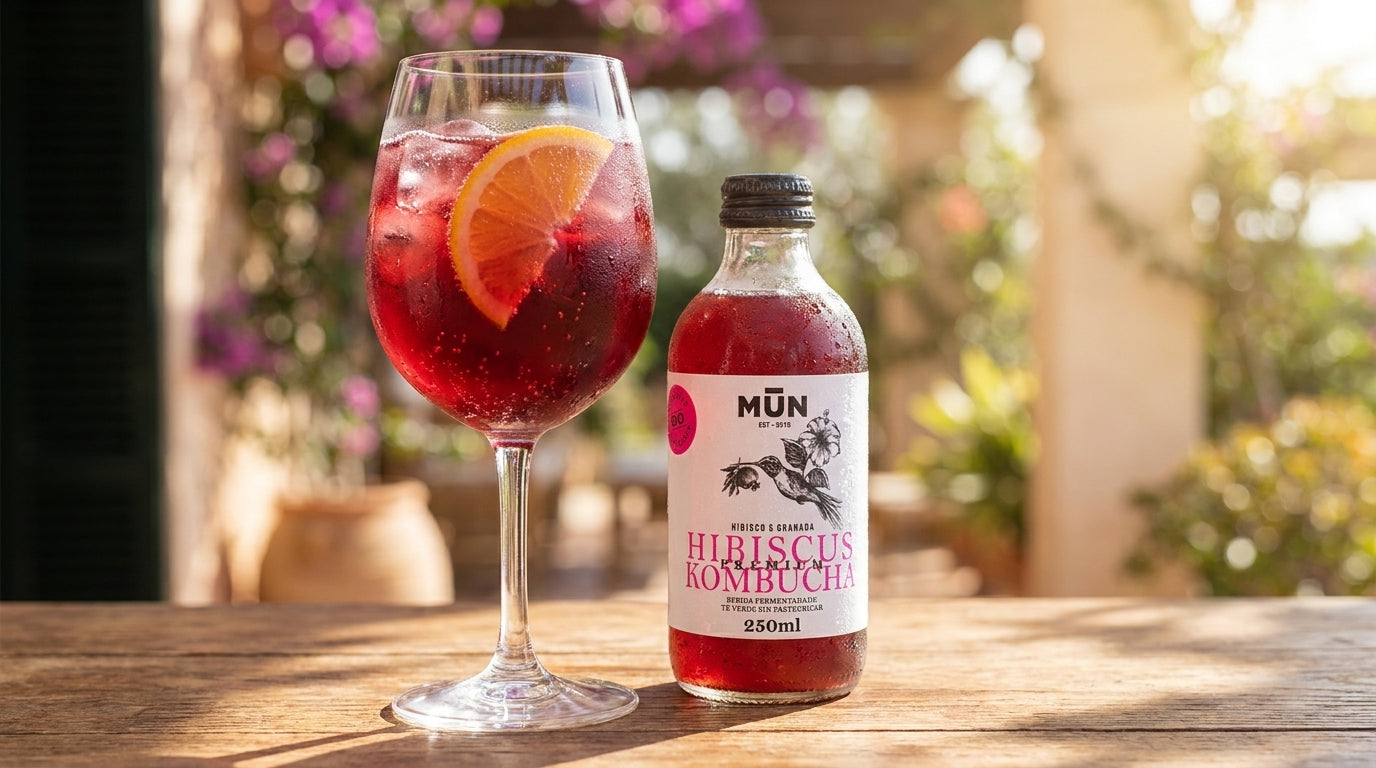
- Hibiscus with pomegranate and hibiscus flower
Initial format: 750 ml. Later, on customer request, came the 275 ml with crown cap and the 250 ml with screw cap, designed for individual servings.
The current range
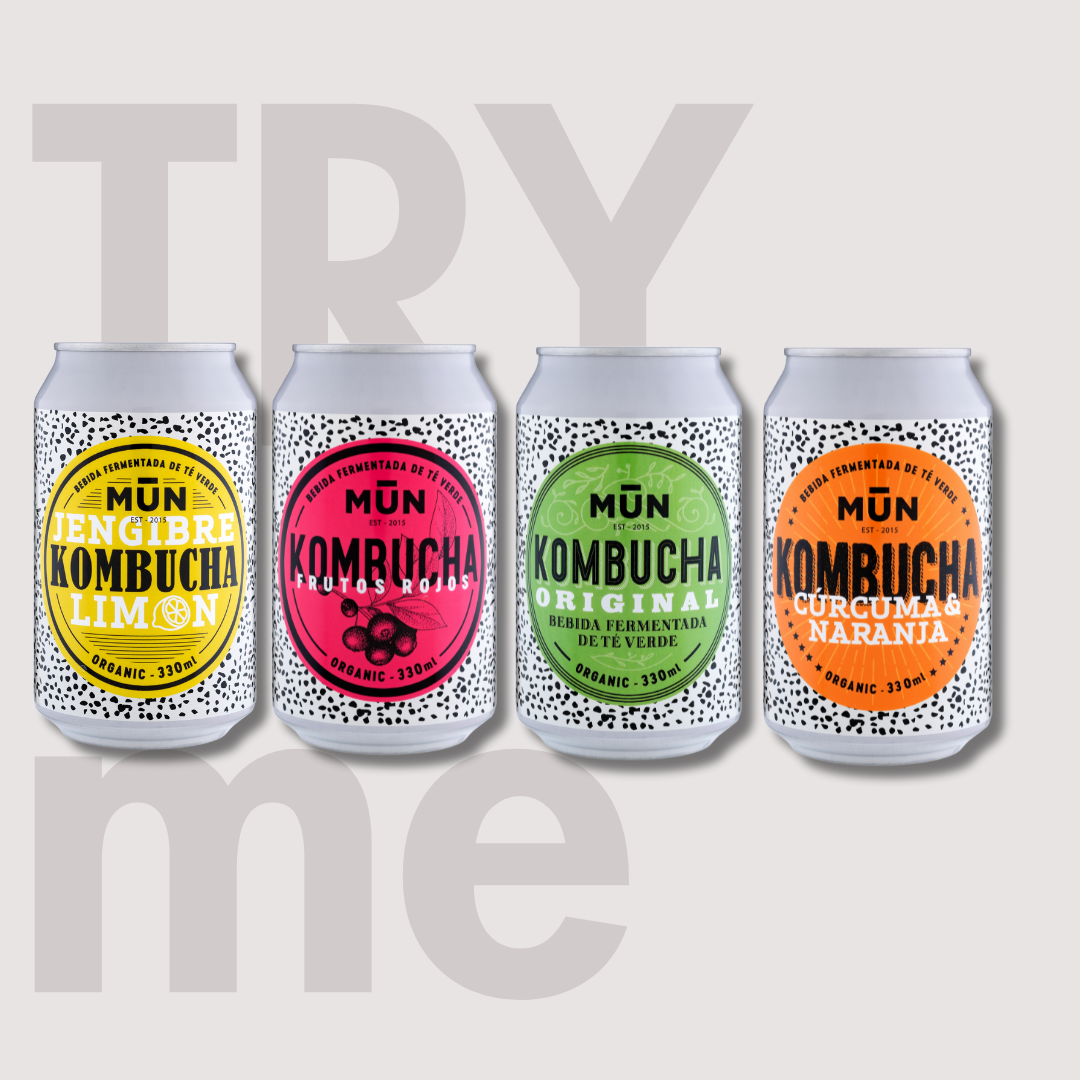
From those first two flavours, more varieties have been added over the years:
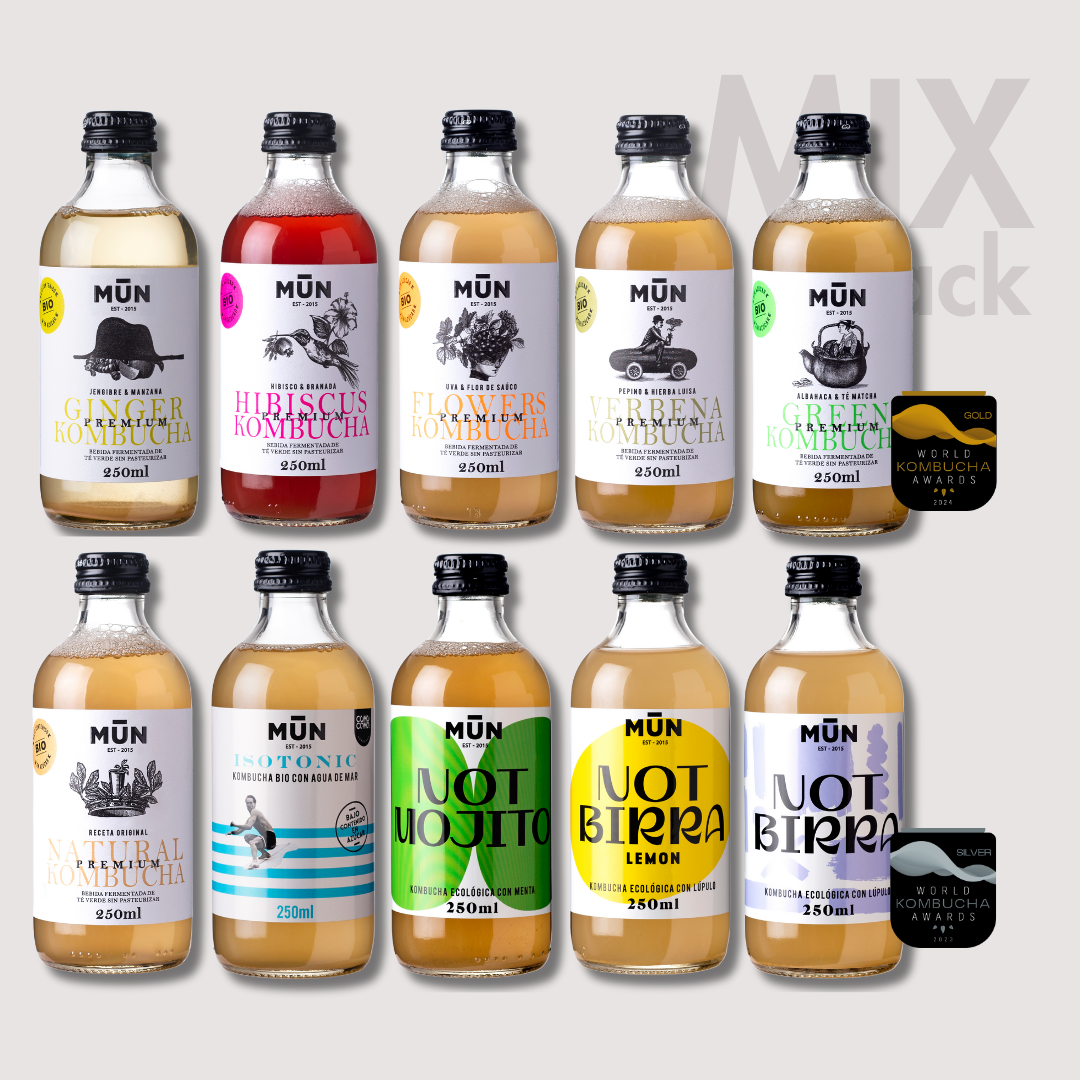
- Flowers: elderflower and grape must
- Green: basil and matcha tea
- Verbena: cucumber and lemon verbena
- Natural: the purest version, no second fermentation
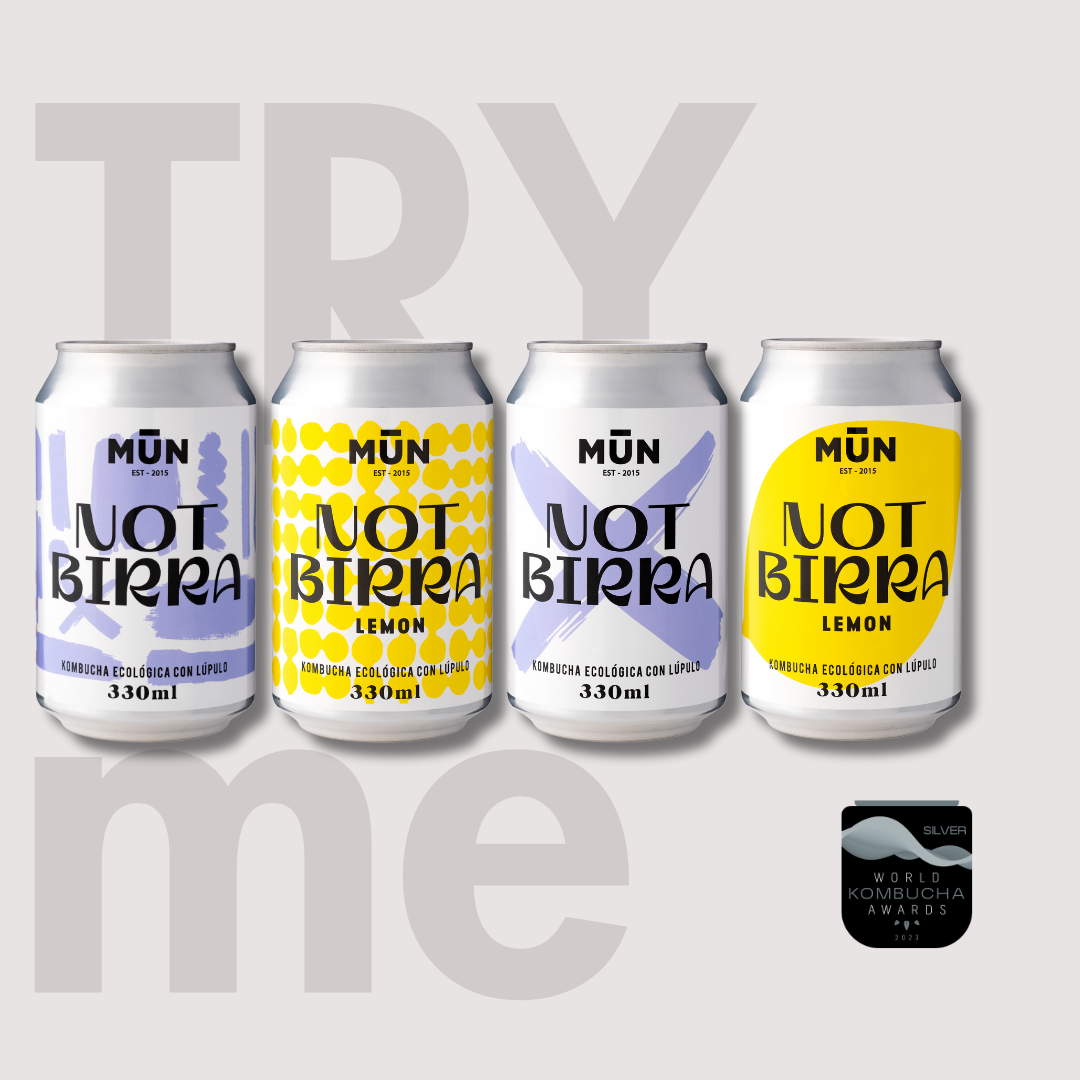
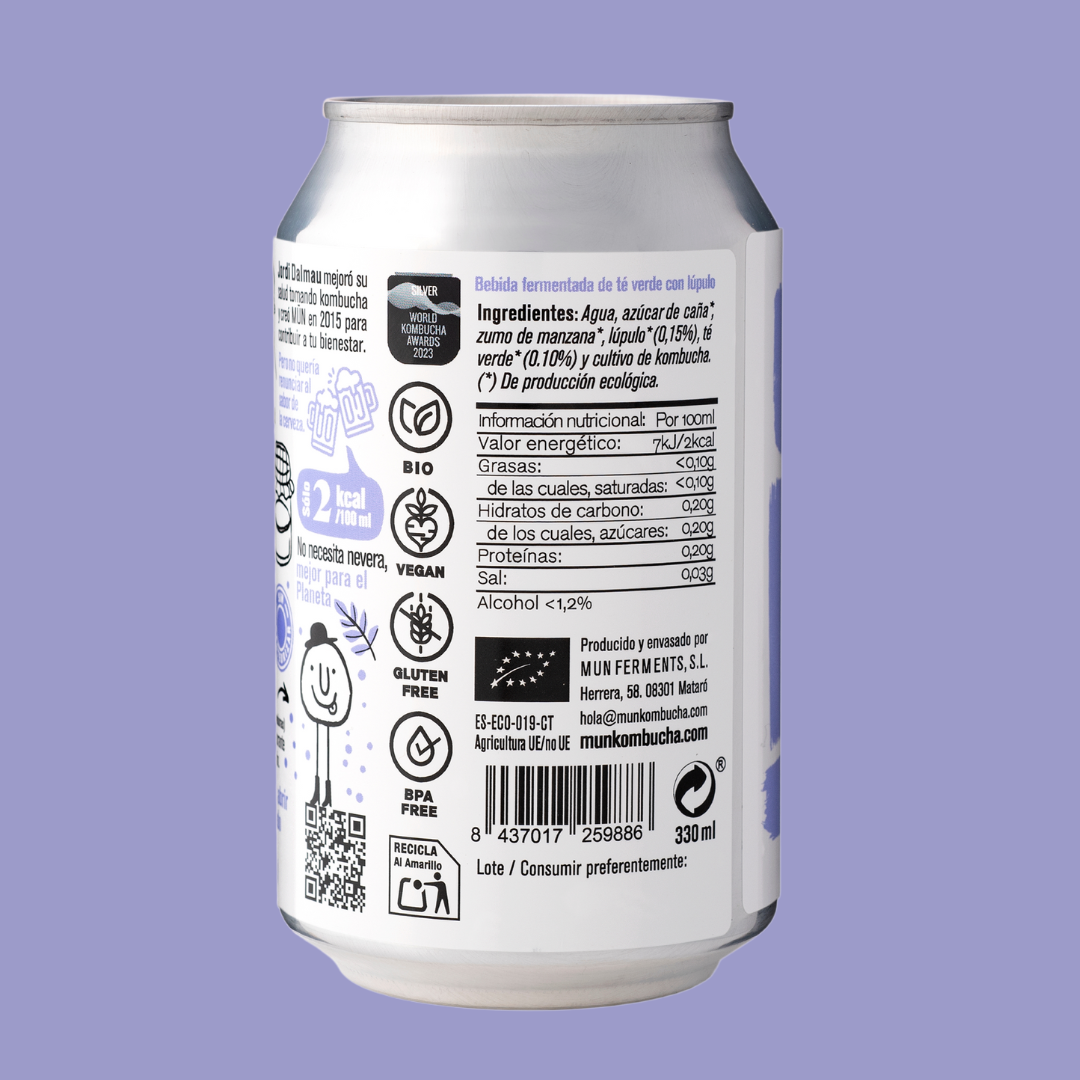
- NotBirra (formerly Paleobirra): hop infusion, a fermented alternative to beer
- NotBirra Lemon: the citrus version
- Not-Mojito: mint, lime and our ferment
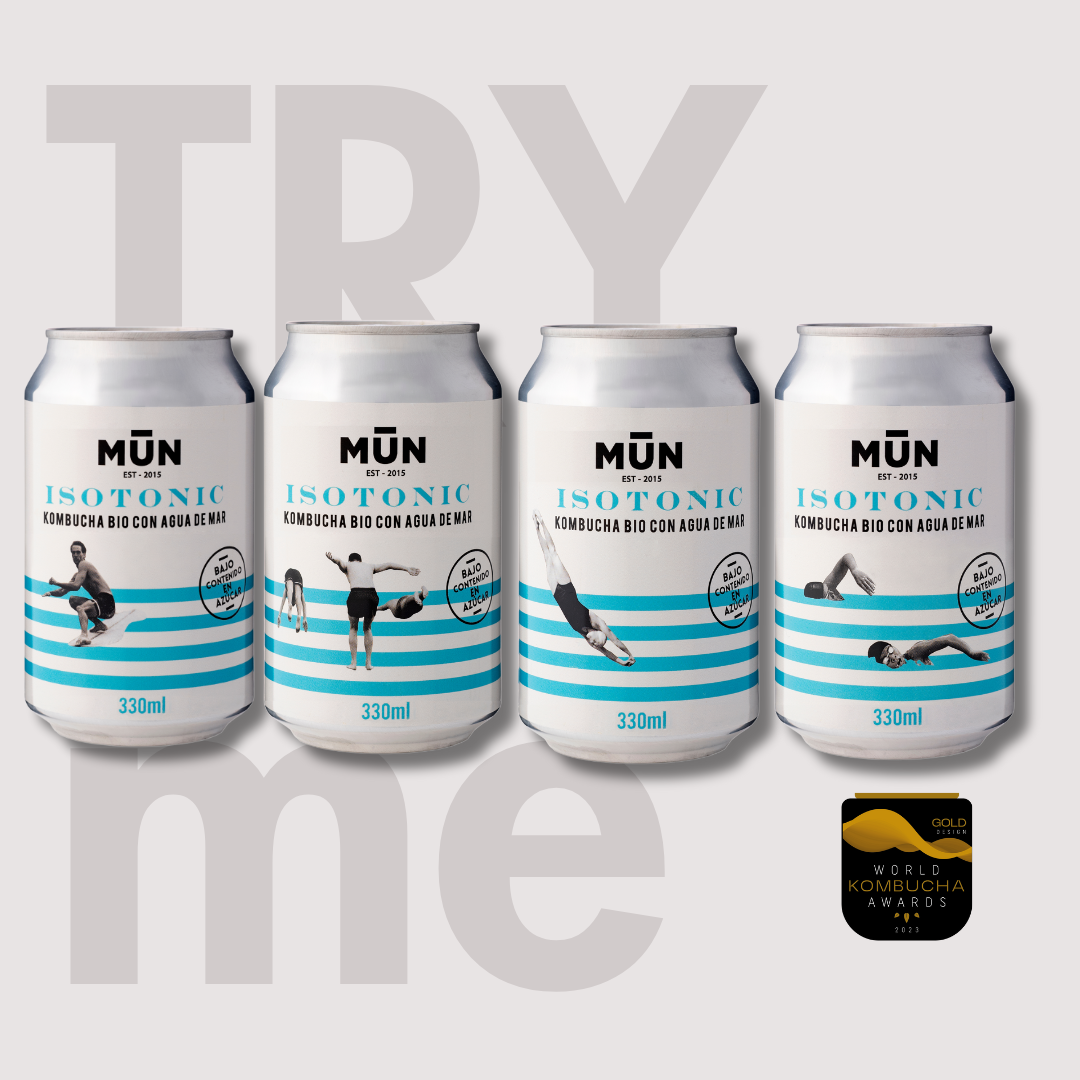
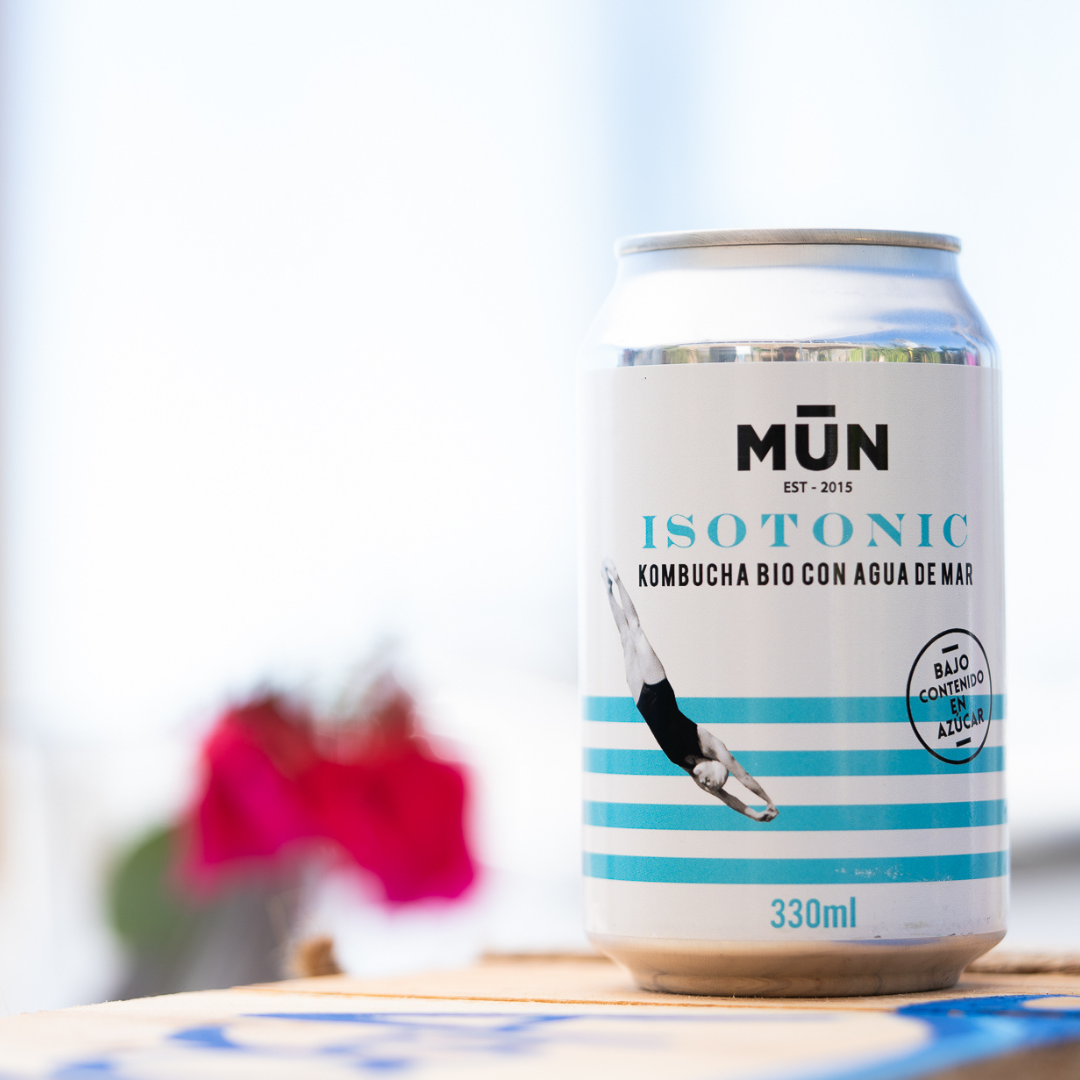
- Isotonic: with isotonic seawater, +30 natural minerals
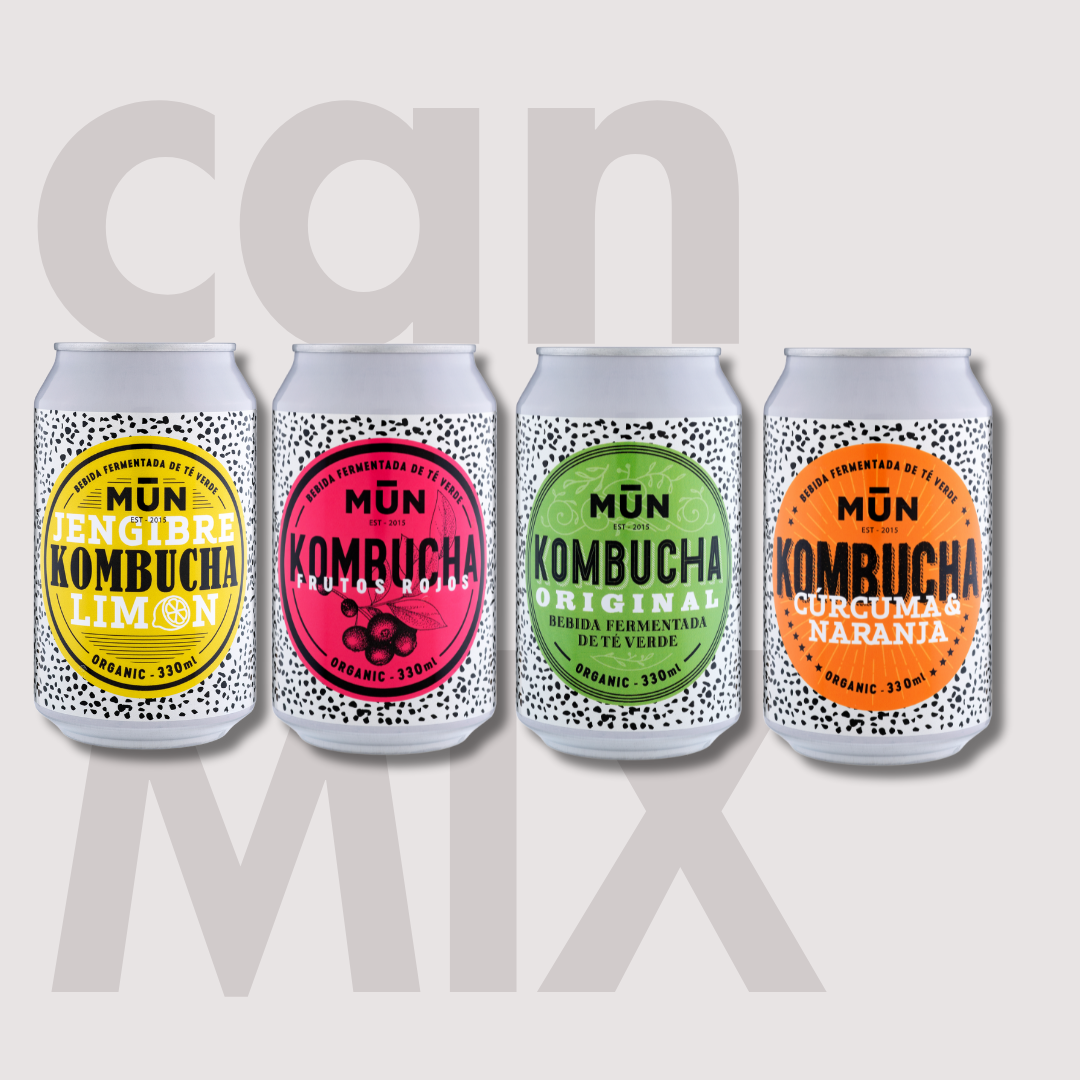
Beyond direct sales, the range has expanded into hospitality and large-scale retail, also in BPA-free cans for the HORECA channel.
Mataró: 30 km from Barcelona
The brewery is in Mataró, capital of the Maresme region. The microclimate is stable, which helps control the slow fermentations: between 25 and 30 days per batch. A full lunar cycle. (Detailed process here.)
The numbers that define Mūn
Eleven years on, this is what we have:
- 15 active varieties
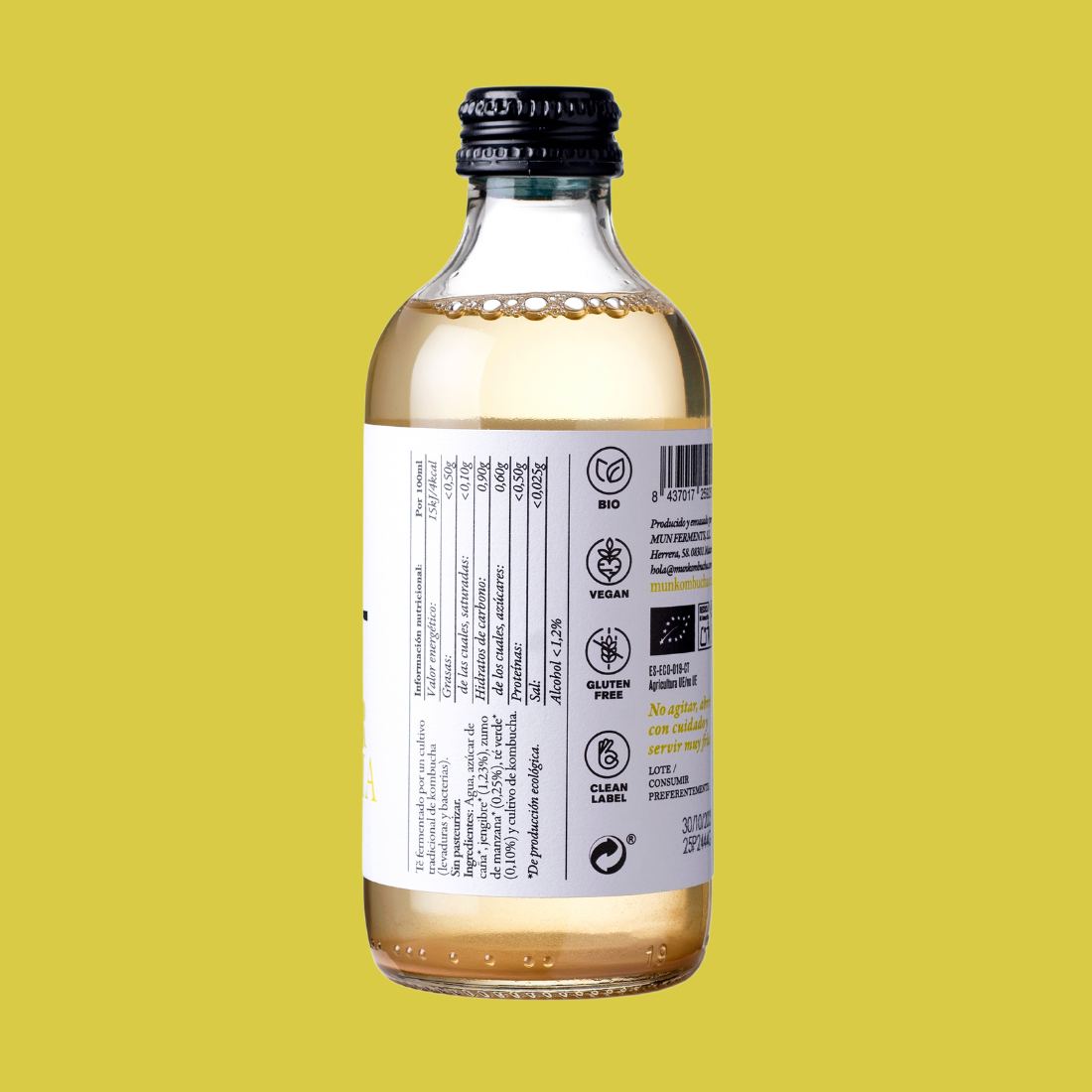
- Residual sugar between 0.1 and 1.8 g per 100 ml depending on variety. The industry average is 6-9 g/100 ml. (Calculator with the exact figure for each Mūn)
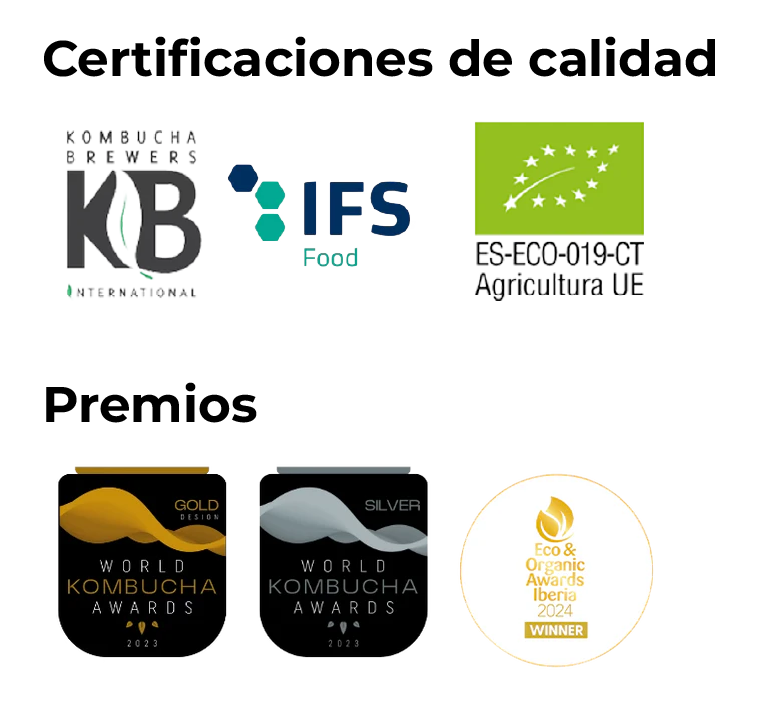
- Unpasteurised. Cultures remain alive in the bottle.
- No added gas. Bubbles come from natural fermentation.
- Stable without mandatory refrigeration: the combination of complete fermentation and very low residual sugar lets the bottle hold at room temperature.
It's the only unpasteurised kombucha that is fully shelf-stable without refrigeration on the market today.
Why we still ferment for 30 days
Fermenting for seven days, pasteurising, adding gas and sweetening would quadruple output and reduce cost per litre. Most commercial brands do exactly that.
We don't, for one specific reason: the residual sugar and organic acids that separate real kombucha from a soft drink only appear when the fermentation reaches the end. Shortening the process means selling fizzy sweet tea with a kombucha label. That isn't what we started doing in 2015.