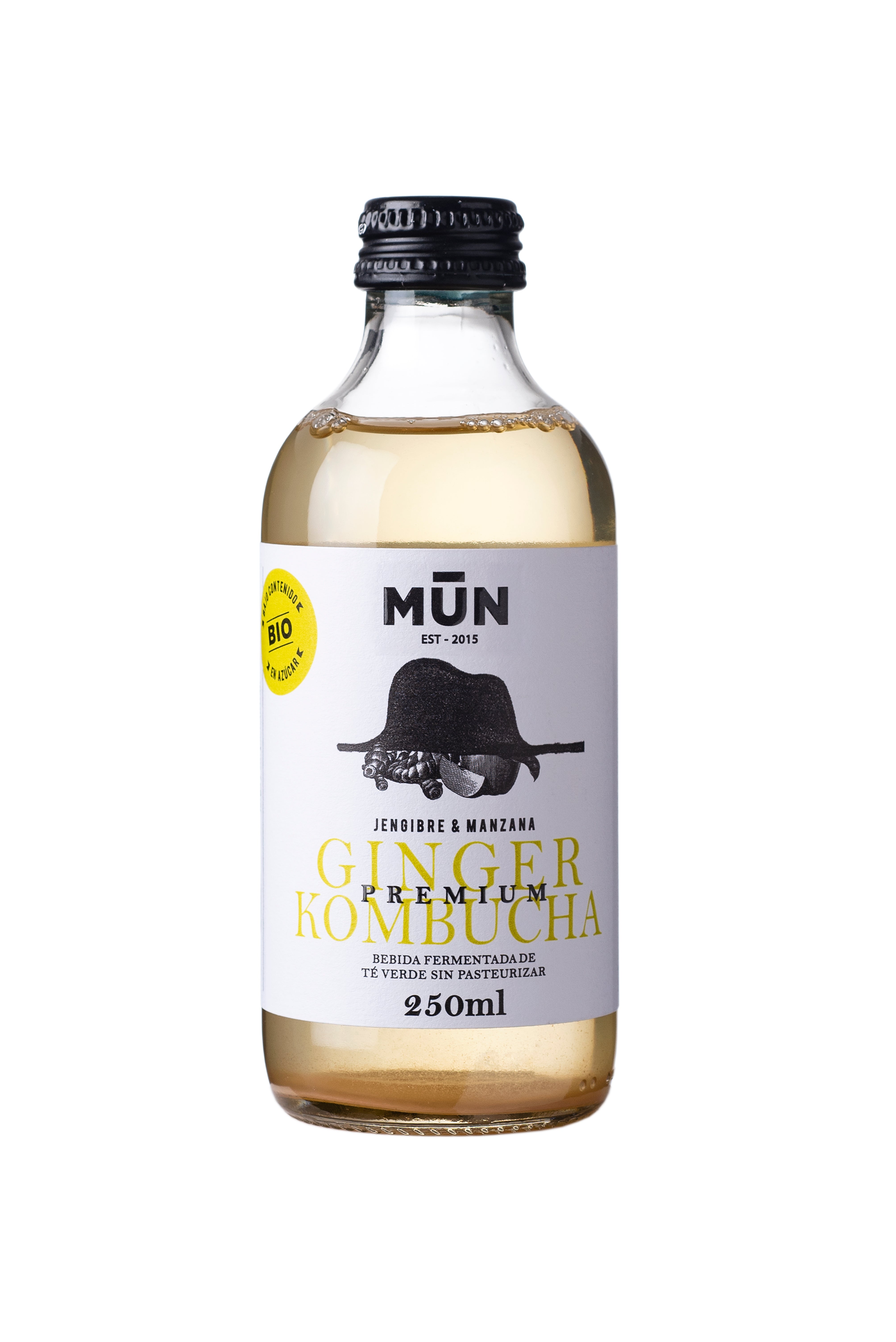
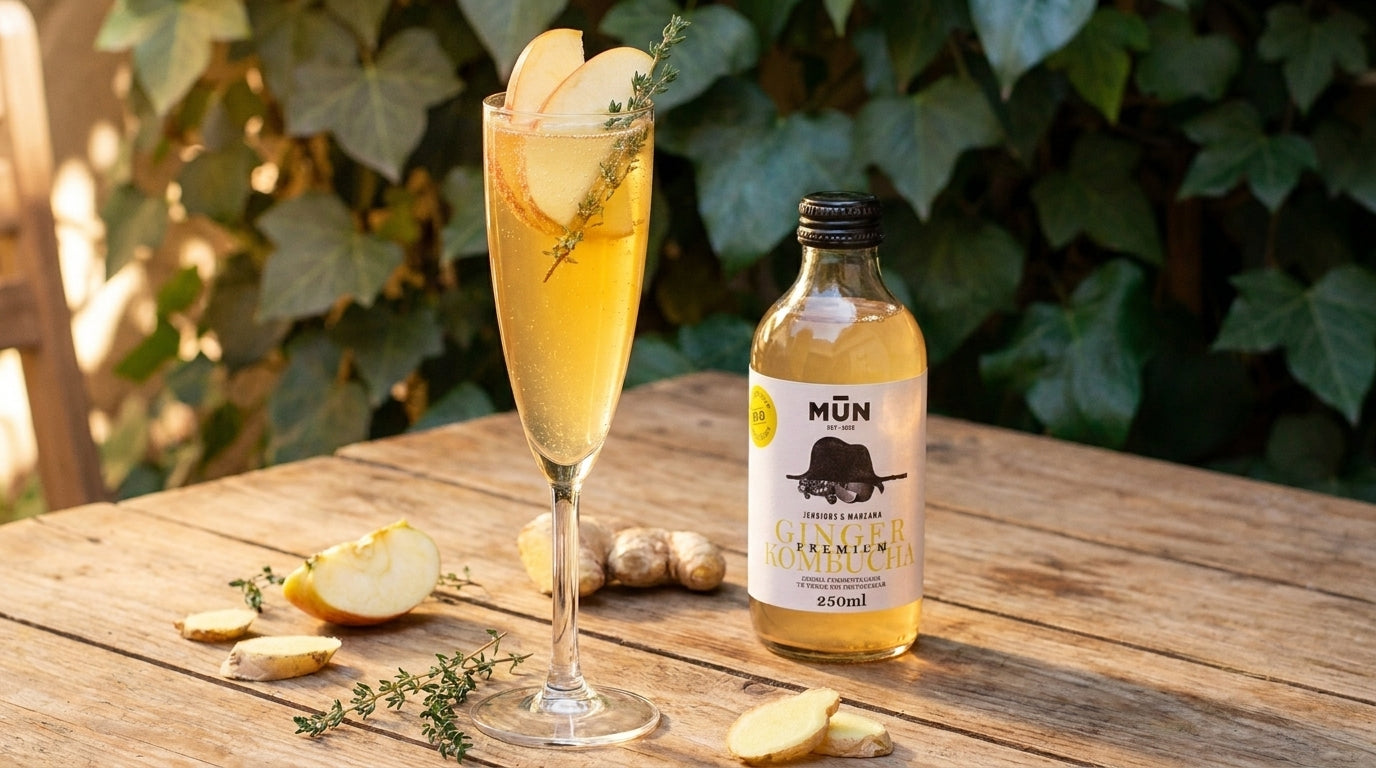
Non-alcoholic cider is a real alternative to traditional cider: apple juice, fresh acidity, and natural bubbles, without alcoholic fermentation. We prepare this homemade version with Mūn Ginger Kombucha, fresh apple, and lemon. It takes 5 minutes, requires no special equipment, and works for both everyday meals and celebrations.
We call it Mūn Bubble because the effervescence comes from the natural fermentation of kombucha, not added CO₂. The result: a full-bodied, slightly dry drink, with the spicy touch of ginger and the freshness of apple.
What is non-alcoholic cider
Traditional Asturian, Basque, or Norman cider is obtained by fermenting apple juice with yeasts until it reaches between 4% and 8% alcohol. A non-alcoholic cider reproduces the sensory profile (acidity, bubbles, apple aroma) without generating ethanol. There are three common approaches:
- Industrial de-alcoholized cider: fermented cider from which alcohol is removed by vacuum distillation or reverse osmosis.
- Carbonated apple must: natural carbonated juice, sweet, without fermentation.
- Kombucha blend: apple juice combined with ginger kombucha. It provides real fermented acidity, natural bubbles, and a residual alcohol content of less than 0.5%, the same as other beverages labeled "non-alcoholic" in the EU.
This recipe follows the third path. It is the quickest to prepare at home and the only one that provides live cultures from the kombucha.
Ingredients
For 4 glasses (approx. 1 liter):
- 500 ml natural apple juice, cold (ideally cold-pressed, no added sugar)
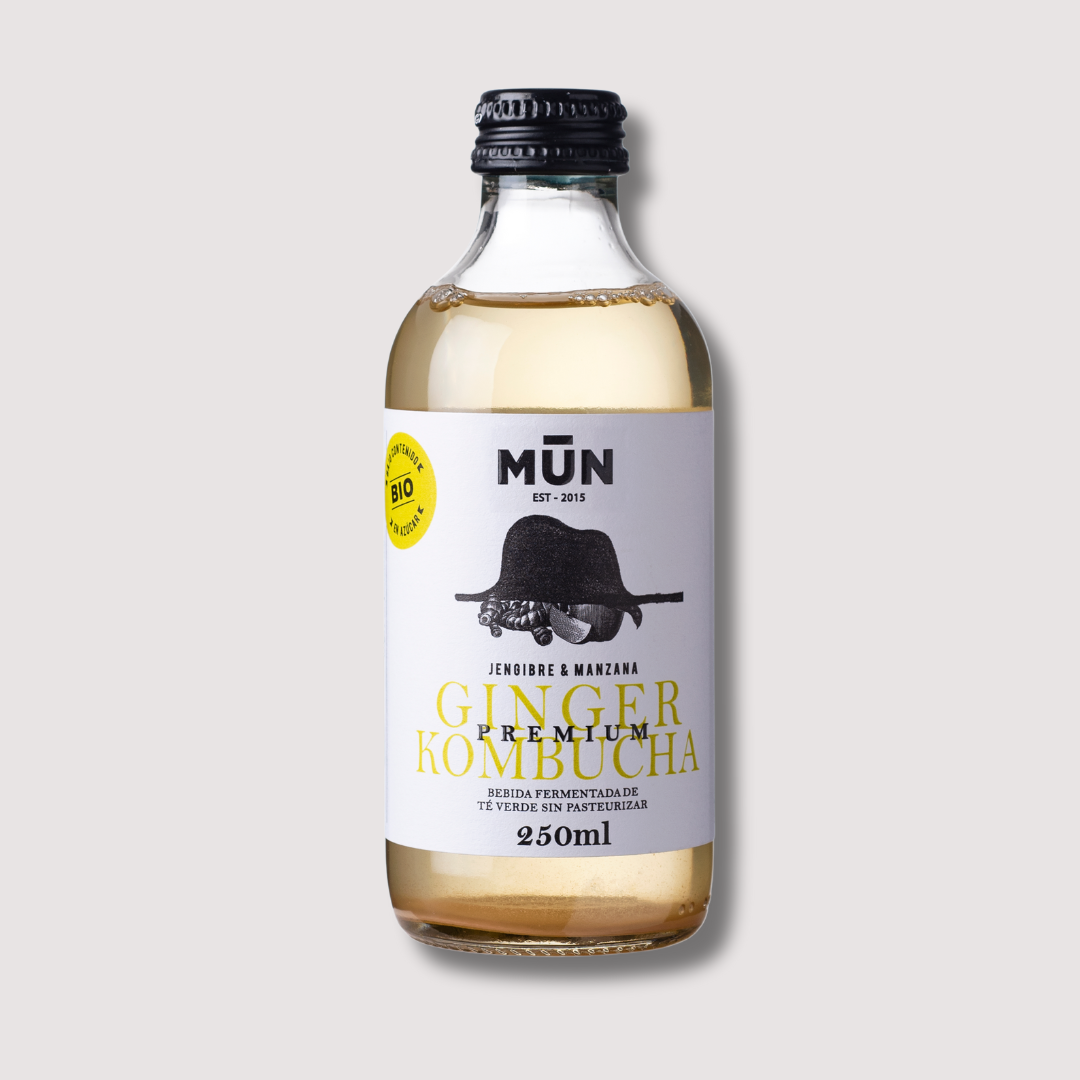
- 500 ml Mūn Ginger Kombucha, very cold
- Juice of ½ lemon
- 1 firm apple (Granny Smith, Pink Lady, or Reineta), cut into thin wedges
- A thin slice of fresh ginger (optional, enhances the spice)
- Ice to taste
Notes on the juice: avoid apple juices reconstituted from concentrate with added sugar. Read the label: the only ingredient should be "100% apple juice". If the juice is too sweet, the recipe will lose the characteristic "dry" profile of cider.
Step-by-step preparation
- Chill all liquids. The apple juice and kombucha must be very cold before mixing. If you combine them warm, you lose bubbles and the drink becomes flat.
- Wash the fresh apple without peeling it. The skin adds color and aroma. Cut it into thin wedges or half-moons.
- In a large pitcher, first pour the apple juice, then the lemon juice. Stir.
- Add the Ginger Kombucha last, tilting the pitcher and letting it slide down the side. This preserves the natural bubbles of the kombucha.
- Add the apple wedges and ginger slice. Stir only once, gently.
- Serve immediately in tall glasses or cups with ice. Decorate with an apple wedge on the rim if you want a cocktail presentation.
Times and yield
- Preparation time: 5 minutes
- Resting time (optional): 10 minutes in the fridge for flavors to integrate
- Servings: 4 glasses of 250 ml
- Storage: consume immediately. If there's any left, cover the pitcher and store it in the fridge; the bubbles will last 6-8 hours.
- Residual alcohol: <0.5% vol (from the kombucha). Suitable for "non-alcoholic" labeling according to European regulations.
Why we use Ginger Kombucha in this recipe
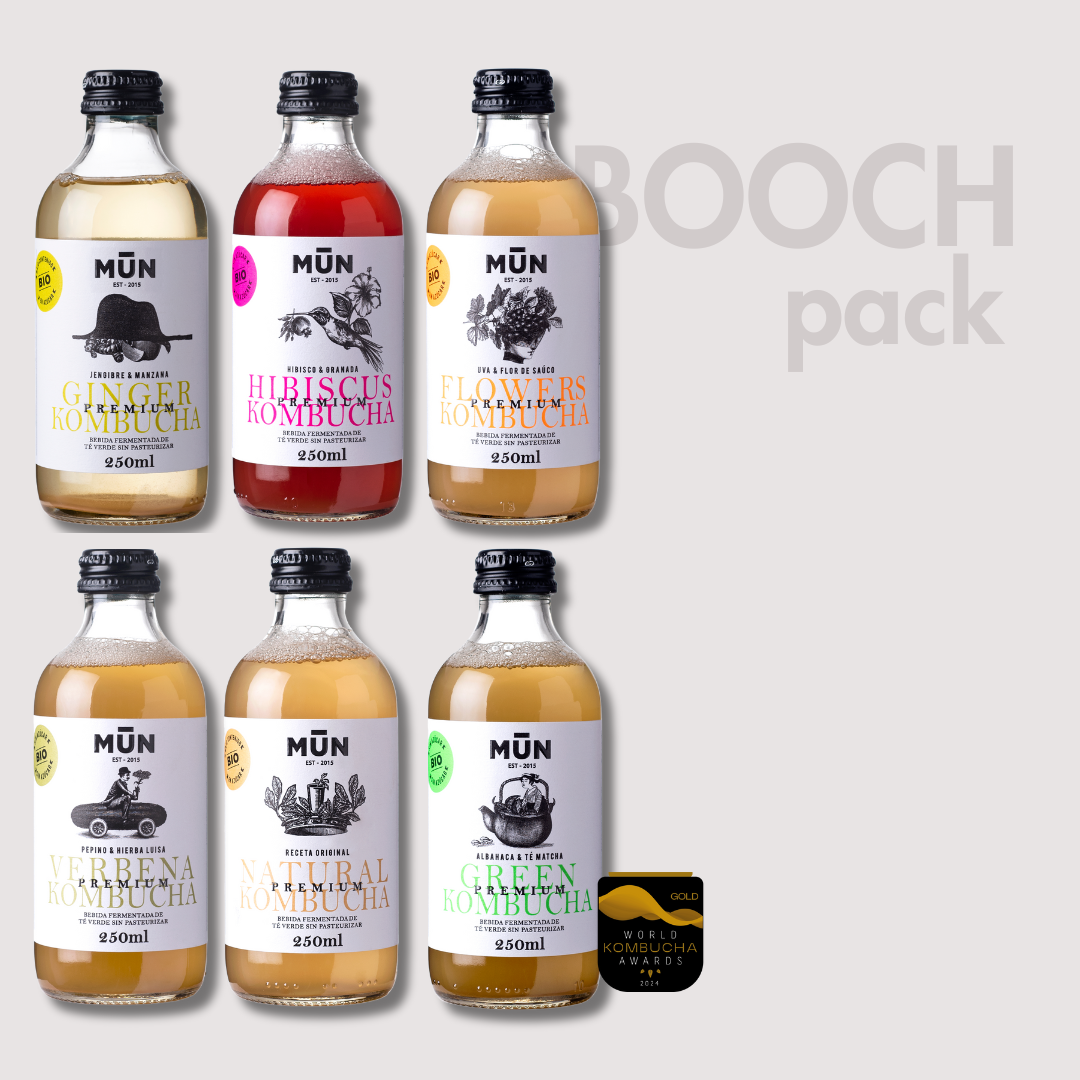
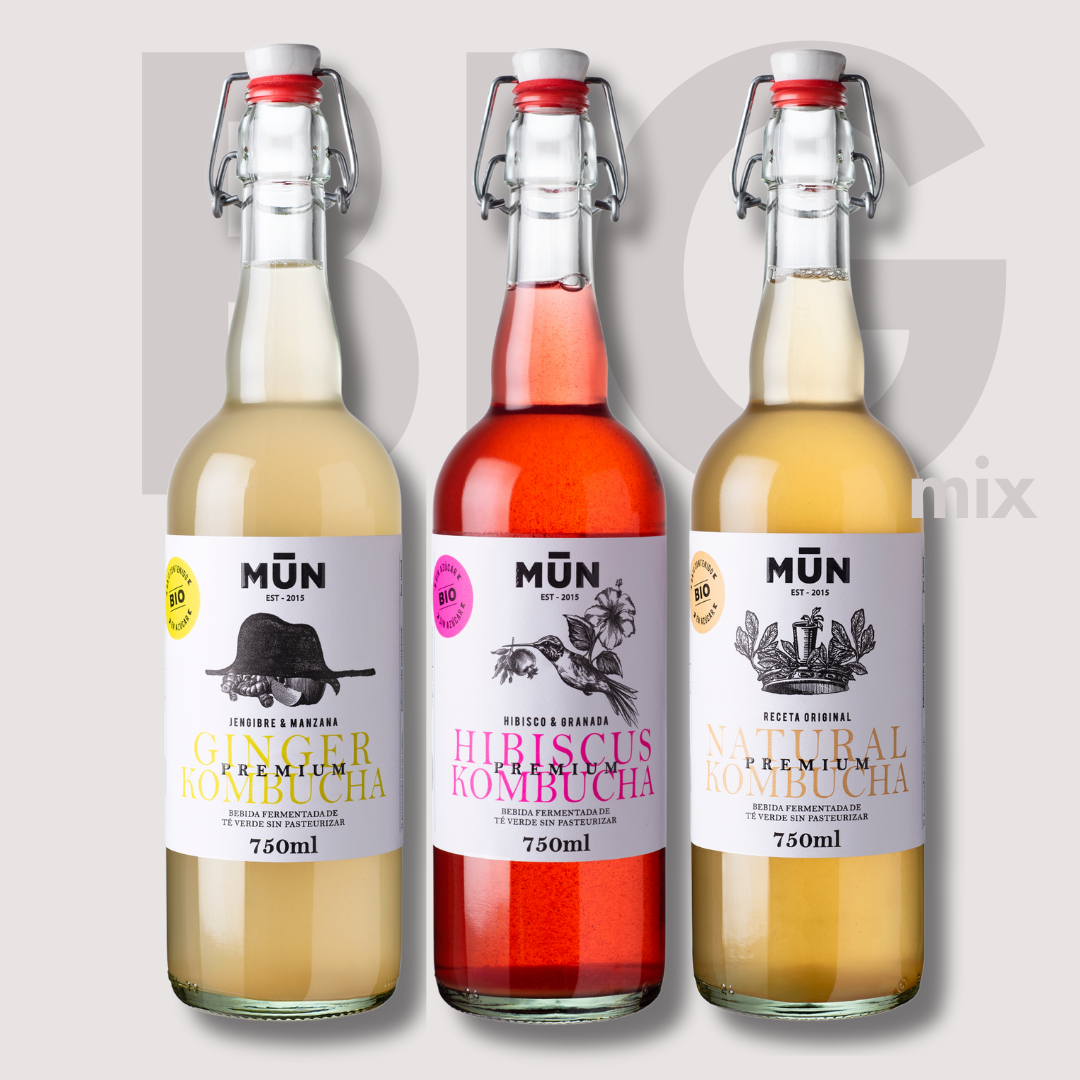
Mūn Ginger Kombucha is a kombucha fermented with fresh ginger infusion. In this non-alcoholic cider, it provides three things that sparkling water or an industrial soft drink cannot:
- Real fermented acidity: the acetic and lactic acid from the kombucha balance the sweetness of the apple juice, just as malic acid does in traditional cider.
- Natural bubbles: the CO₂ from the kombucha comes from fermentation; it is finer and more persistent than pressure-carbonated.
- Ginger spice: adds body and a slightly spicy finish that complements the apple without overpowering it.
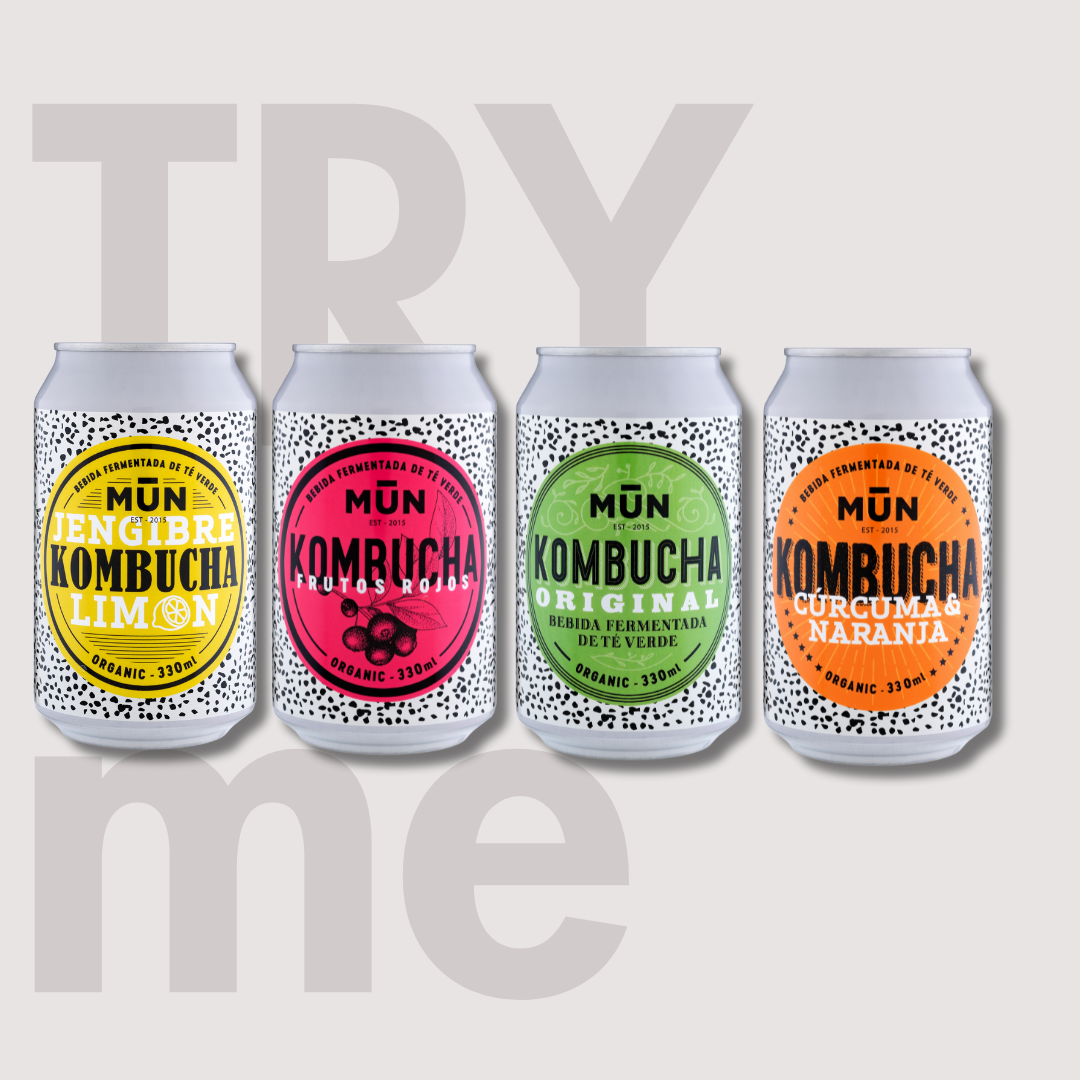
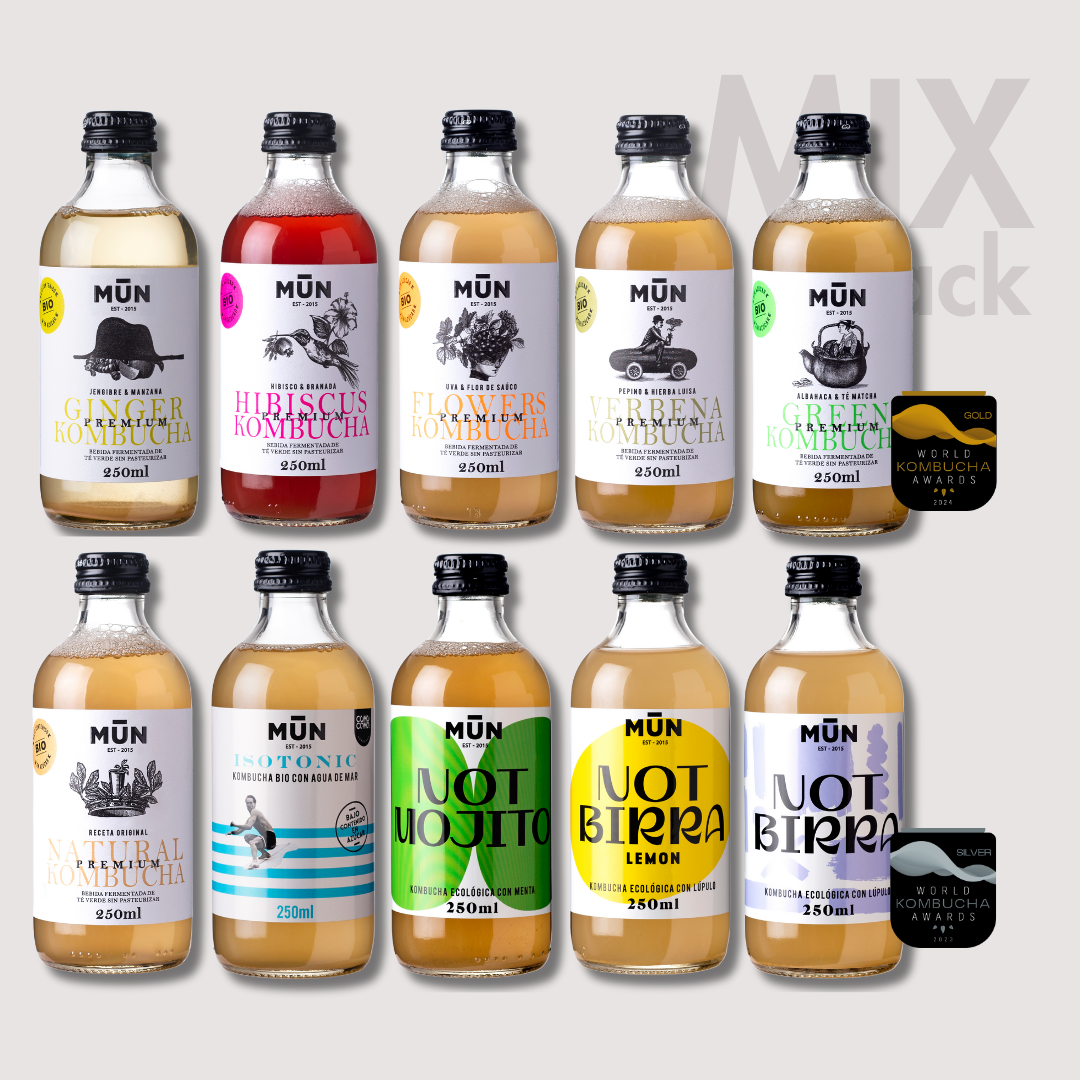
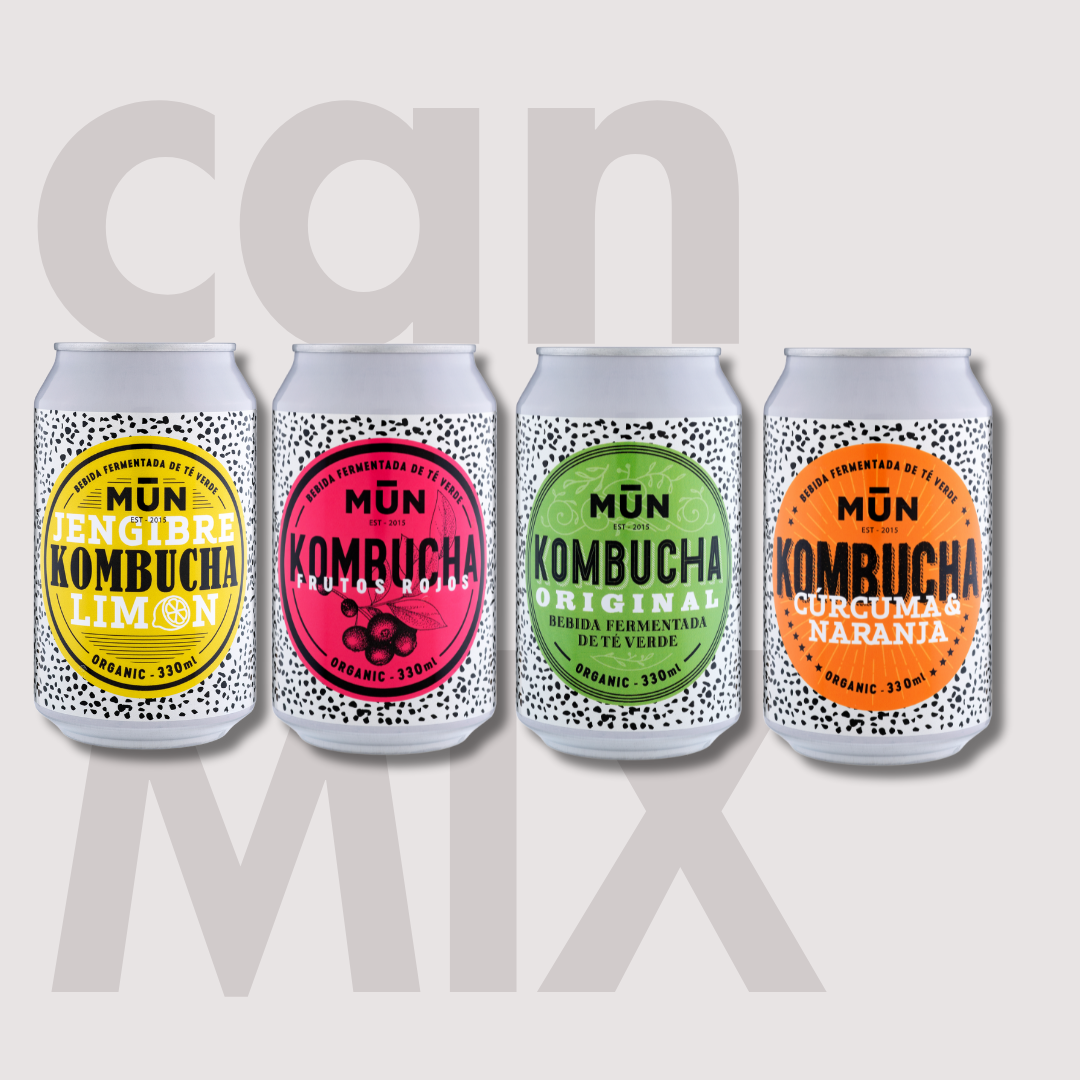
Other kombuchas in the range (Lemon, Original) also work, but Ginger is the one that most closely matches the profile of a dry cider with character.
Variations
- Festive version (non-alcoholic champagne type): replace the juice with commercial de-alcoholized cider and reduce the kombucha quantity to 250 ml. Serve in a flute glass.
- Drier: increase kombucha to 600 ml and reduce juice to 400 ml. Add 2-3 drops of non-alcoholic Angostura bitters.
- More citrusy: add lime or lemon zest when serving, and replace half a lemon with a whole lime.
- After-dinner cocktail: add a sprig of fresh rosemary or thyme to the pitcher 10 minutes before serving.
- Children's version: reduce the lemon to a few drops and add 1 tablespoon of apple or agave syrup. The kombucha bubbles make it very appealing.
- Hot non-alcoholic cider (winter): heat the apple juice with cinnamon, cloves, and orange peel to 60 °C, serve in a mug, and add the cold kombucha at the end. The temperature difference activates the aroma.
Common mistakes
- Mixing with room temperature liquids: kombucha quickly loses its fizz. Everything must be very cold.
- Stirring too much: each turn with the spoon kills bubbles. A gentle stir is enough.
- Using juice with added sugar: breaks the acid-sweet balance and the drink becomes cloying.
- Serving without ice in the glass: ice is not just decoration; it keeps the bubbles longer and lowers the final temperature.
- Opening the kombucha in advance: natural CO₂ escapes quickly. Open the bottle just before mixing.
When to serve it
This non-alcoholic cider works for:
- Lunches and dinners: replaces wine or traditional cider. It pairs especially well with cured cheeses, Iberian cold cuts, tortilla, escalivada, and white meats.
- Toasts and celebrations: Christmas, New Year's Eve, birthdays, baptisms, communions. It's a real alternative for those who don't drink alcohol and want something more interesting than a soft drink.
- Pregnancy and breastfeeding: always consult with a doctor, but as it is <0.5% vol, it falls within "non-alcoholic" beverages according to regulations.
- Designated drivers: allows participation in toasts without giving up a complex flavor.
- Appetizer: served very cold with nuts or olives, it stimulates the appetite thanks to the acidity of the kombucha.
Frequently asked questions
Does non-alcoholic cider with kombucha really contain alcohol?
It contains less than 0.5% vol, the natural residue of kombucha fermentation. European regulations allow any beverage below this threshold to be labeled "non-alcoholic". It is comparable to a very ripe apple or freshly squeezed orange juice after a few hours at room temperature.
Can I prepare it in advance?
The mixture loses bubbles over time. Ideally, prepare the base (juice + lemon + apple wedges) in advance and add the kombucha just before serving.
What is the difference with carbonated apple must?
Must is juice carbonated with industrial CO₂: sweet and flat in the aftertaste. This non-alcoholic cider with kombucha has fermented acidity, finer bubbles, and a dry finish with ginger notes.
Does any kombucha work?
Yes, but the profile changes. Original provides a cleaner finish, Lemon enhances citrus acidity, and Ginger is the option that most closely matches a dry cider with character.
Is it suitable for coeliacs and vegans?
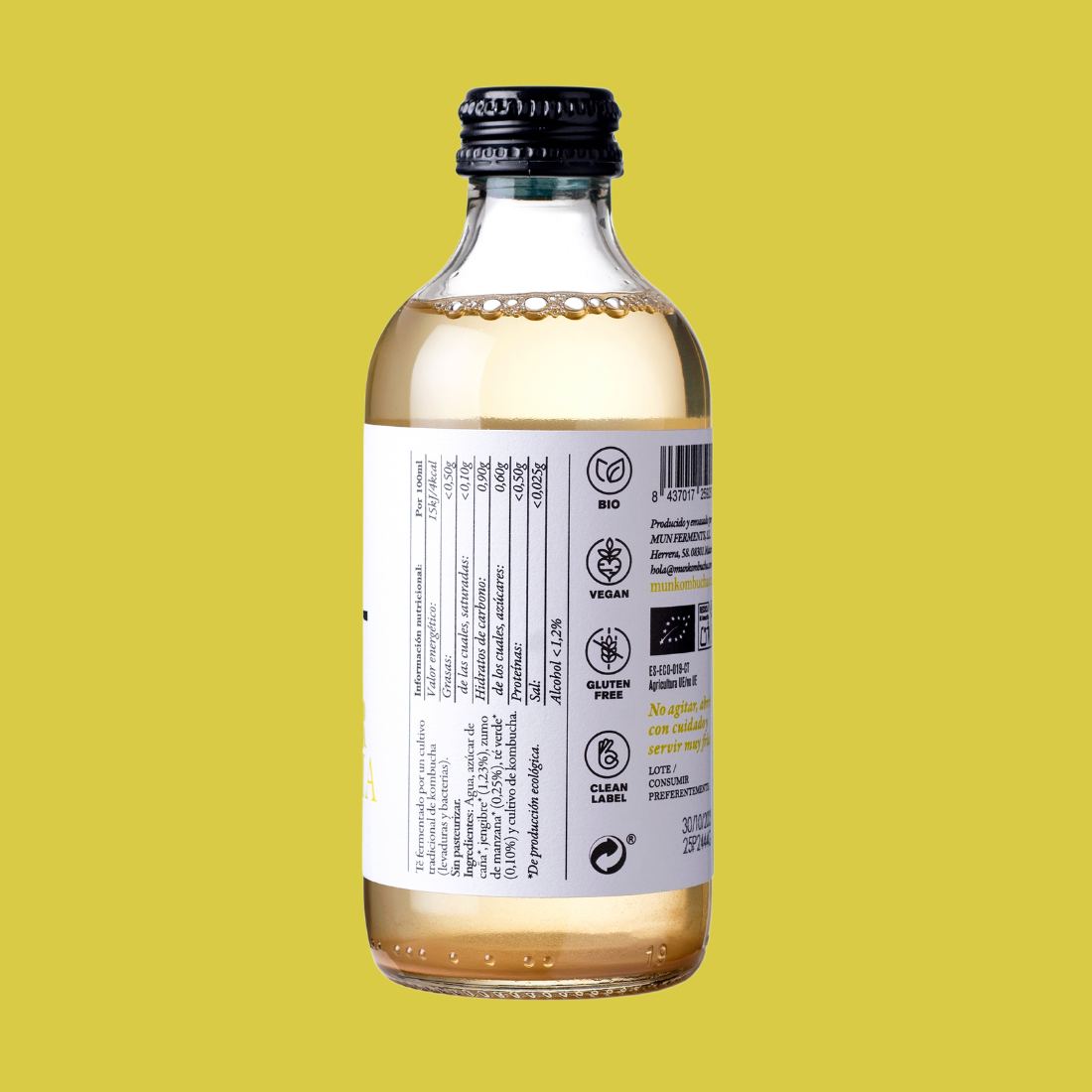
Mūn Ginger Kombucha is vegan and gluten-free. The other ingredients (juice, lemon, apple, ginger) are also. Recipe suitable.
How many calories are in a glass?
A 250 ml glass provides approximately 55 kcal, almost all from the apple juice. Much lower than traditional cider (around 110 kcal) or cava (around 200 kcal).
Other kombucha recipes
- Homemade Probiotic Lemonade with Kombucha
- Kombugin: Non-Alcoholic Cocktail with Kombucha and Tonic
- Non-Alcoholic Kombucha Mojito
Recipe developed by the Mūn team. Mūn recipes are designed to integrate kombucha into daily life without complications.