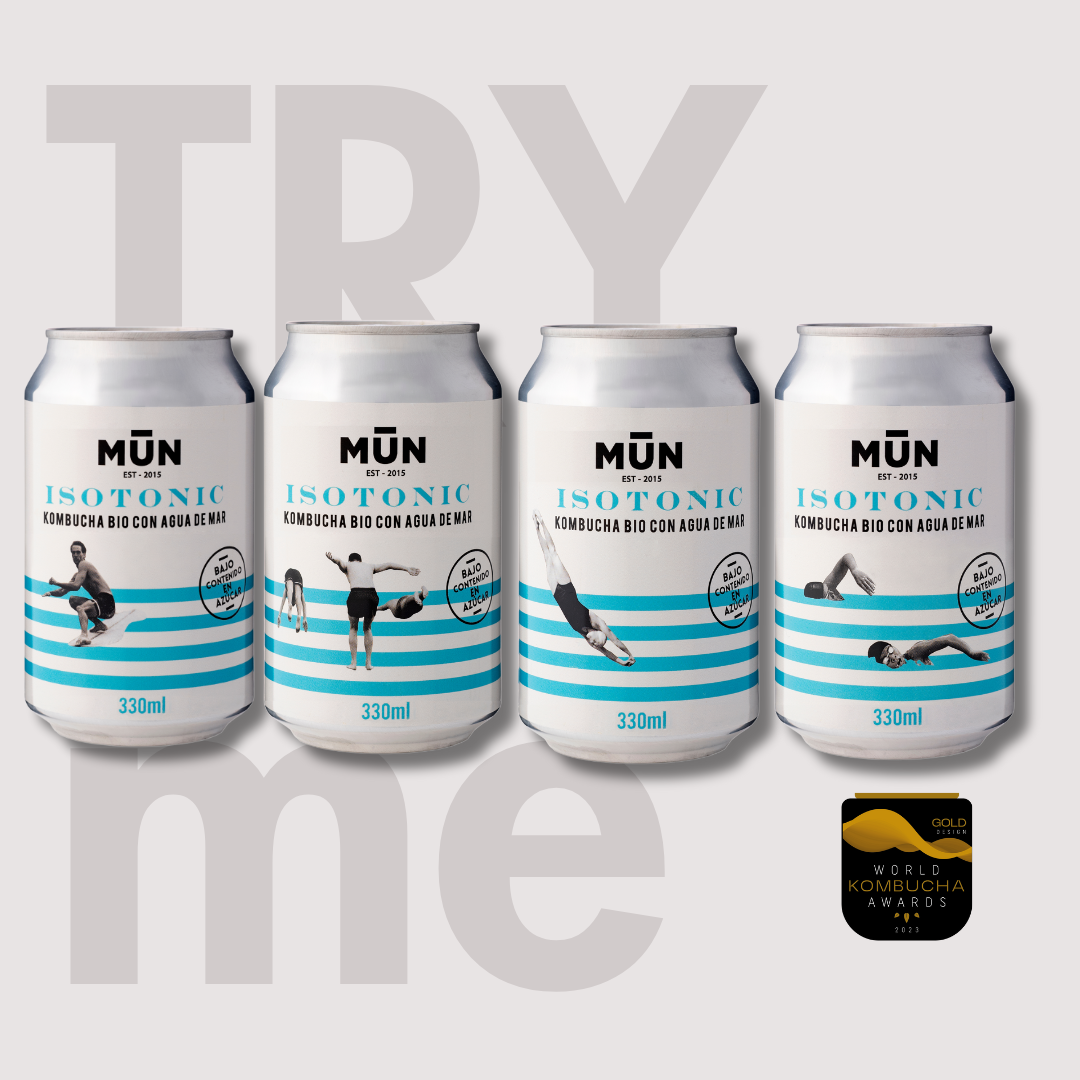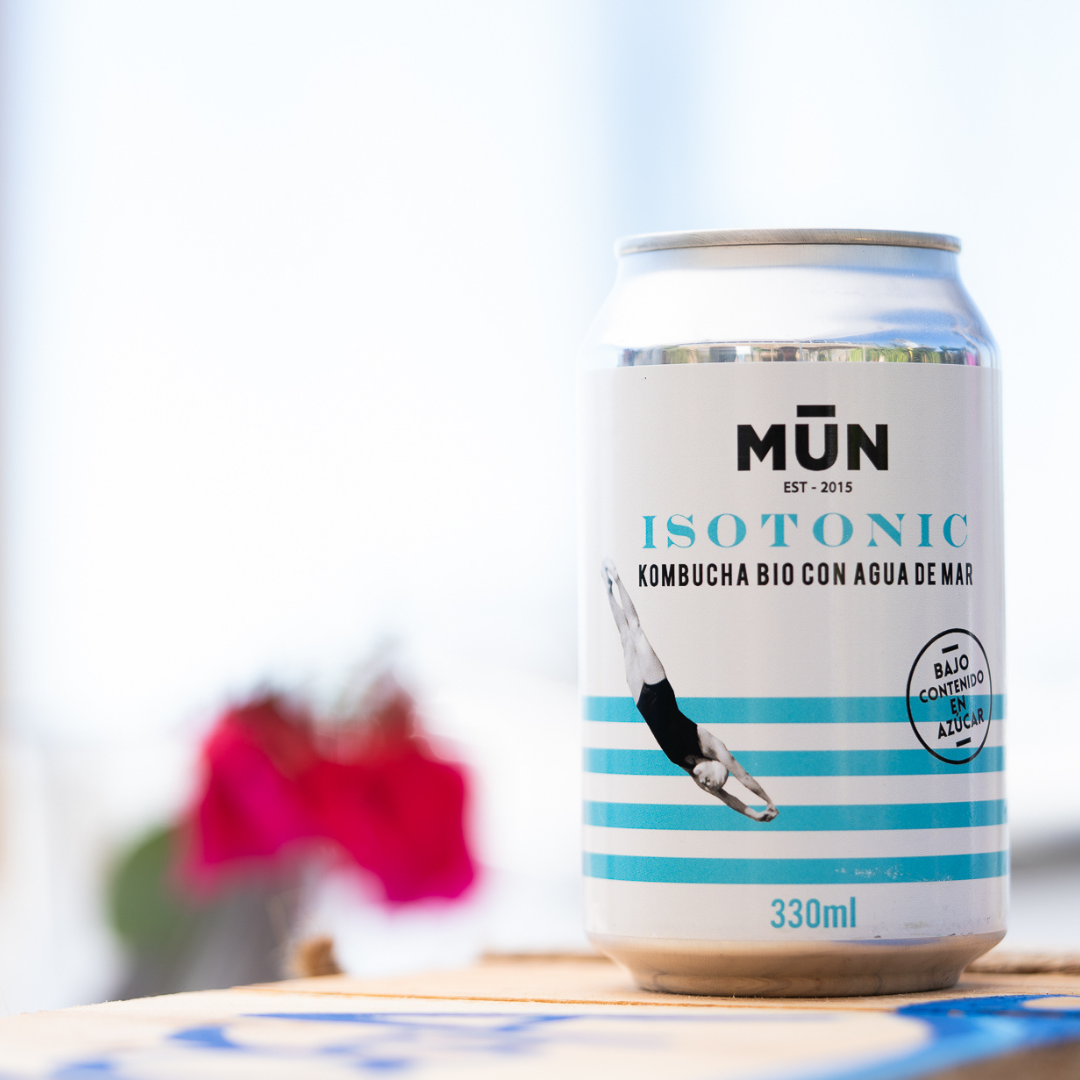
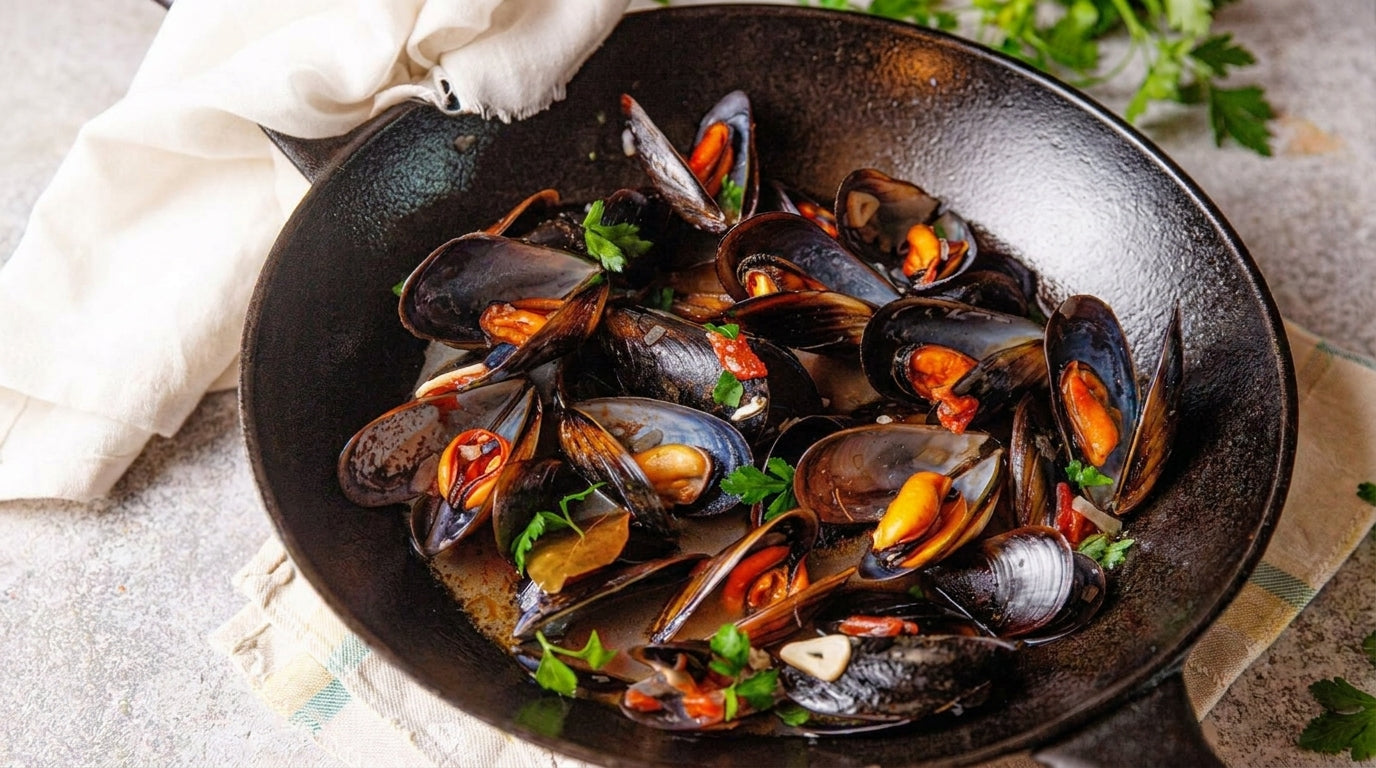
Sailor-style mussels are one of the most popular dishes in Spanish cuisine: quick, economical, light, and full of flavor. This version swaps traditional white wine for Mūn Isotonic Kombucha, a kombutxa made with isotonic seawater. The result is a sauce with natural marine mineralization and practically no alcohol. Recipe by @ma_petite_bouchee. 19 minutes total.

Why swap white wine for kombutxa
Classic sailor-style mussels include white wine. It serves three functions: it provides acidity, reduces during cooking concentrating flavors, and helps open the shells with its pH.
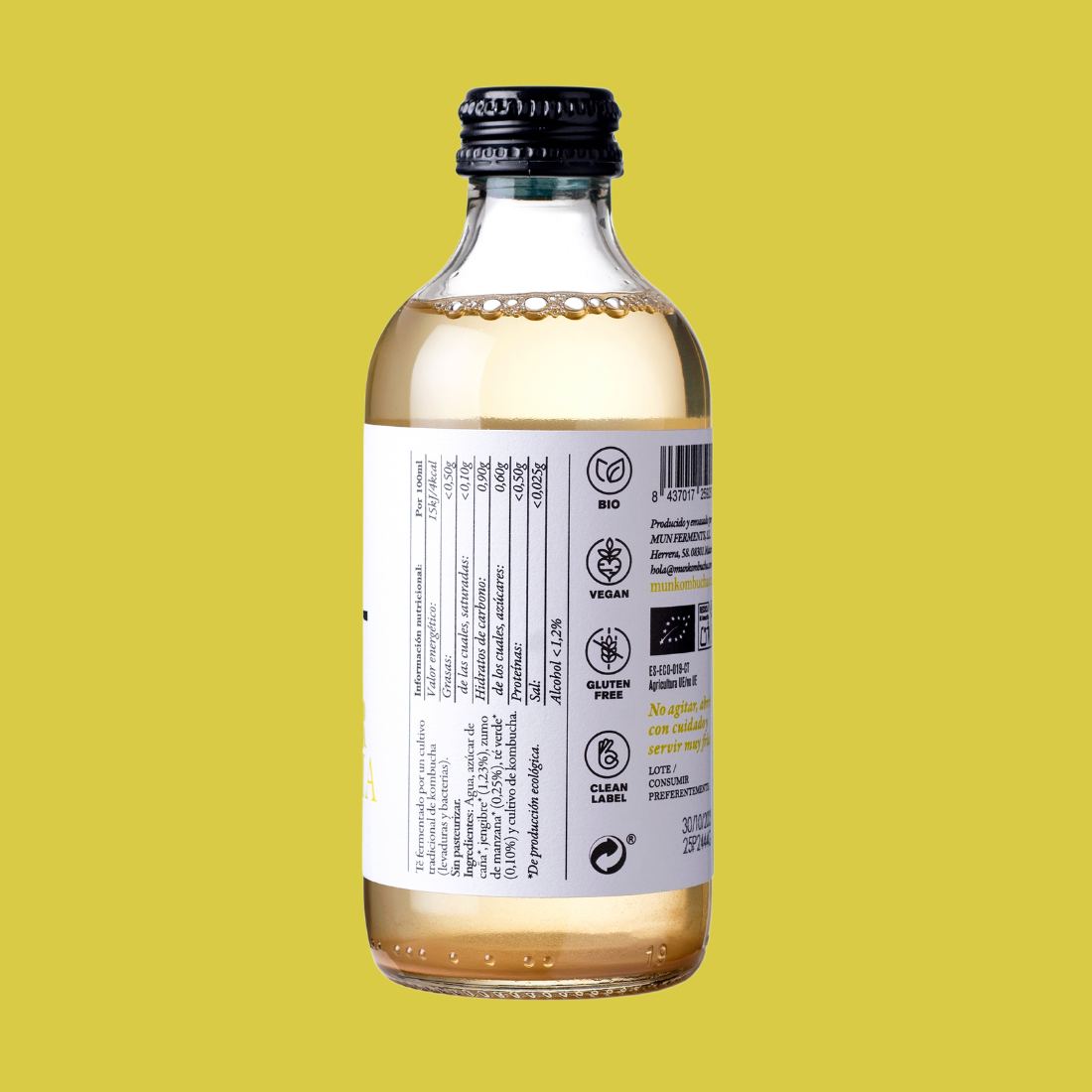
Mūn Isotonic Kombucha does exactly the same, better:
- Acidity: the organic acids from fermentation (acetic, gluconic, glucuronic) provide clean acidity, without the residual sweetness of wine.
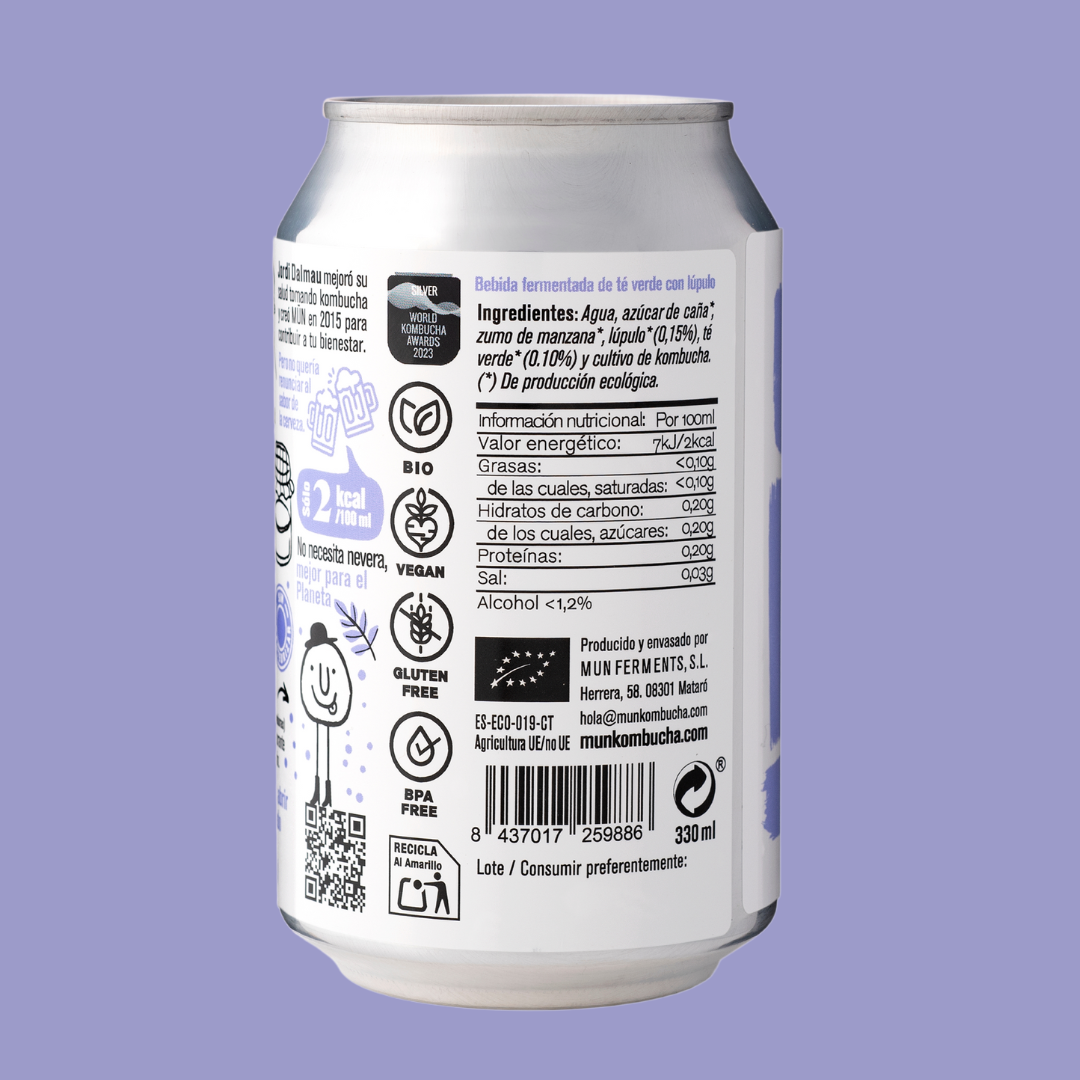
- Marine mineralization: it is made with isotonic seawater with +30 natural minerals (sodium, magnesium, potassium, calcium, iodine...). It enhances the marine character of the dish.
- Almost alcohol-free: less than 0.5% vs 11-12% for wine. Suitable for all audiences.
- No added sulfites: unlike wine, which almost always contains them.
The result is a cleaner sailor-style sauce, with a natural mineral base and a more complex acidity profile.
Step-by-step recipe
Ingredients (4 servings)
- 600 g fresh mussels
- 250 ml Mūn Isotonic Kombucha
- 2 sliced garlic cloves
- ½ finely chopped onion
- 2 tablespoons crushed natural tomato
- 2 tablespoons extra virgin olive oil
- 1 teaspoon rice flour (thickens the gluten-free sauce)
- 2 dried bay leaves
- Chopped fresh parsley
- Salt and pepper to taste
Preparation
- Clean the mussels. Wash them under cold water. Pull on the "beards" to remove them. Discard any mussel that is open and does not close when tapped.
- Make the sofrito. In a wide pot with a lid, heat the oil over medium-low heat. Add the sliced garlic, chopped onion, crushed tomato, and rice flour. Sauté, stirring for 4 minutes until the onion is translucent.
- Add bay leaf and kombutxa. Add the bay leaves and Mūn Isotonic Kombucha. Increase to medium heat and cook for 4 minutes for the sauce to start reducing.
- Cook the mussels. Add the cleaned mussels to the pot. Cover and increase to medium-high heat. Wait 3-5 minutes until all the shells open. Discard any that have not opened.
- Rest and serve. Remove from heat. Let the sauce rest for 2 minutes. Sprinkle generously with chopped fresh parsley. Serve immediately with bread for dipping.
Times and facts
| Stage | Duration |
|---|---|
| Preparation | 7 minutes |
| Cooking | 12 minutes |
| Calories (per 100 g) | ~71 kcal |
| Estimated cost (4 servings) | ~€2.89 |
How to choose good mussels
The success of this recipe starts at the fishmonger:
- Shells closed or that close when tapped. Discard any that are open and do not react.
- Clean sea smell, never ammonia. If they smell bad, don't buy them.
- Shiny shells without cracks. A broken shell = lost mussel.
- Adequate weight: they should feel heavy for their size. If they are very light, they might be empty.
- Fresh vs Galician: Galician rock mussels (PDO) are the most renowned. More expensive but worth it for this recipe.
Variations
- Spicy: add a dried chili or a pinch of cayenne to the sofrito.
- With fresh tomato: substitute the crushed tomato with 2 peeled and chopped fresh tomatoes. Better in summer.
- With pepper: add ½ roasted red pepper in strips to the sofrito.
- Without flour: remove the rice flour for a lighter sauce. The texture will be less thick.
- With white wine + kombutxa: if you want to keep some of the wine, use 125 ml of each. It adds more complexity but increases the alcohol.
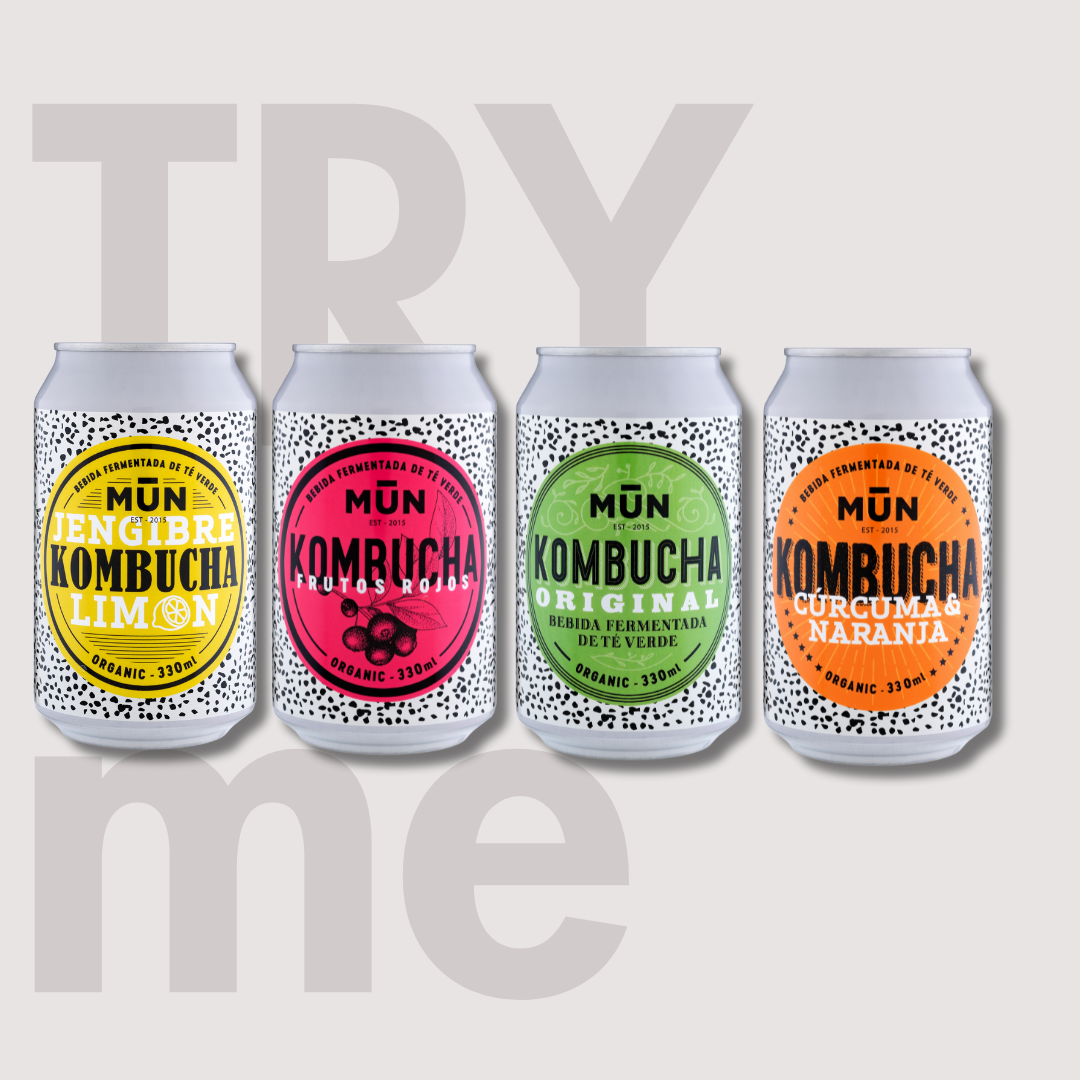
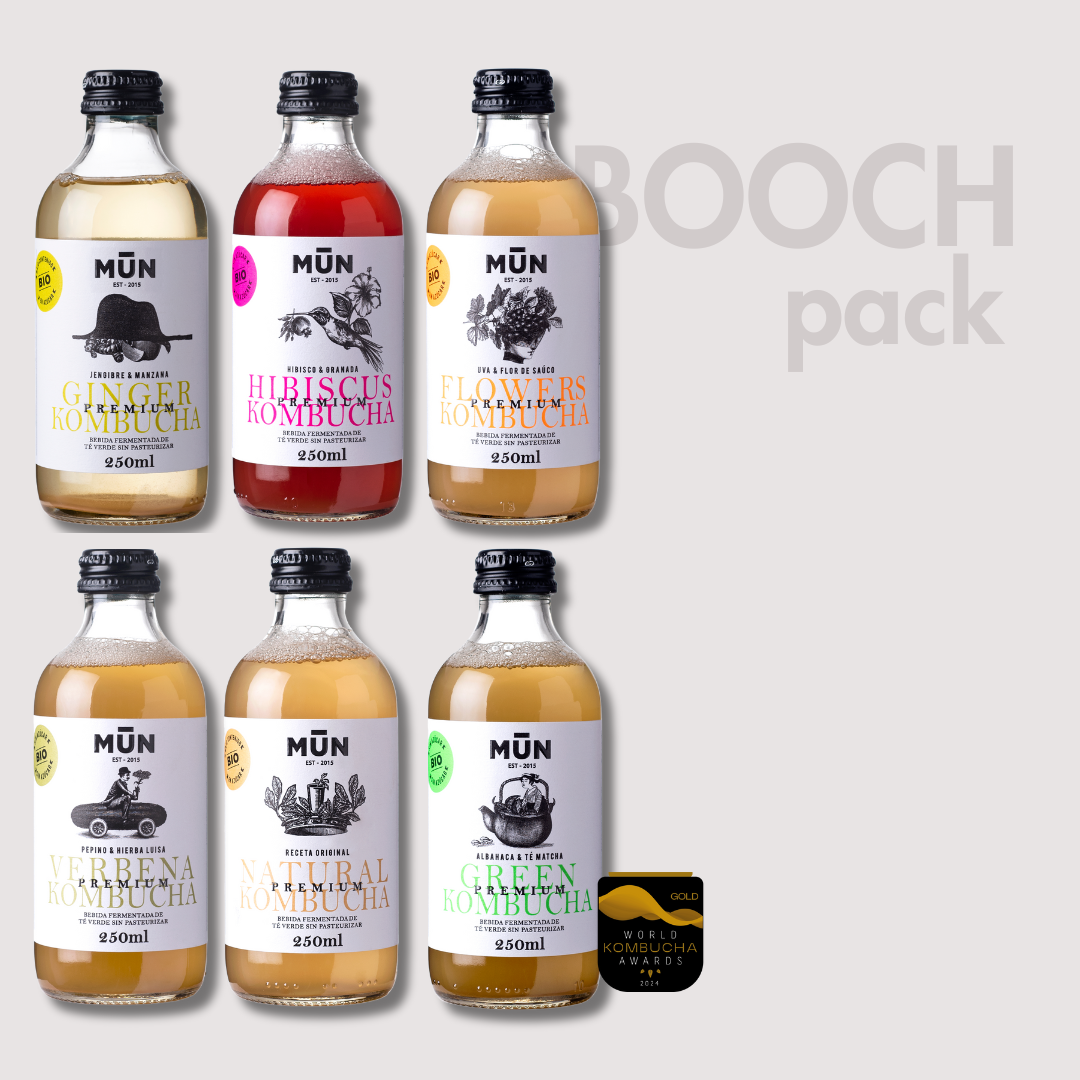
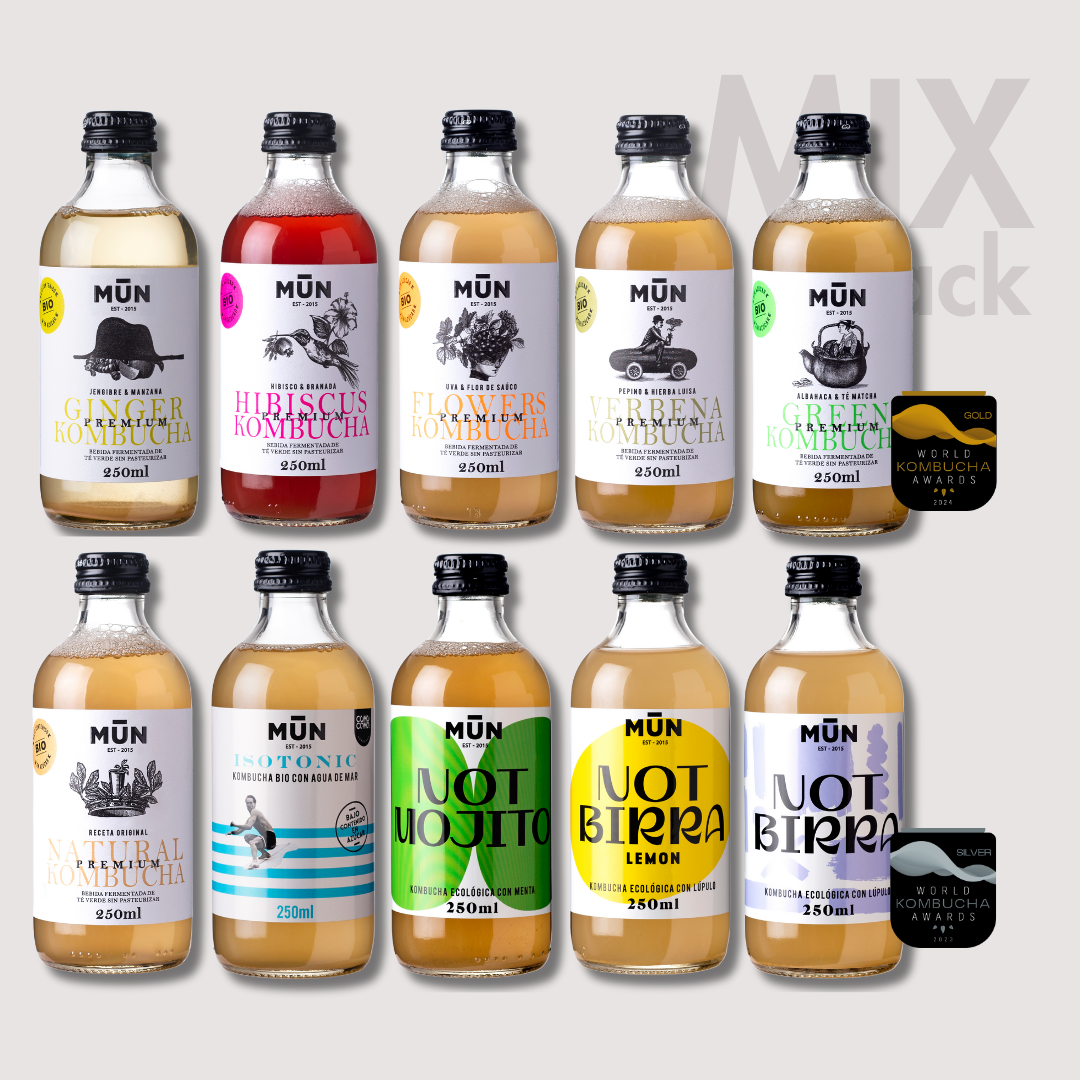
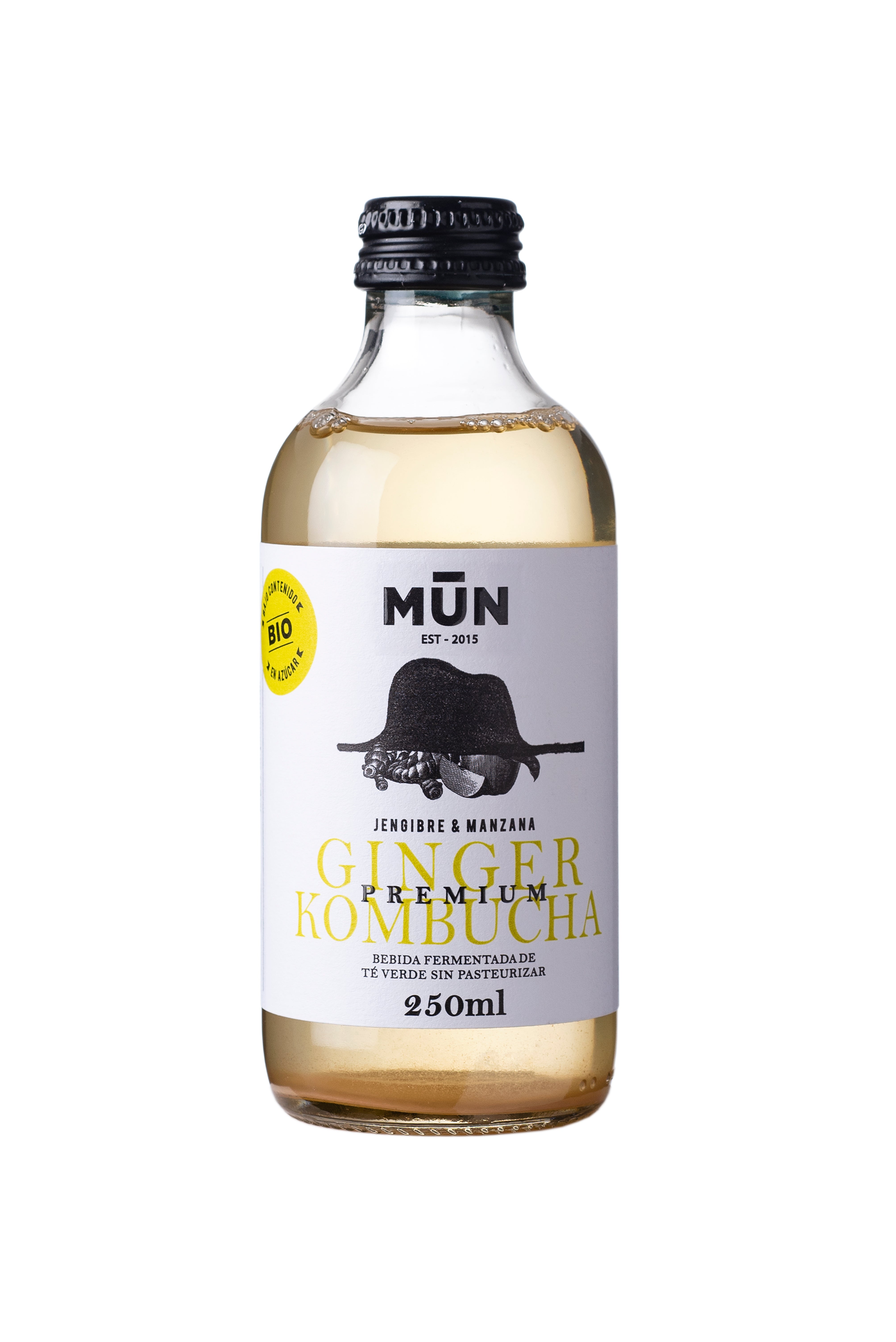
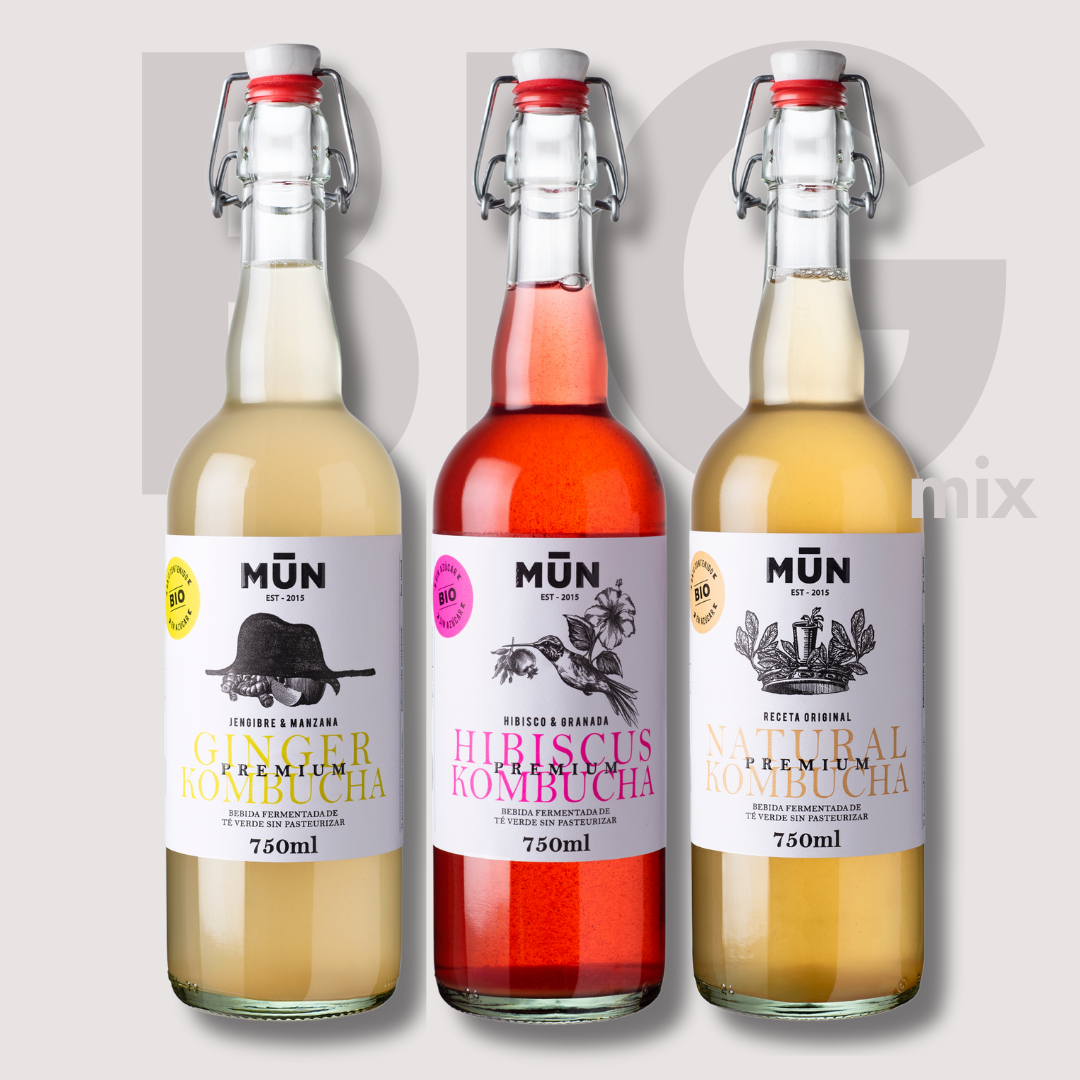
- With another Mūn: if you don't have Isotonic, it also works with NATURAL or GINGER. Each variety offers a different profile: NATURAL is neutral (closer to wine), GINGER adds a spicy touch.
Common mistakes
- Not cleaning the beards properly: ruins the bite. Remove them all.
- Overcooking the mussels: they become rubbery. As soon as they open, remove from heat.
- Open lid: mussels need steam to open. Keep the pot covered during cooking.
- Excess salt: mussels and Isotonic kombutxa already provide sodium. Taste before salting.
- Serving cold: sailor-style mussels are best hot, freshly made. Don't let them rest too long.
Pairing
These mussels pair very well with:
- Well-chilled Mūn Isotonic Kombucha served in a wine glass. It completes the circle with the sauce.
- Mūn VERBENA Kombucha if you prefer a more herbaceous profile (cucumber + lemon verbena).
- Toasted rustic bread for dipping in the sauce. Essential.
- Simple green salad with lettuce and lemon to alternate bites.
Frequently Asked Questions
Can I use frozen mussels?
You can, but the texture is not the same. If you use them, thaw in the refrigerator for 12 hours and reduce cooking time to 2-3 minutes (they are already partially cooked).
How many mussels per person?
As a starter or tapa, 150 g per person. As a main course, 250-300 g per person.
Does the kombutxa change the flavor?
Yes, subtly. The sauce is slightly less sweet than with wine and has a natural mineral base from the seawater. Most blind tasters don't detect kombutxa, only that the sauce is "cleaner".
Is there leftover sauce? What do I do?
The sailor-style sauce with kombutxa is excellent as a base for rice the next day, or for dipping bread. It keeps for 2 days in the refrigerator.
Suitable for coeliacs?
Yes, if you use rice or corn flour (recommended). Mūn kombutxa is naturally gluten-free.
Suitable for pregnant women?
Mūn kombutxa has less than 0.5% alcohol (within the legal limit for non-alcoholic beverages). In any case, consult your medical professional regarding seafood consumption during pregnancy.
When to make them
Sailor-style mussels work especially well for:
- Sunday appetizer: the classic family after-dinner dish.
- Quick dinners: 19 minutes from fridge to plate.
- Summer: it's a fresh, seafood dish, ideal after the beach.
- Christmas and gatherings: as an elegant tapa on tables with many guests. (Fact: searches for "sailor-style mussels" double in December).
- Picnics: in glass jars, they are a good option for a culinary excursion.
Other seafood recipes with kombutxa
Original recipe by @ma_petite_bouchee.