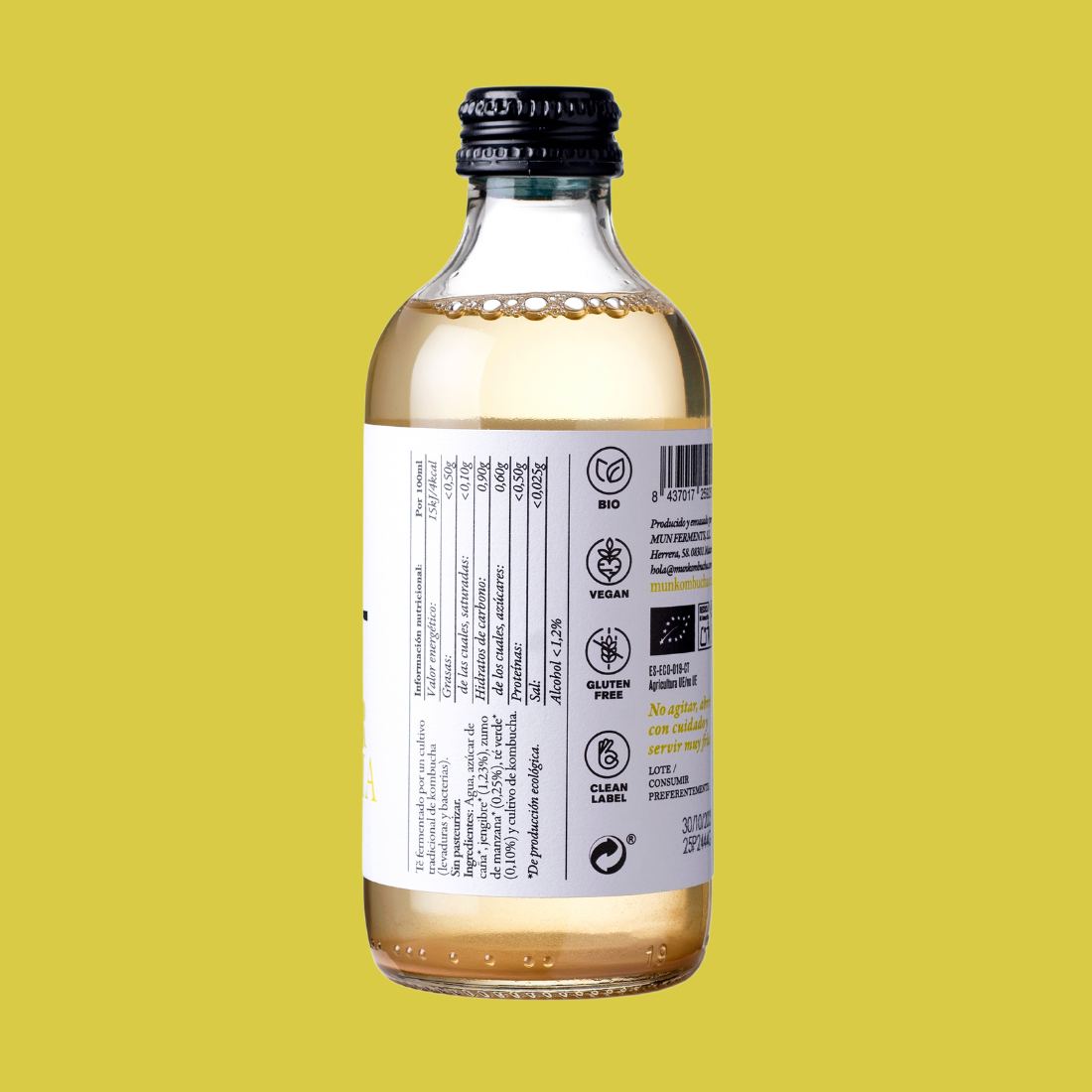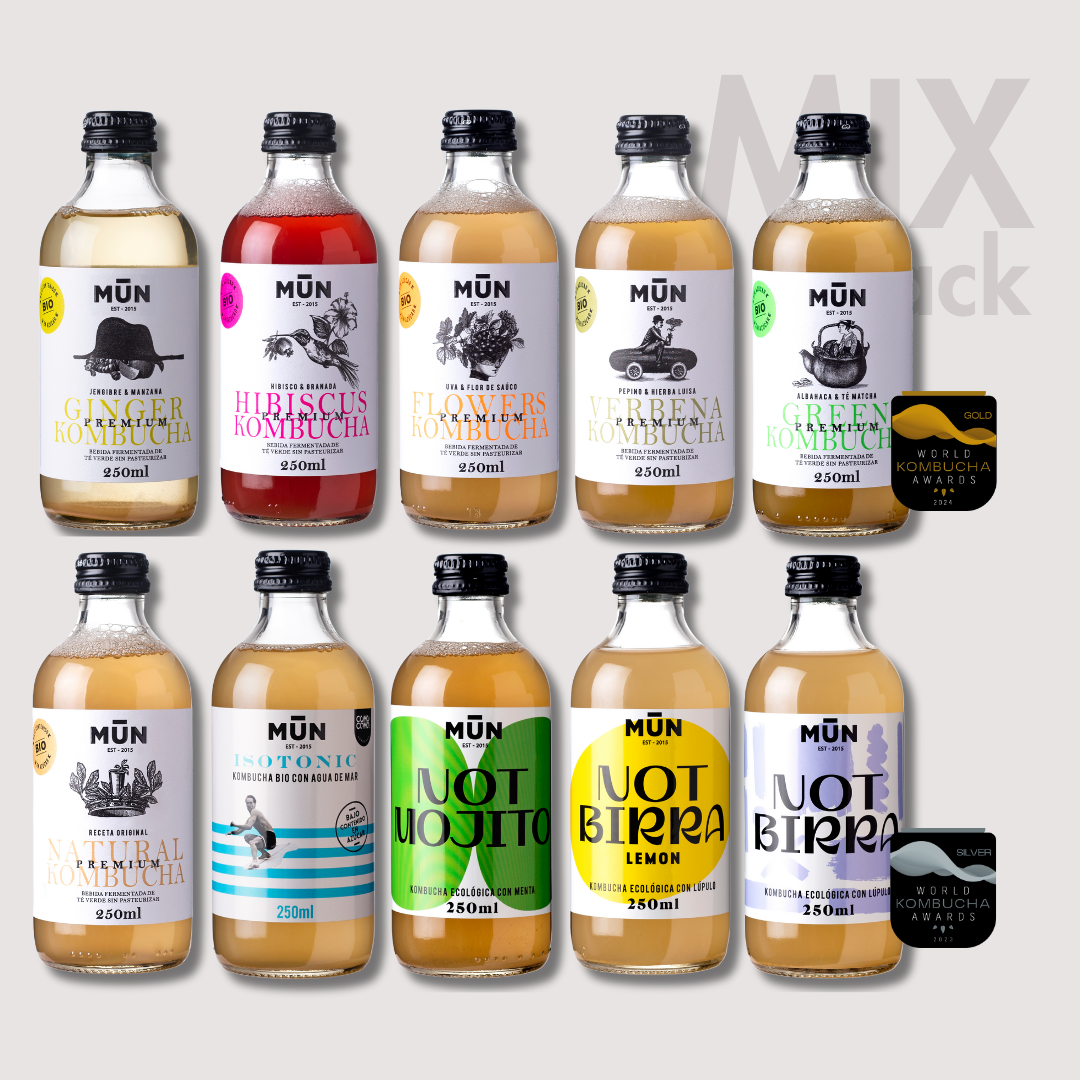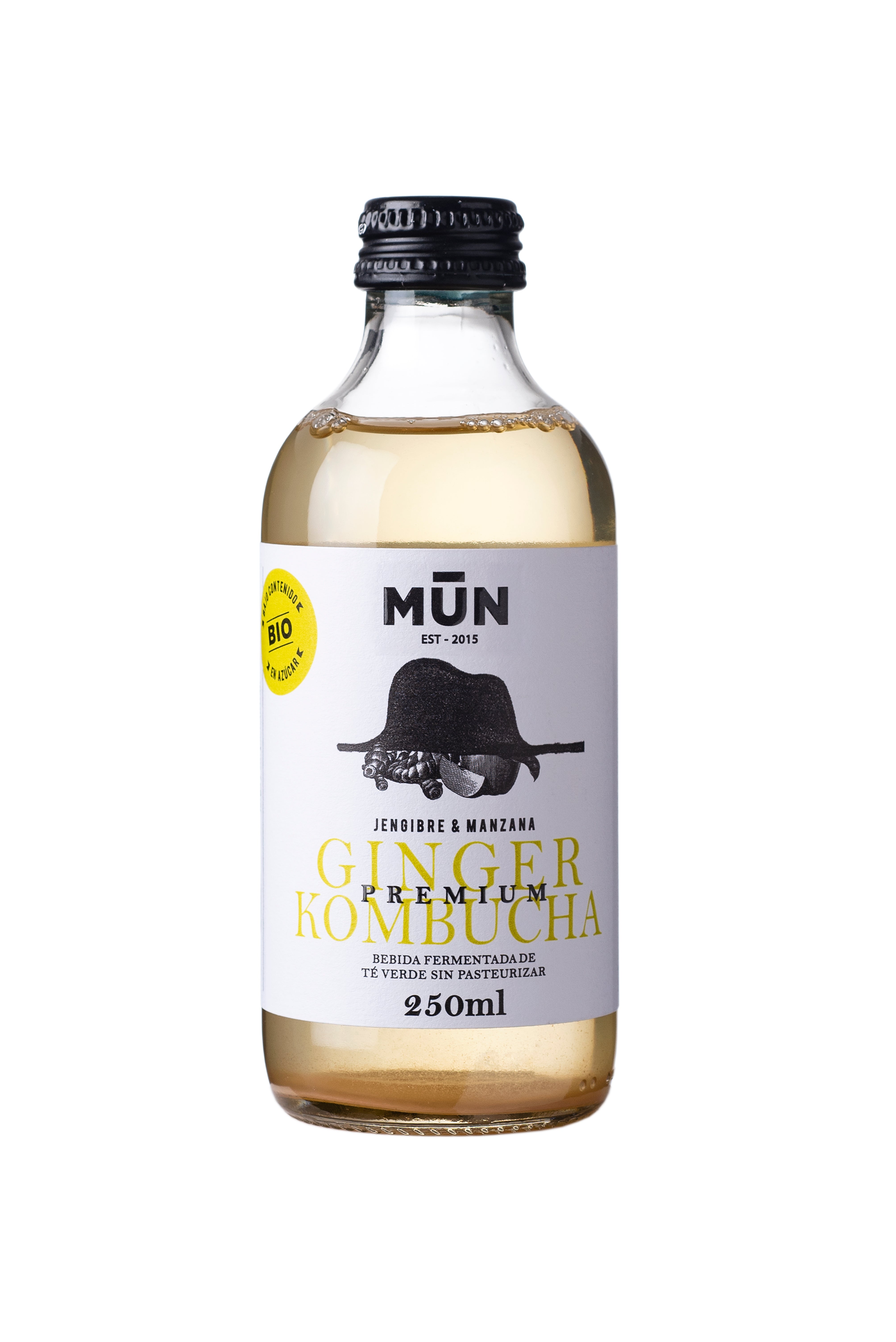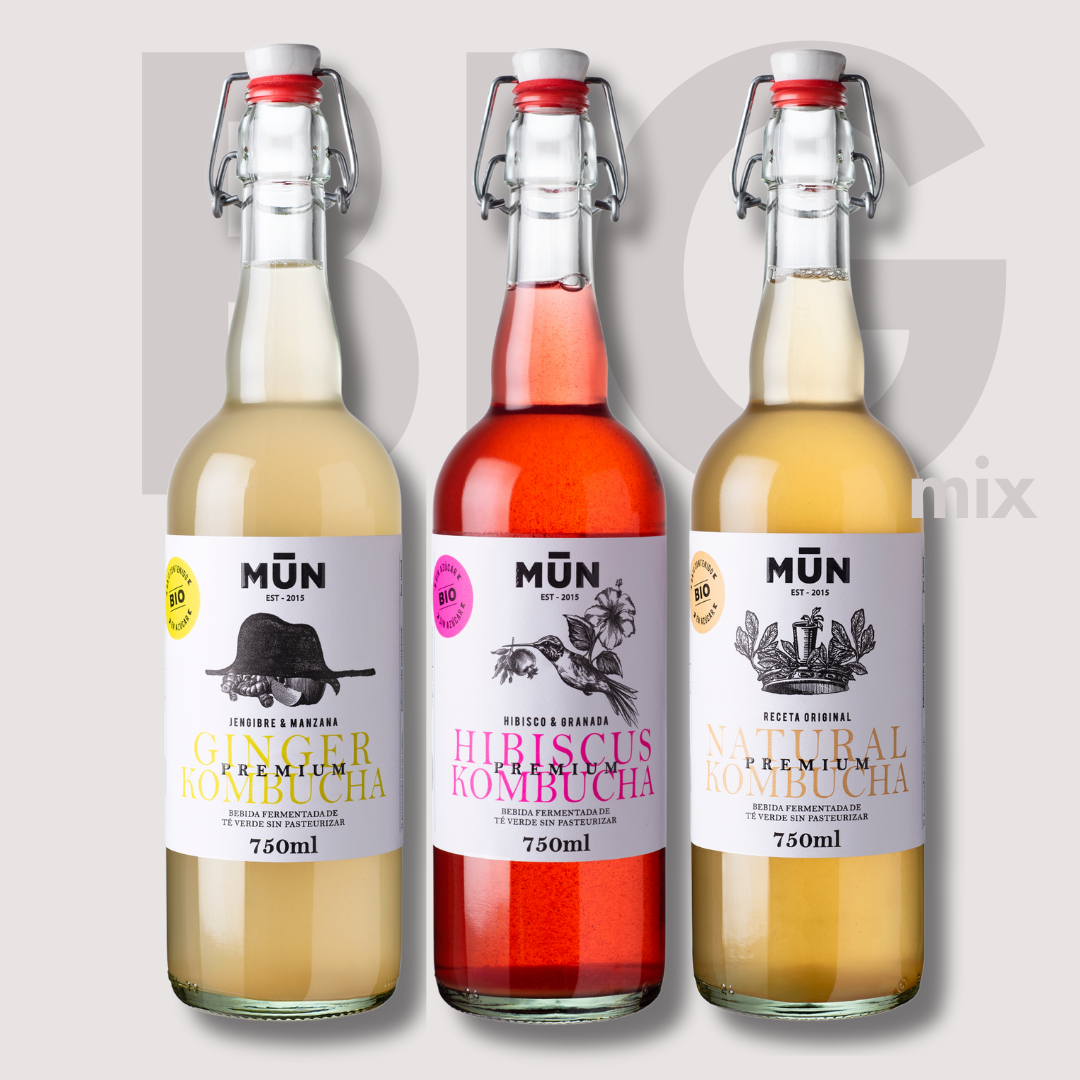
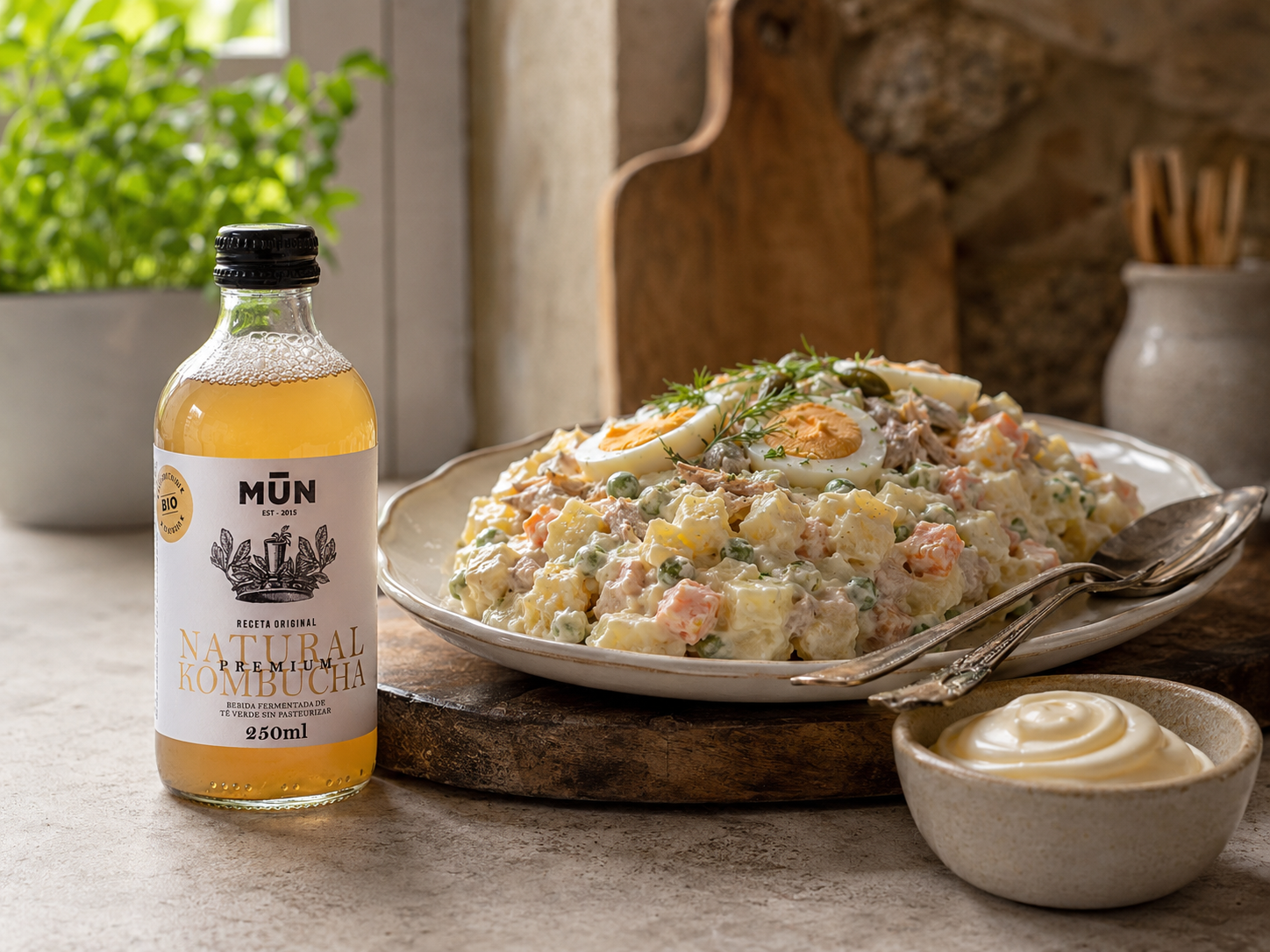
The ensaladilla rusa is one of the most representative tapas of Spanish cuisine, present in bars throughout the peninsula for over a century. In this recipe, we replace the traditional lemon or vinegar in the mayonnaise with a tablespoon of Natural Kombucha, which provides just the right acidity and a slightly livelier and more digestive profile, without altering the classic result.
The technique is the usual: cooked potato and carrot, tuna in oil, boiled egg, green olives, peas, and a firm homemade mayonnaise that envelops the whole. The trick is in the mayonnaise: with Mūn Natural Kombucha we achieve a stable emulsion, with natural acidity from fermented tea, without the need for industrial vinegars or bottled lemon juice.
What is ensaladilla rusa
Despite its name, the ensaladilla rusa served in Spain has little to do with the original 19th-century Russian Olivier. The Spanish version became popular in the early 20th century and established itself as a bar tapa during the post-war period, when ingredients (potato, carrot, canned tuna, egg, mayonnaise) were accessible and allowed large quantities to be prepared for several days.
Today it is a staple dish in bars all over Spain, especially in Madrid, Andalusia, and the Cantabrian coast, where each household keeps its variant. The constants: diced cooked potato, plenty of homemade mayonnaise, and a garnish of olives or bell pepper.
Ingredients for 6 servings
For the ensaladilla
- 600 g Monalisa or Kennebec potatoes
- 200 g carrots
- 3 free-range eggs
- 2 cans of tuna in olive oil (160 g drained)
- 100 g pitted green olives
- 150 g cooked peas (fresh or canned)
- Fine salt
For the homemade mayonnaise with kombucha
- 1 egg at room temperature
- 200 ml sunflower oil (or half sunflower, half mild olive oil)
- 1 tablespoon of Mūn Natural Kombucha (replaces lemon or vinegar)
- 1 pinch of salt
Step-by-step preparation
1. Cook the vegetables and eggs
Peel the potato and carrot and cut them into regular 1.5 cm cubes. Put plenty of salted water in a pot, bring to a boil, and add the carrot first (8 minutes), then the potato (10 more minutes). Pierce with a toothpick: it should go in without resistance but without falling apart. Drain and let cool on a spread-out tray.
Boil the eggs for 10 minutes from when the water boils. Rinse them under cold water, peel, and set aside.
2. Prepare the mayonnaise with Natural Kombucha
In the blender cup, place the whole egg, the tablespoon of Mūn Natural Kombucha, and a pinch of salt. Add the oil on top without blending yet. Insert the blender to the bottom, set it to minimum speed, and hold it still for 10 seconds: you will see how it emulsifies from the bottom. Slowly lift the blender to integrate all the oil. It should be firm and shiny.
The kombucha provides two things here: acidity (replaces lemon) and a slightly fermented touch that pairs very well with tuna and olives.
3. Mix and rest
In a large bowl, combine potato, carrot, two chopped boiled eggs, flaked tuna, sliced olives, and drained peas. Add the mayonnaise little by little and mix with a spatula until all ingredients are well coated without breaking the potato. Adjust salt to taste.
Transfer to a serving dish, smooth the surface with a spatula, and decorate with the remaining grated boiled egg on top and a few strips of bell pepper if you like. Refrigerate for at least 1 hour before serving.
Timings
- Preparation: 30 minutes
- Cooking: 15 minutes
- Refrigeration: 1 hour
- Total time: 1 hour 30 minutes
- Servings: 6
Why Natural Kombucha in mayonnaise
Traditional mayonnaise is acidified with lemon or vinegar. Bottled lemon often contains preservatives and provides a flat taste; industrial wine vinegar can be aggressive. Mūn Natural Kombucha is fermented tea with live culture: it provides organic acidity (mainly acetic and gluconic acid from fermentation) in a much more complex matrix, with subtle notes of apple and tea.
The result in the mayonnaise is a stable emulsion, with a balanced acidic base and without the aggressive bite of vinegar. One tablespoon per 200 ml of oil is sufficient.
Accompaniments
Ensaladilla rusa is traditionally served with:
- Picos andaluces or regañás for dipping
- Toasted breadsticks
- A slice of toasted rustic bread
- As a tapa, on toast with an anchovy on top
Variations
Vegan without egg
Replace the eggs with 200 g of pressed firm tofu and the mayonnaise with a version made with 100 ml unsweetened soy milk, 200 ml oil, and 1 tablespoon of Natural Kombucha. Emulsify just like classic mayonnaise.
With prawns
Add 200 g of peeled cooked prawns (1 minute in boiling salted water). The prawns elevate the dish and turn it into a table starter, not just a tapa.
With albacore tuna
Replace regular tuna with albacore tuna in olive oil. More delicate fiber and cleaner flavor.
Without potato (low-carb)
Replace the potato with 500 g of al dente cooked cauliflower cut into small cubes. Reduces carbs while maintaining texture.
Spicy with piparras
Add 6-8 chopped Basque piparras and a touch of hot paprika to the mayonnaise.
With roasted pepper
Incorporate a roasted red pepper in strips, peeled and deseeded. Adds sweetness and color.
Common mistakes
Broken mayonnaise
Cause: ingredients at different temperatures or oil added too quickly. Solution: start with the egg at room temperature and do not move the blender until the emulsion starts from the bottom.
Overcooked potato
If the potato falls apart, the ensaladilla becomes mushy. Cook in already diced pieces (not whole) and monitor from minute 8 onwards.
Too much mayonnaise
The ensaladilla should be coated, not swimming. Add the mayonnaise in batches and stop when the ingredients are well covered.
Serving without resting
It needs at least 1 hour in the fridge for the flavors to integrate. Freshly made, it tastes like separate ingredients.
Olives with pits
It seems obvious but it happens: always use pitted green olives and slice them for even distribution.
Frequently asked questions
Can I use store-bought mayonnaise?
Yes, but you lose control over acidity and texture. If you use it, add half a tablespoon of Natural Kombucha when mixing it with the ingredients to lighten it and add freshness.
How long does it last in the fridge?
48 hours in an airtight container. From the second day, the mayonnaise loses its structure and the potato starts to release water.
Can it be frozen?
No. Mayonnaise separates when defrosted, and the potato loses its texture. It is a dish for immediate consumption.
Which potato is best?
Firm varieties like Monalisa, Kennebec, or Agria. Avoid floury types like Russet that fall apart when cooked.
Why kombucha and not lemon?
Kombucha provides more complex organic acidity, without the bitterness of lemon zest or the flat taste of bottled lemon. Furthermore, it is probiotic before emulsification.
Can I double the quantities?
Yes, scale linearly. For 12 servings, use 1.2 kg of potato, 400 g of carrot, and 2 eggs in the mayonnaise (with 400 ml of oil and 2 tablespoons of Natural Kombucha).
Other verified recipes with Natural Kombucha
- Swedish Meatballs with Creamy Natural Kombucha Sauce
- Vegan Basil Cheese Fermented with Kombucha
- Asparagus Risotto with Natural Kombucha
Recipe by The Mūn Team
Try Mūn Natural Kombucha
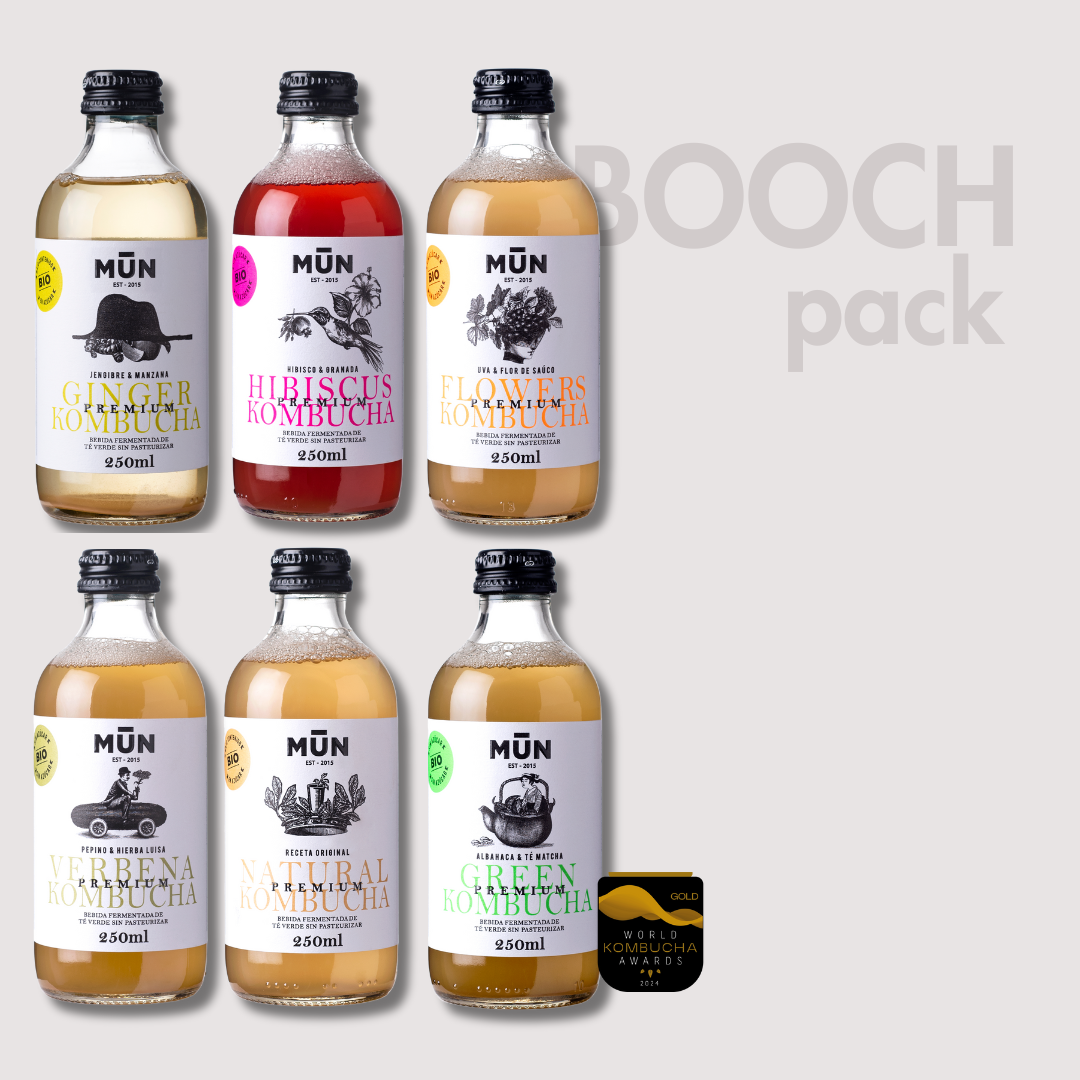
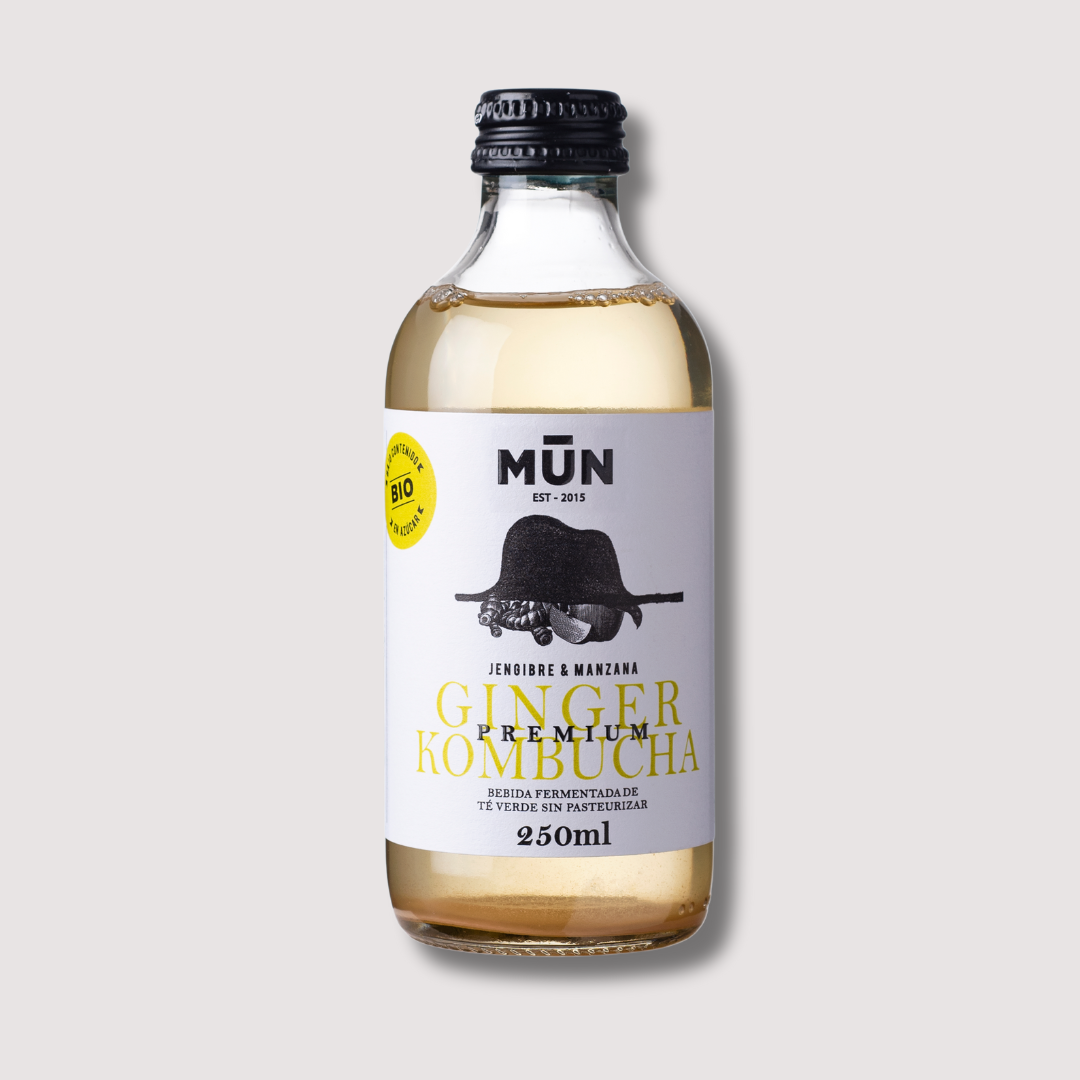
For this recipe, we use Mūn Natural Kombucha 250 ml: fermented tea with live culture, no added sugars, organic certified. One tablespoon in the mayonnaise replaces lemon with a more balanced and digestive result.