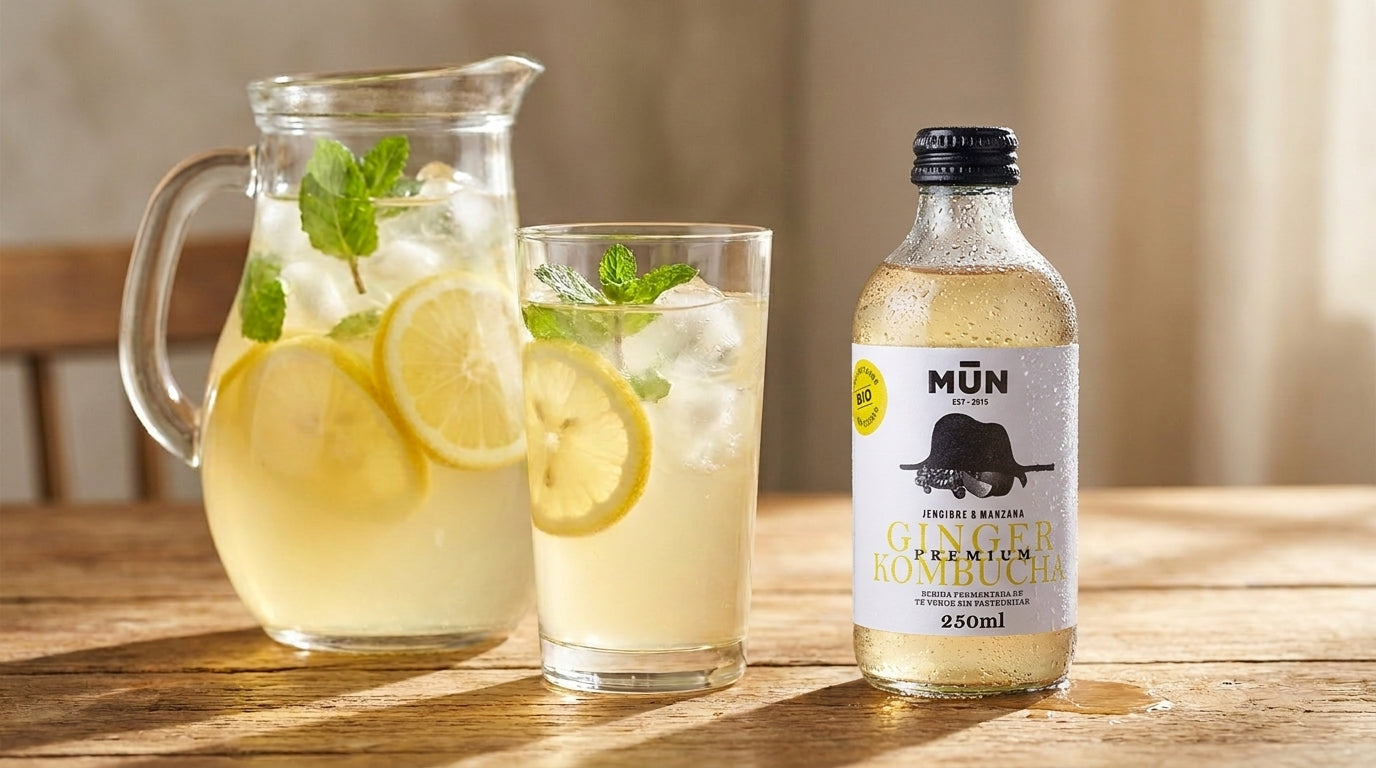
Homemade lemonade with kombucha is one of the simplest ways to transform a classic soft drink into a low-sugar fermented beverage. Seven minutes of work, fresh ingredients, and the result is an effervescent lemonade with the natural acidity of fermentation, tea polyphenols, and just the right touch of ginger.
Here you have the step-by-step recipe, a sugar-free version with stevia, the variations you would try on a weekend, the mistakes to avoid, and tricks to keep it always cold at home.

Why Make Homemade Lemonade with Kombucha
A traditional homemade lemonade —lemon juice, water, sugar— works very well to quench thirst, but it carries two problems: it contains a lot of sugar (between 8 and 10 g/100 ml in standard recipes) and provides nothing beyond basic hydration with vitamin C.
When you replace part of the water and almost all the sugar with well-fermented kombucha, three things happen:
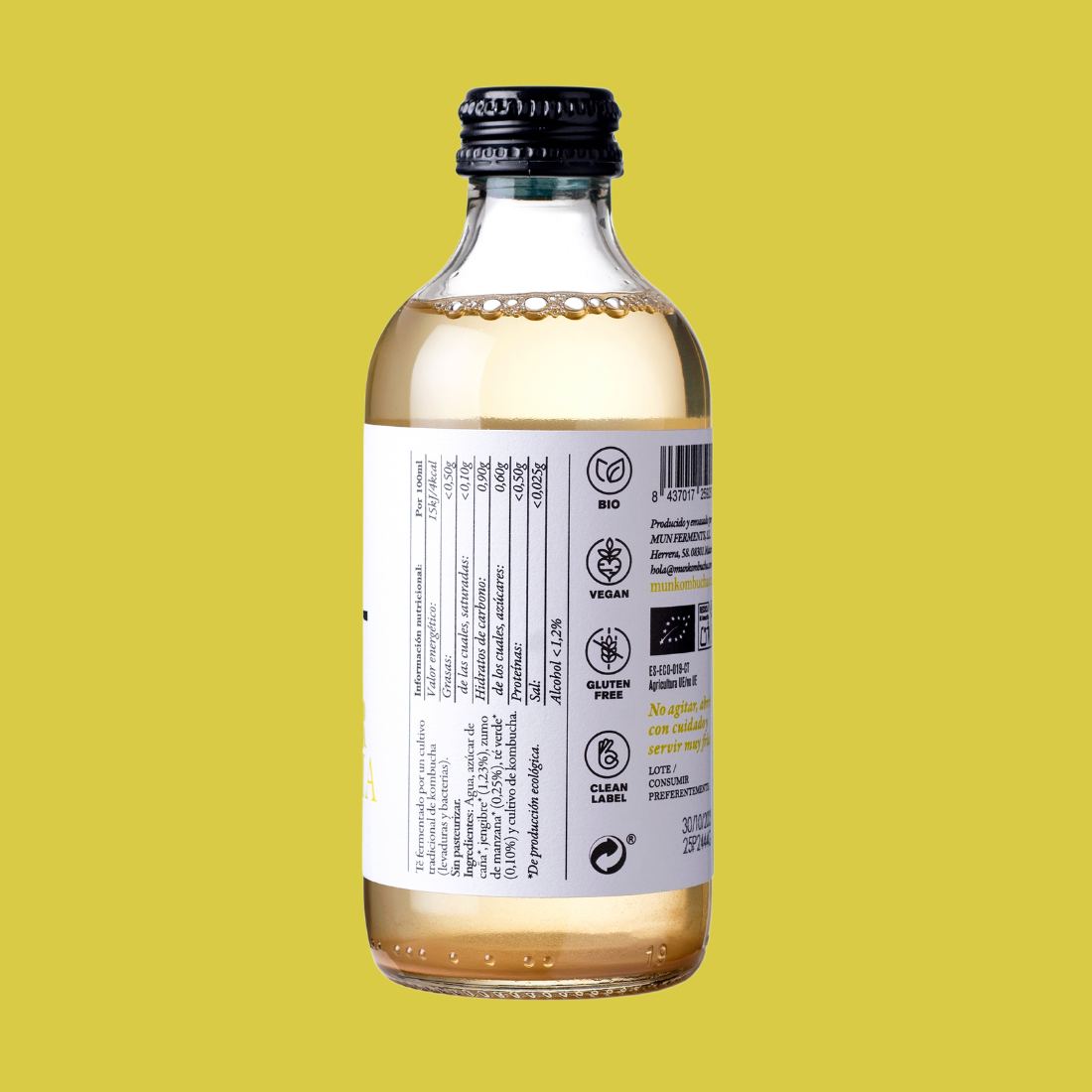
- Total sugar drastically decreases. A Mūn PREMIUM GINGER has 0.6 g of residual sugar per 100 ml. The resulting lemonade is around 2-3 g/100 ml, compared to 8-10 g/100 ml of the classic version.
- Natural effervescence appears. The gas comes from fermentation, not from added CO₂.
- Live cultures and organic acids from the kombucha (acetic, gluconic, glucuronic) are incorporated, adding depth to the flavor without the need for extras.
The result is a more adult, less cloying drink that you can have with food or between meals without the sticky sensation of a soft drink.
Which Mūn Variety to Choose and Why
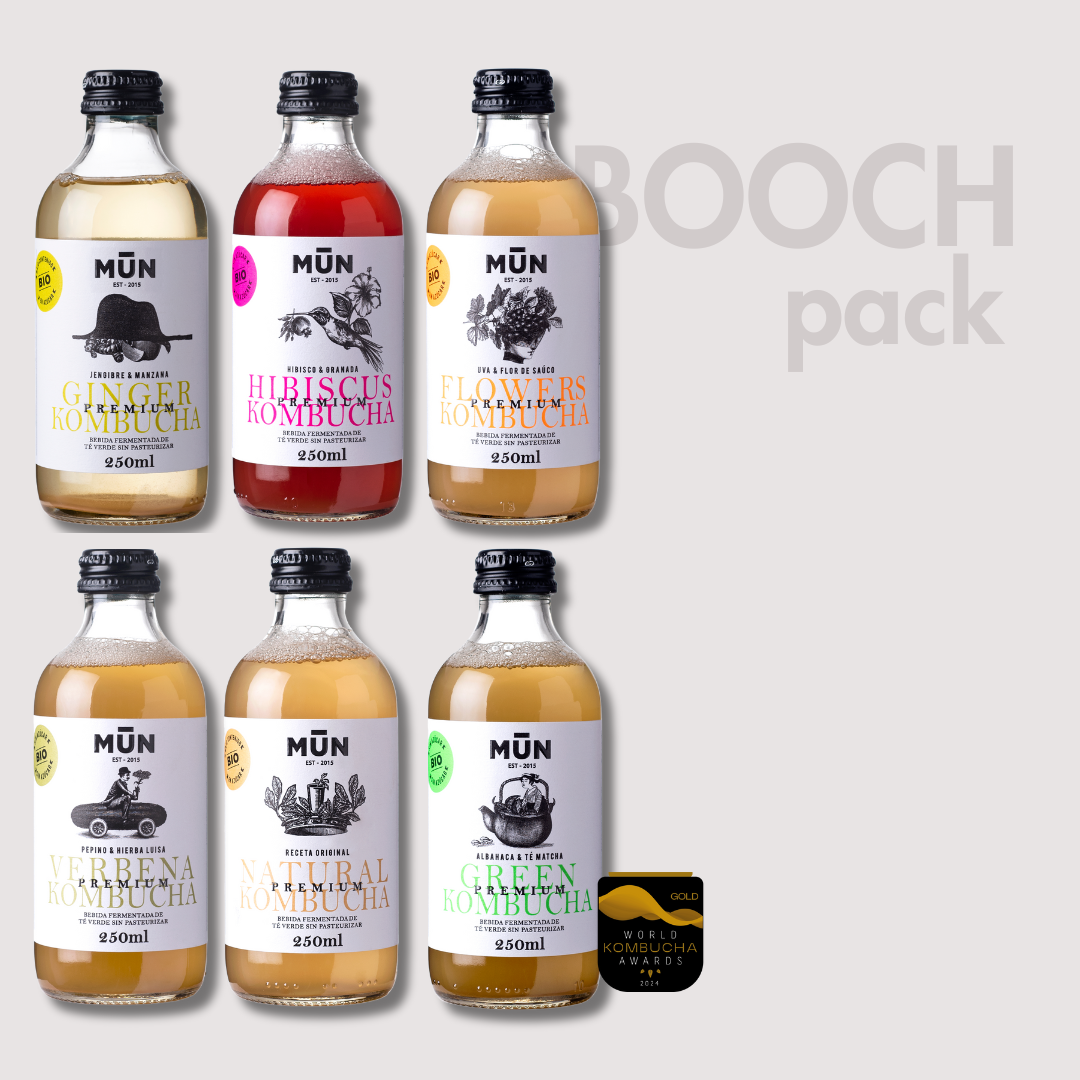
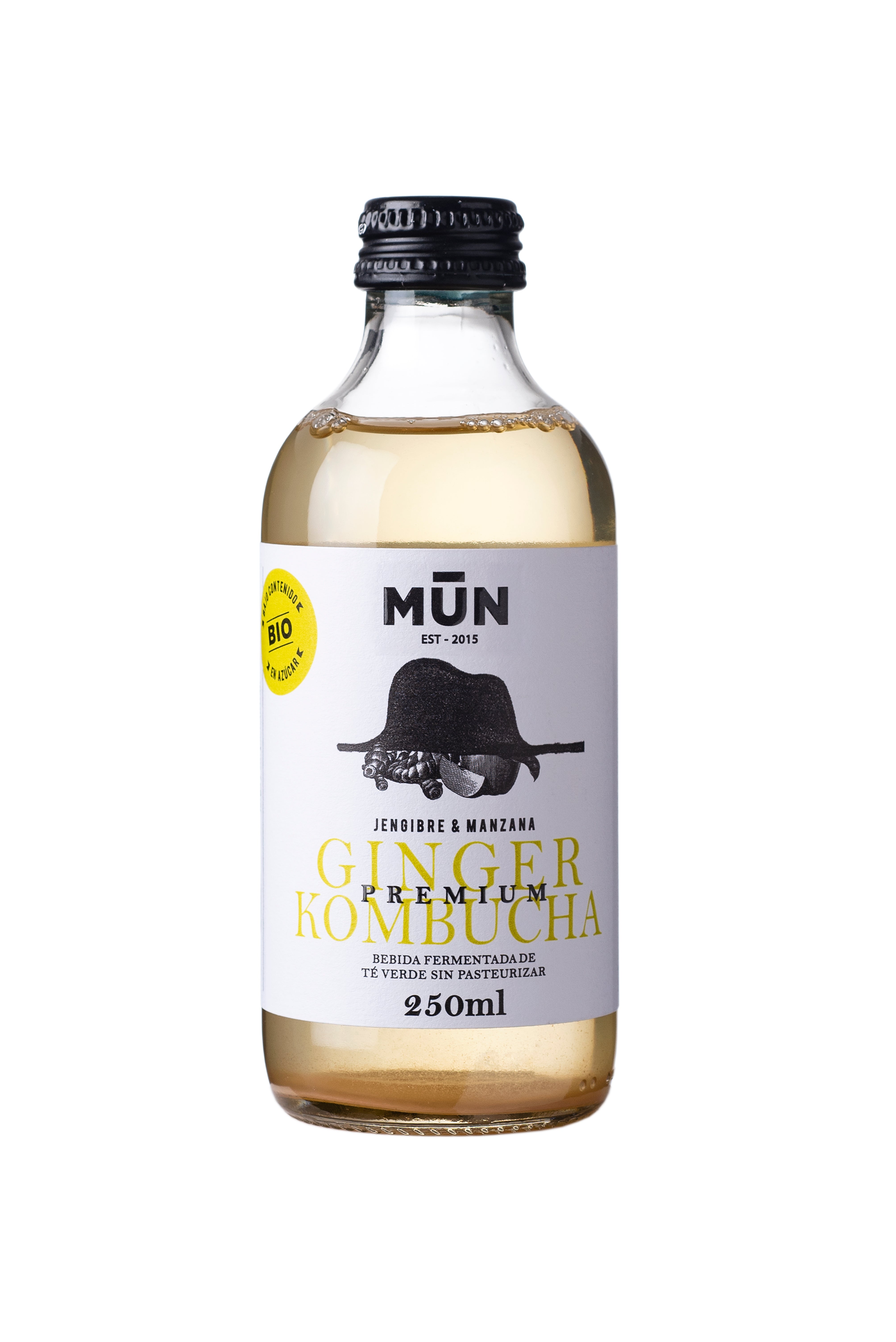
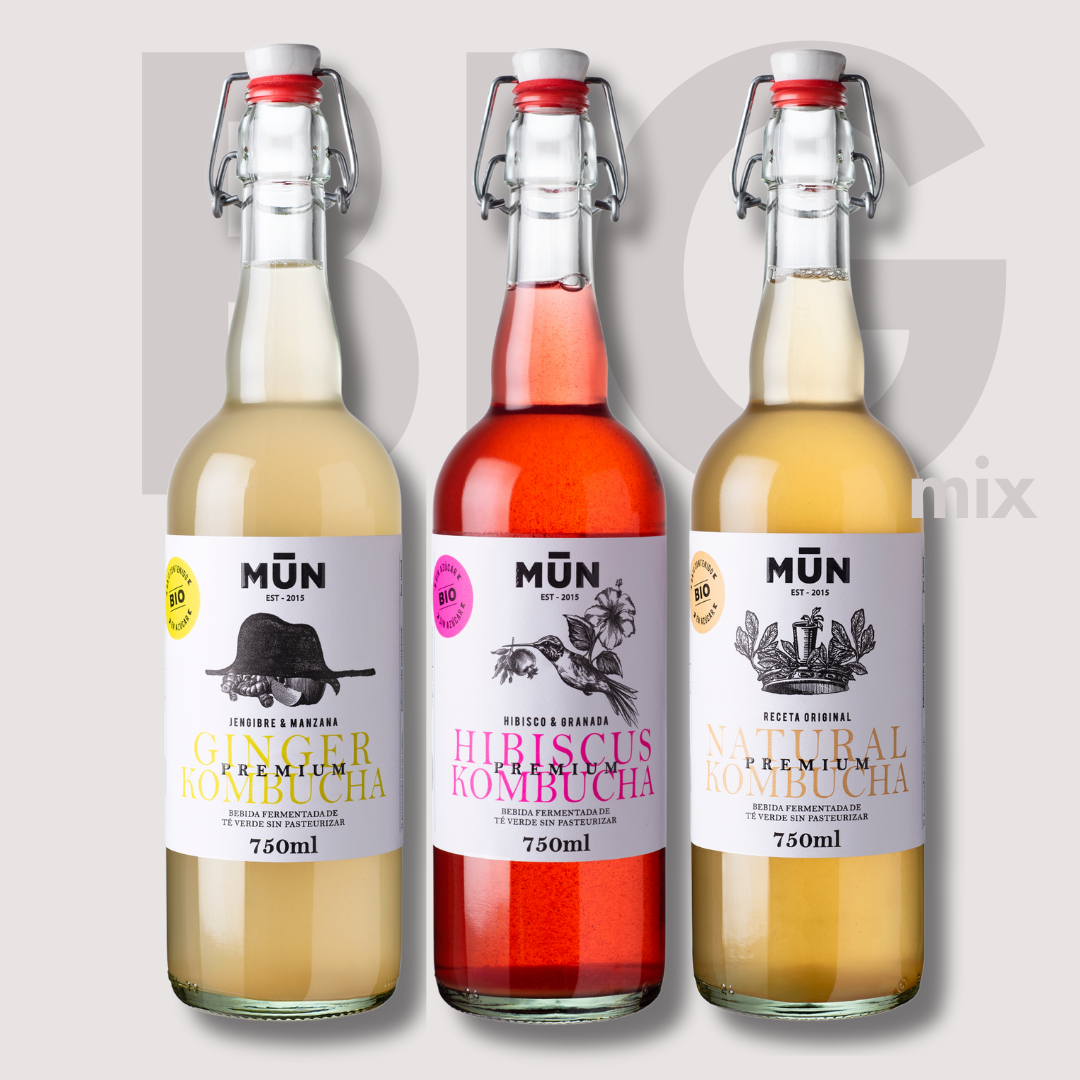
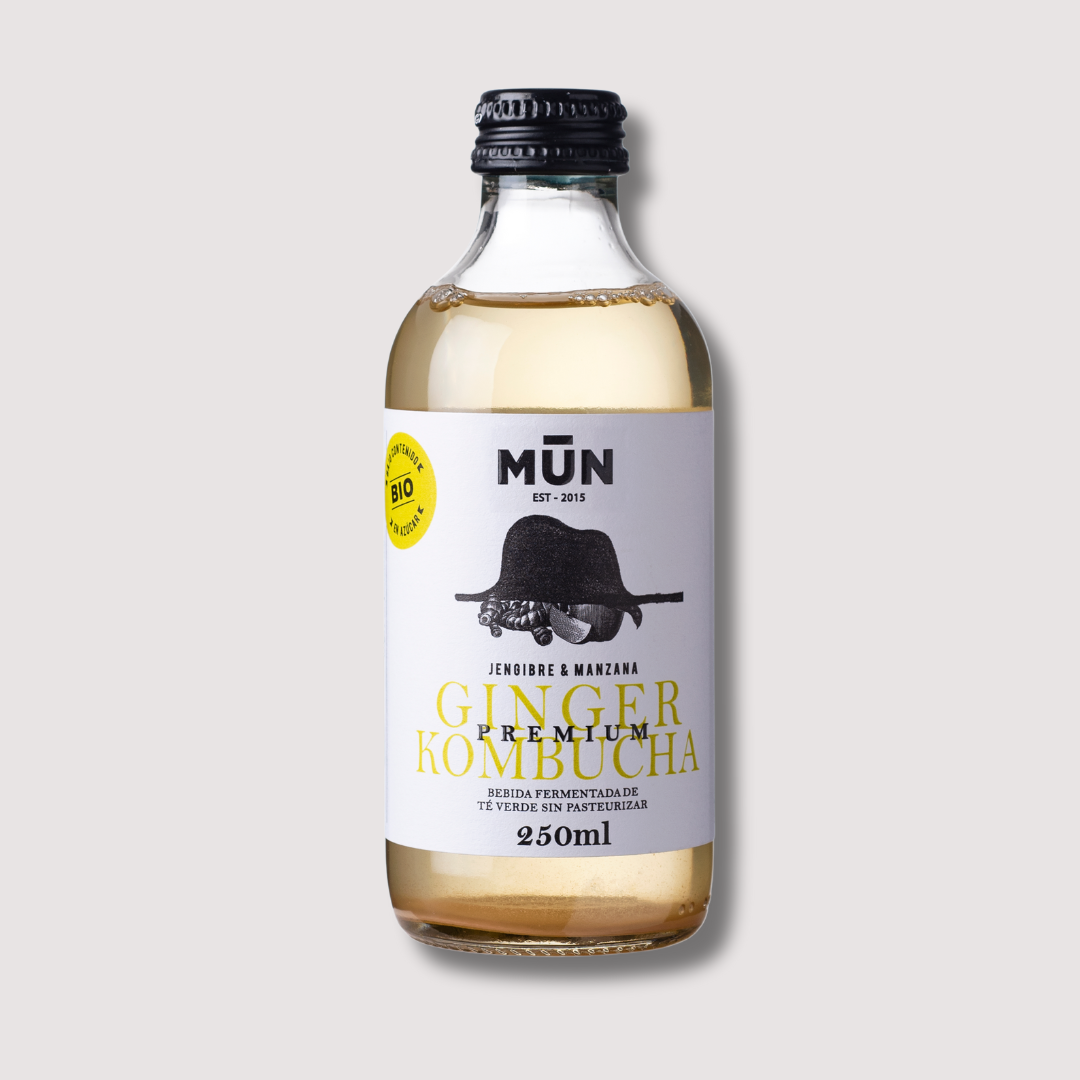
For this recipe, we use Mūn PREMIUM GINGER Kombucha. It is our variety fermented with green tea, ginger juice, and apple juice. It brings three specific things to the lemonade:
- Natural ginger spice: reinforces the citrus character of lemon without the need to add fresh ginger.
- Subtle sweetness from apple juice: balances the acidity without you having to add much extra sugar.
- Lively fizz: appears during the second fermentation in the bottle, with no added gas.
If you prefer another base, these also work:
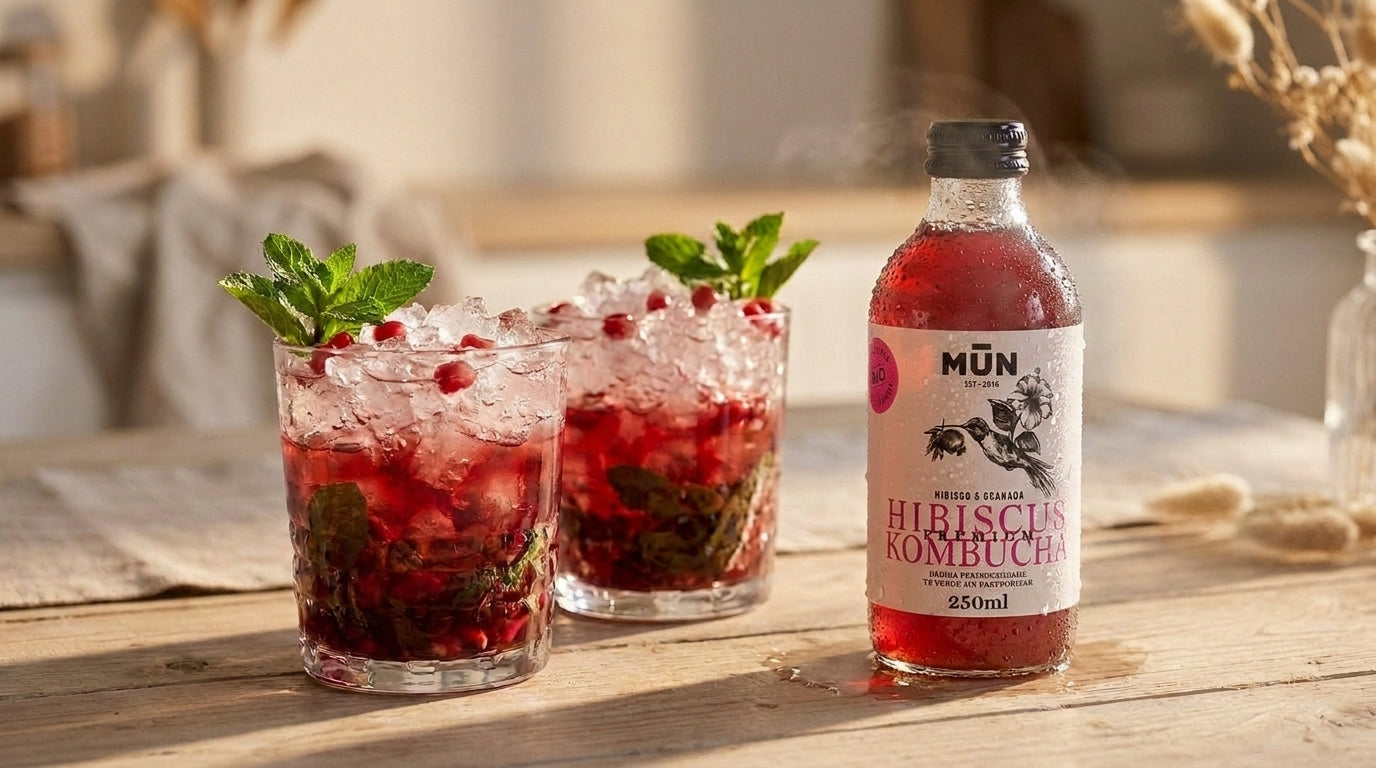
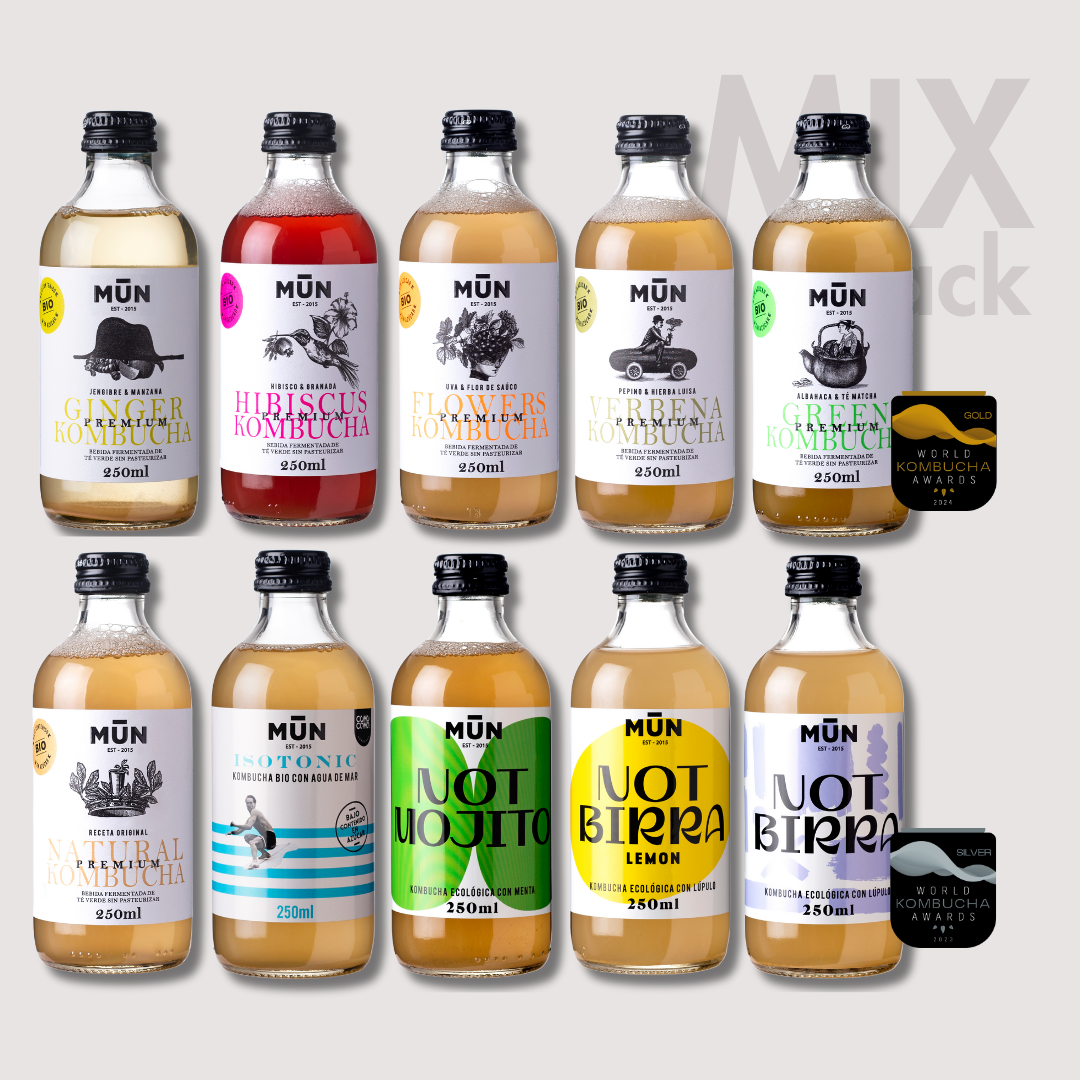
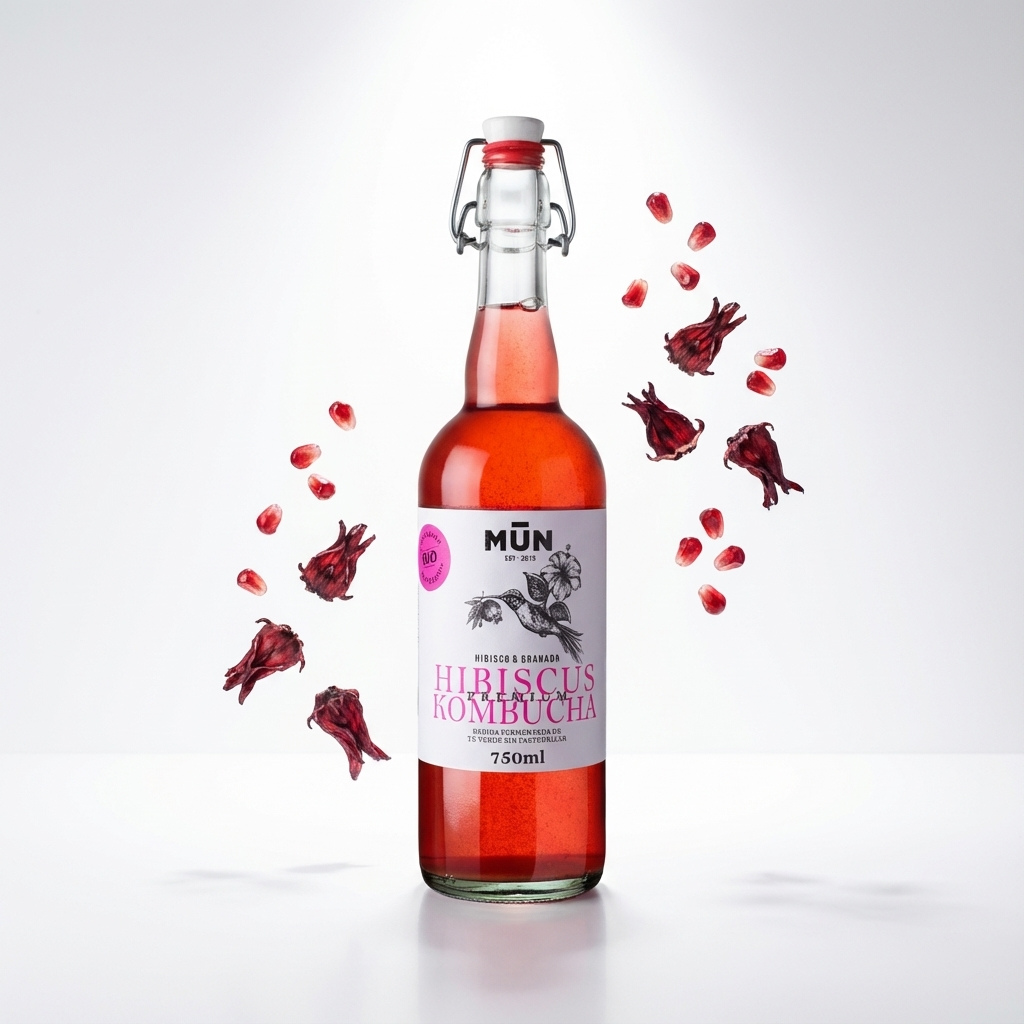
- HIBISCUS: intense pink color, floral flavor. A visually more attractive lemonade.
- VERBENA: notes of lemon verbena and cucumber. Herbal-fresh lemonade, ideal for summer.
- NATURAL: the most neutral. If you want the lemon flavor to dominate without competition.
Step-by-Step Recipe: Homemade Lemonade with Kombucha
Ingredients (1 pitcher · 4 servings)
- 500 ml of Mūn PREMIUM GINGER Kombucha
- 100 ml fresh lemon juice (approximately 3 medium lemons)
- 20 ml agave syrup or coconut sugar (optional, to taste)
- 2 cups (~500 ml) cold filtered water
- 10 ice cubes
- For garnish: lemon or lime slices, fresh mint leaves, hibiscus flower
Preparation
- Squeeze the lemons. Strain the juice to remove pulp and seeds.
- In a large pitcher, mix the lemon juice, agave syrup (if using), and filtered water. Stir until the syrup is completely dissolved.
- Add the Mūn PREMIUM GINGER Kombucha carefully, pouring it along the side of the pitcher to avoid losing fizz. Stir gently.
- Add the ice and let it rest for one minute to cool down.
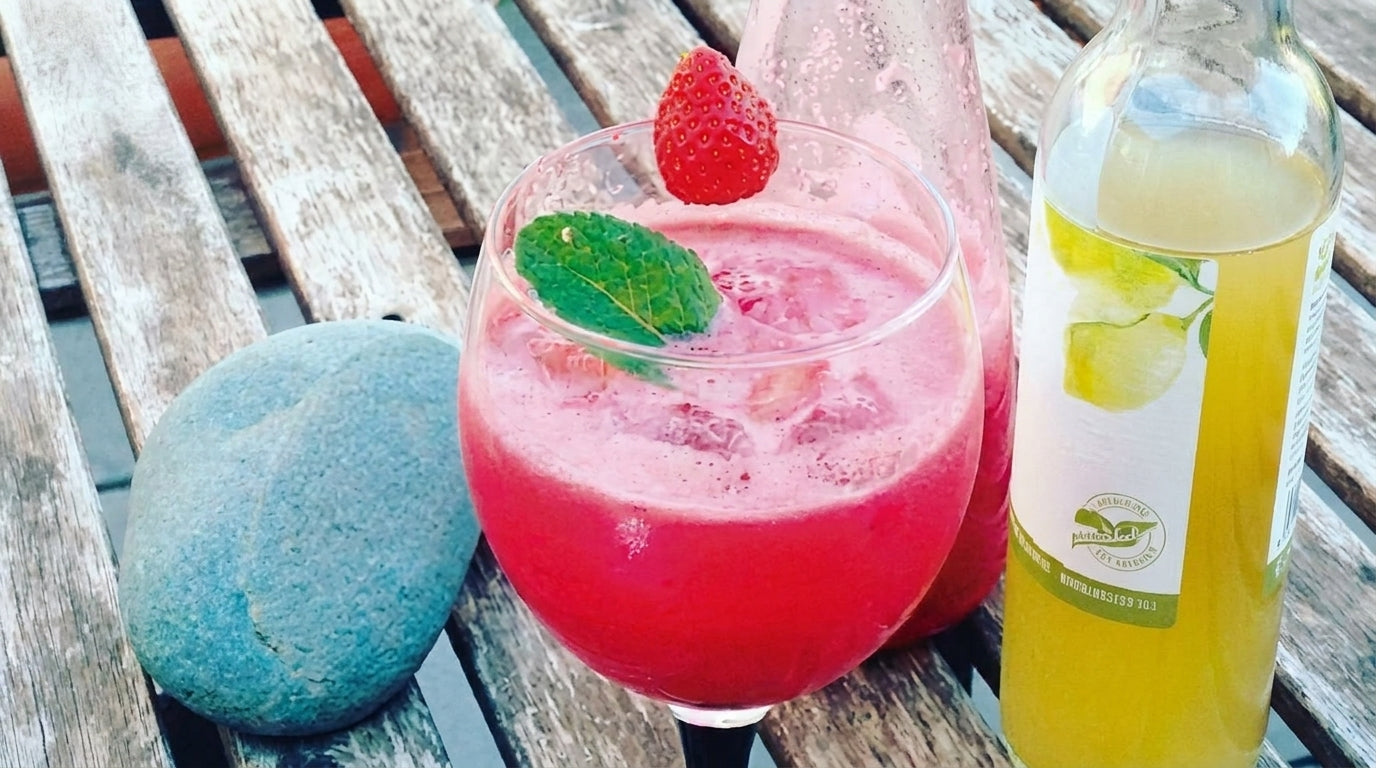
- Serve in tall glasses. Garnish with a lemon slice, mint leaves, and, if you have one, a dried hibiscus flower.
Times and Data
| Stage | Duration |
|---|---|
| Preparation | 7 minutes |
| Chilling time | 1 minute |
| Calories (per 100 ml) | ~11 kcal |
| Estimated cost per pitcher | ~€2.40 |
No Added Sugar Version (with Stevia)
If you want a lemonade with even fewer calories or are following a low-sugar diet, replace the agave syrup with natural stevia leaves.
Sugar-Free Version Ingredients
- 500 ml of Mūn PREMIUM GINGER Kombucha
- 100 ml fresh lemon juice
- 3 fresh stevia leaves (Stevia rebaudiana), or ¼ teaspoon natural stevia powder
- 2 cups filtered water
- 10 ice cubes
- For garnish: lemon slices, mint leaves, hibiscus flower
Sugar-Free Version Preparation
- Macerate the stevia leaves in the filtered water for 5 minutes. Stir to release their sweetness.
- Add the lemon juice and mix.
- Incorporate the kombucha slowly, pouring it along the side of the pitcher.
- Add ice, serve, and garnish.
The result is slightly less sweet than the agave version, with a subtle herbaceous undertone that pairs very well with ginger. A good option if you have the lemonade with savory meals.
Recommended Variants and Combinations
Once you have mastered the base, you can start experimenting. These are the variants that have worked best in real tests:
- Red Berry Lemonade: add ½ cup of crushed strawberries, raspberries, or blueberries before serving. Provides anthocyanins and an intense color.
- Herbal Lemonade: incorporate fresh basil leaves or lemon thyme when macerating. A more Mediterranean flavor.
- Fresh Turmeric Lemonade: add half a teaspoon of grated turmeric and a pinch of black pepper. Intense yellow color, warm flavor.
- Matcha Lemonade: whisk half a teaspoon of matcha powder with a little warm water before adding it to the pitcher. More green bitterness, a more adult profile.
- Cucumber Lemonade: add thin slices of cucumber and let macerate for 10 minutes. If you use Mūn VERBENA instead of GINGER, the refreshing effect is multiplied.
- Cocktail Lemonade: 30 ml of gin added at the end = adult version for after-dinner drinks.
When to Drink Lemonade with Kombucha
Due to its profile (low sugar, controlled acidity, live cultures), it fits at various times of the day:
- Breakfast: a small glass instead of bottled orange juice. It provides vitamin C from lemon and the probiotics from kombucha without overloading on sugar.
- Post-workout: it's a good option to rehydrate if you've sweated moderately. For long efforts, it's better to combine with Mūn ISOTONIC.
- After-dinner: the acidity helps to "cleanse" the palate after heavy meals. It perfectly replaces coffee or soda.
- Appetizer: serve the pitcher at an after-dinner gathering or brunch. It's a non-alcoholic alternative (or with moderate alcohol if you add gin) that isn't boring.
- Heat: in mid-summer, a well-chilled lemonade with kombucha is one of the most refreshing drinks you can prepare without industrial gas.
Common Mistakes and How to Avoid Them
Some details that can make the recipe not turn out as expected:
- Pouring the kombucha all at once: you lose the natural fizz. Do it slowly, pouring along the side of the pitcher.
- Using bottled lemon juice: it has preservatives and a metallic taste. Always use fresh lemon.
- Adding too much sugar: defeat the purpose. If the lemon is very acidic, first try to balance with less syrup; only add more if you need it.
- Heating the kombucha: it kills the live cultures. All ingredients should be cold or at room temperature.
- Making too much for several days: lemonade with kombucha continues to ferment slightly. It's best to prepare for the day or at most 24 hours.
How to Store It Well: The Reused Bottle Trick
If you want to have lemonade always ready in the fridge, this is the system:
Reuse an empty 750 ml Mūn PREMIUM GINGER bottle. It's glass, with a ceramic swing top stopper (the same one we use in production), and it seals hermetically without losing gas.
Prepare the lemonade following the recipe, let it cool, and bottle immediately. It lasts up to 24 hours in the fridge without losing fizz. If more days pass, it will still be drinkable but the effervescence will decrease and the acidity will increase.
Extra tip: if you want a lemonade with even more fizz, leave the closed bottle at room temperature for 4-6 hours before putting it in the fridge. Natural fermentation generates more CO₂. Be careful: no more than 8 hours at room temperature or the stopper might pop off.
Frequently Asked Questions
Can I make it with any kombucha?
Yes, but the result depends a lot on the variety. PREMIUM GINGER is the best option due to the ginger-apple-lemon balance. Industrial kombuchas with a lot of added sugar or pasteurized will result in a sweeter and flatter lemonade.
How much sugar does the final lemonade have?
With the original recipe (PREMIUM GINGER + 20 ml of agave) it's around 3 g/100 ml. Without agave, it drops to 1.5-2 g/100 ml. A traditional commercial lemonade is around 8-10 g/100 ml.
Is it suitable for children?
Kombucha contains minimal traces of alcohol (below 0.5%, within the legal limit for non-alcoholic beverages). In the recipe, it is also diluted with water and lemon. It's a personal decision for each family; many give it from 6-7 years old without issue.
Can I use it to make cocktails?
Yes. It works very well with gin, vodka, or tequila. A "Mūn Lemon Spritz" would be: 60 ml of gin, a pitcher of this lemonade, plenty of ice. For long after-dinner gatherings.
Does it serve as a base for mocktails?
Perfectly. Add chopped fruit, fresh herbs, and plenty of ice. It's the ideal base for alcohol-free parties.
Other Recipes with Mūn PREMIUM GINGER
If you are interested in exploring more uses for this variety, try:
- Moscow Mule with ginger kombucha
- Detox smoothie with Mūn PREMIUM GINGER
- Probiotic Apple Fizz with GINGER