Three electrolytes. And a lot of sugar.
You go to the supermarket, ask for an isotonic drink, and they hand you a fluorescent orange plastic bottle. You read the label. Sodium, potassium and, if you're lucky, magnesium. And below, in small print, 6 grams of sugar per 100 milliliters.
The commercial isotonic drink industry has been selling you a very condensed version of what your body needs after sweating for decades. Good enough to solve a label. Cheap enough to move millions of liters a year. Sweet enough to keep you coming back.
But after sweating for two hours on a bike or a 35-degree day in Madrid, what your body has lost are not three minerals. They are dozens. And what it needs to replenish is not sugar disguised as hydration.
This is about which isotonic drink is really worth it. No marketing.
What a real isotonic drink must have
For a drink to work as an isotonic, it must meet three basic requirements:
One: have a mineral concentration similar to that of blood plasma (hence "isotonic"). That means between 270 and 330 mOsm/L. If it has more, it dehydrates you instead of hydrating you. If it has less, it is absorbed but does not compensate for losses.
Two: contain the electrolytes you actually lose with sweat. Not just sodium. Sweating eliminates sodium, potassium, magnesium, calcium, chlorine, and traces of other minerals. A good isotonic drink should replenish them all, not just the easiest to add.
Three: don't saturate with sugar. A pinch of carbohydrate can accelerate intestinal absorption. A bombardment of 6-7 g/100 ml is something else: it's a soda with vitamins.
Spoiler: most isotonic drinks on the shelf only meet the first point. And sometimes, not even that.
Comparative table: 100 ml of each drink
| Drink | Sugar | Electrolytes | Electrolyte origin | Ingredients |
|---|---|---|---|---|
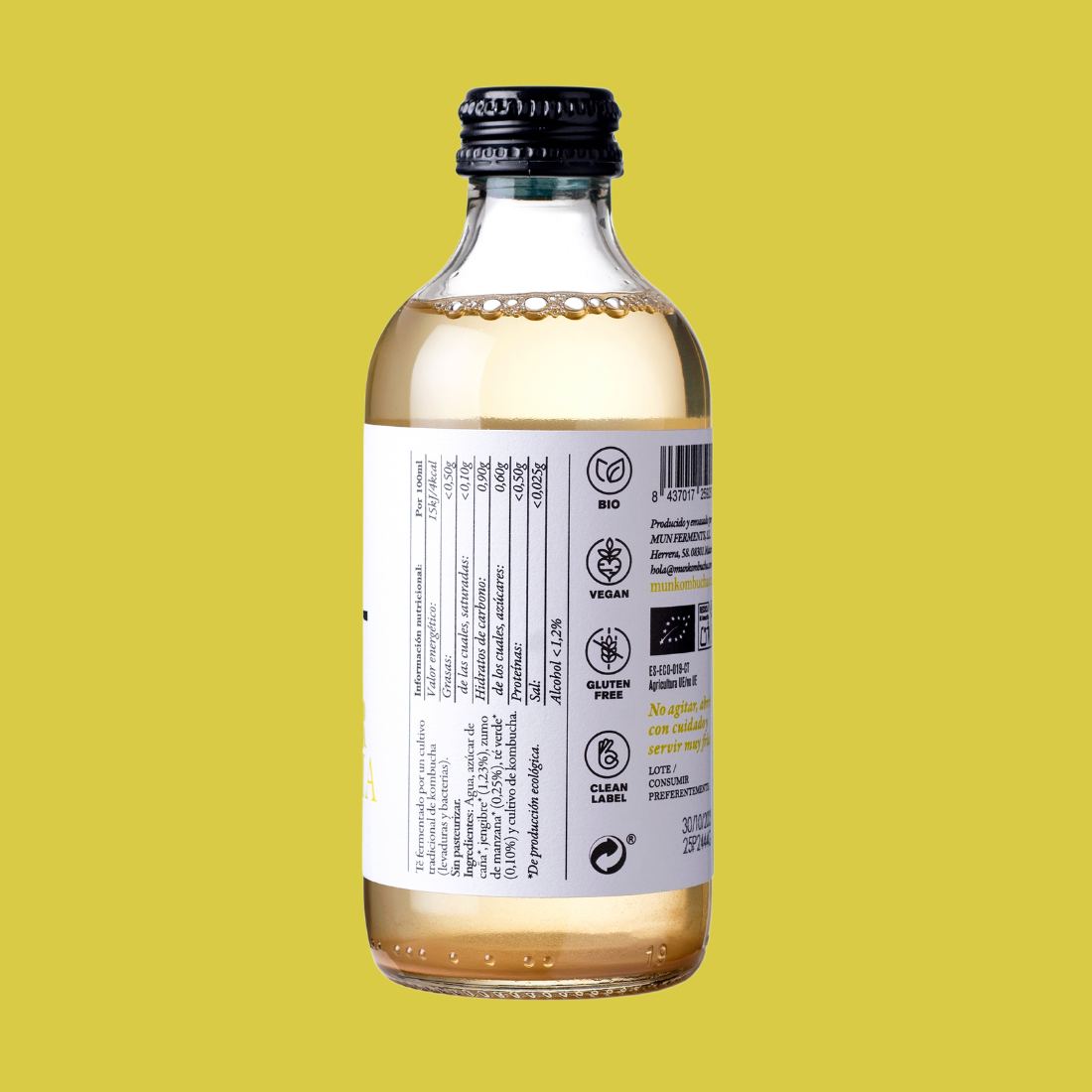
| 💪 Mūn Isotonic | 0.61 g | +30 minerals | Isotonic seawater | Tea + SCOBY + seawater |
| 🥤 Type Aquarius | ~6.4 g | 3-4 (Na, K, Cl, sometimes Mg) | Synthetic additives | Water, sugar, salts, flavorings, colorants |
| ⚡ Type Powerade | ~5.6 g | 3 (Na, K, Cl) | Synthetic additives | Water, sugar, salts, flavorings, sweeteners |
| 🏃 Type Gatorade | ~6.0 g | 2-3 (Na, K) | Synthetic additives | Water, sugar, salts, flavorings, colorants |
| 💧 Oral serum | ~2.5 g | 3 (Na, K, Cl) | Pure salts | Water, glucose, salts |
| 🌊 Only isotonic seawater | 0 g | +70 minerals | Seawater | Diluted seawater |
Mūn data according to current Isotonic product labeling. Rest: public nutritional tables from manufacturers, referenced as "type X" without commercial brand use. May vary between formats and reformulations.
If you calculate per 250 ml bottle: an Aquarius-type isotonic drink contains **16 g of sugar**. Mūn Isotonic, **1.5 g**. The difference, multiplied by one bottle a day during a summer, is **4.3 kilograms of sugar** that do not enter your body.
The secret of Mūn Isotonic: isotonic seawater
The difference between Mūn Isotonic and a commercial isotonic drink is not a marketing detail. It's a change in philosophy.
Industrial isotonic drinks are made in reverse: water + sugar + isolated salts + flavorings + colorants. That is, you first design the flavor and then add the minerals you believe meet the "rich in electrolytes" claim.
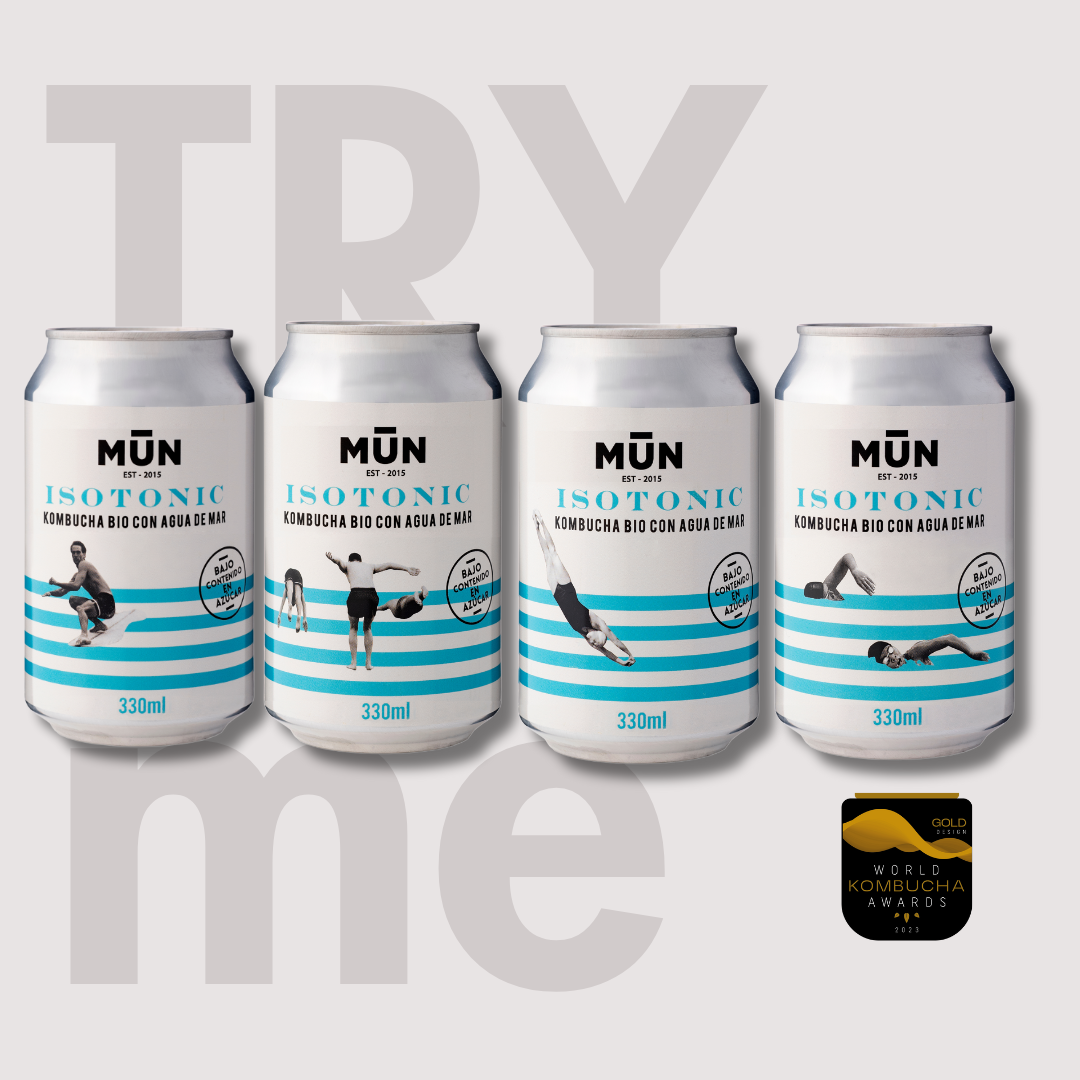
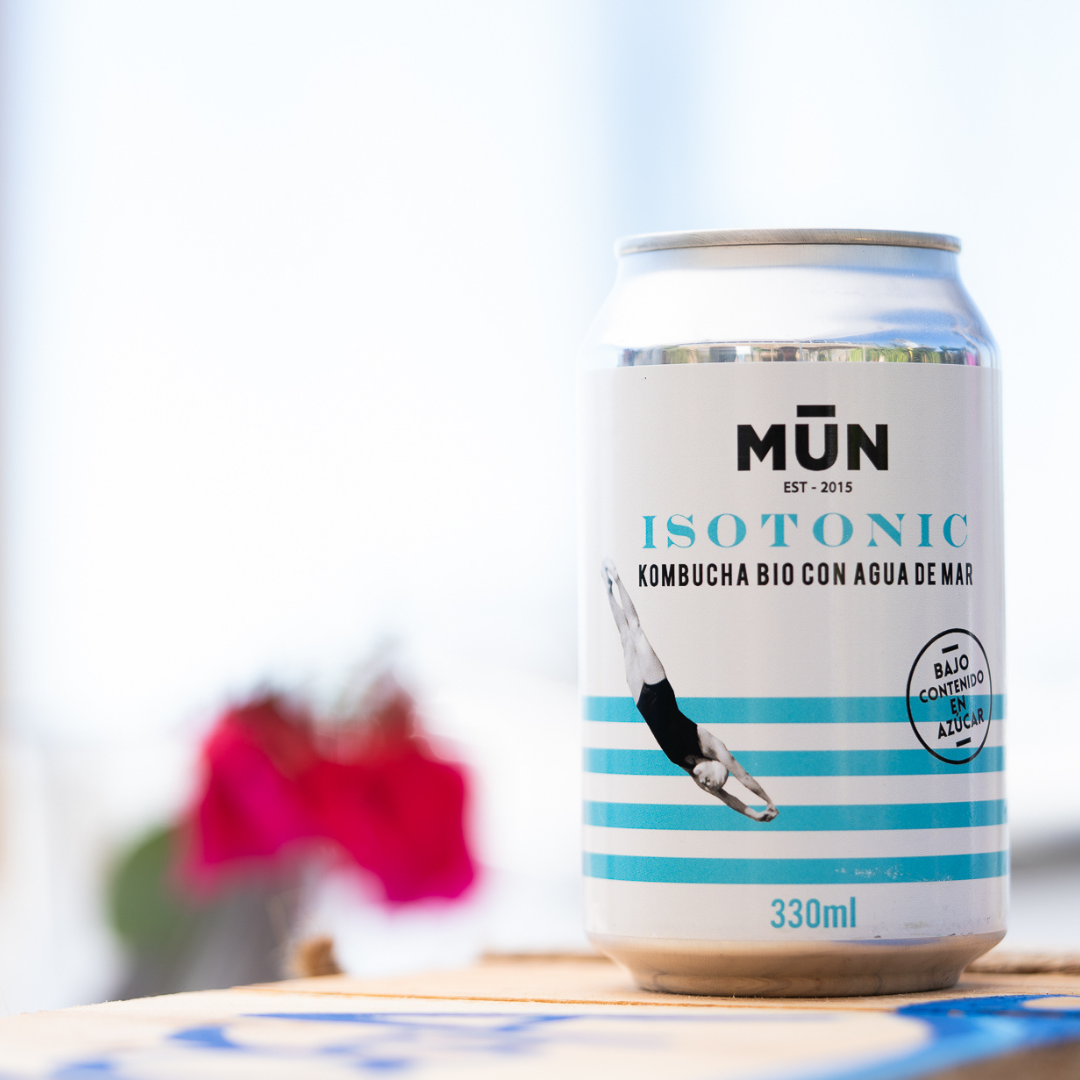
We do it the right way. We start with **isotonic seawater** —seawater from between Ibiza and Formentera, of controlled origin, microfiltered and reduced to physiological salinity— and combine it with the fermented kombucha base.
What does that mean in real mineralization?
Seawater contains more than 70 minerals and trace elements: sodium, potassium, magnesium, calcium, chlorine, sulfur, bicarbonate, bromine, boron, strontium, fluorine, iodine, manganese, iron, zinc, copper, selenium, lithium, vanadium… and counting. It is the most complete liquid source of mineralization that exists in a natural state.
When you reduce seawater to the concentration of blood plasma (around 0.9% total salts), you have a natural isotonic solution with the most complete mineralization that exists in liquid state.
To that, you add the fermented kombucha base and get:
- Complete mineralization (not 3-4 electrolytes, but dozens)
- Organic acids from fermentation
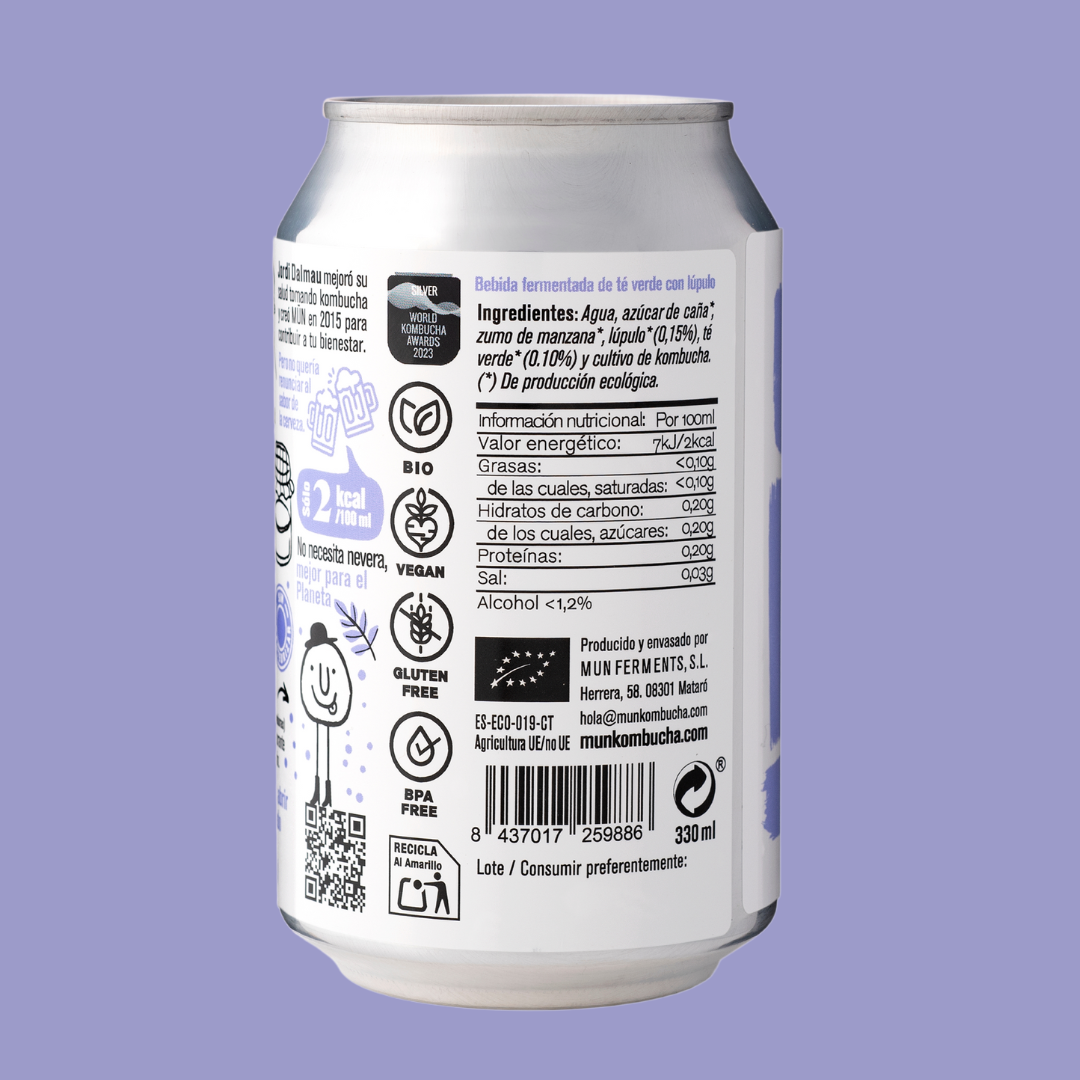
- Very low residual sugar (0.61 g/100 ml)
- No colorants
- No flavorings
- No added sugars
It's not marketing. It's basic product origin chemistry.
Why does complete mineralization matter?
If you only needed to replenish sodium, you could lick a ham cube after a run. The body is more complicated.
When you sweat, the body loses:
- Sodium (the best known): regulates fluid balance, blood pressure, nerve function.
- Potassium: muscle contraction, heart rhythm. Its deficiency causes cramps.
- Magnesium: more than 300 enzymatic reactions. Its deficiency causes cramps, muscle fatigue, headache.
- Calcium: muscle contraction, nerve function.
- Chlorine: osmotic balance.
- Traces of other minerals: zinc, copper, manganese, iodine. Each with a specific function in metabolism, immune system, thyroid function.
An isotonic drink that only covers sodium and potassium replenishes the two easiest minerals to measure, but leaves everything else unreplenished. The total loss is not compensated, only a part.
If it also comes loaded with sugar and flavorings, the drink no longer functions as real replenishment: it provides more sugar than the body needs to replenish and approaches the profile of a soft drink.
When to use Mūn Isotonic
We designed it for four specific moments:
- Post-workout or post-intense physical activity. The classic moment. After sweating, you need to replenish minerals without saturating with sugar. Mūn Isotonic fits perfectly here.
- Hot days. In summer, in poorly ventilated offices, on trips to hot destinations. Chronic mild dehydration is much more widespread than we think. One bottle a day during a heatwave is a good habit.
- Intermittent fasting. Since it only contains 0.61 g of sugar/100 ml and very few calories, it does not break long fasts as a commercial isotonic would. In fact, we made a specific Fasting Pack with Néstor Sánchez and Endika Montiel for this.
- Hangover or mild gastroenteritis. It is not a drug nor does it replace medical oral rehydration. But the combination of complete mineralization + low sugar + fermentation acidity makes it an interesting option for replenishing fluids when the body is upset.
How other isotonic drinks fit in
We're not going to say that an Aquarius or a Powerade are useless. They serve a purpose, and in certain contexts. If you're running a marathon and need a quick shot of glucose plus sodium at kilometer 32, a commercial isotonic is designed exactly for that. The industry knows what it's doing in that niche.
The problem is not the product. The problem is the daily use of an isotonic designed for extreme efforts. Drinking a bottle of Aquarius every afternoon because it's hot is introducing 16 g of sugar daily into a diet that is probably already saturated.
For daily use, the honest options are:
- Water + real food with minerals (fruits, nuts, legumes).
- Oral serum (from a pharmacy, unflavored).
- A natural isotonic drink with complete mineralization and low sugar. Like Mūn Isotonic.
Frequently asked questions
What makes a drink isotonic?
Does Mūn Isotonic contain sugar?
Is it suitable for professional athletes?
Why do you use seawater?
Is it safe to drink seawater?
Can I drink it during a fast?
Can it be drunk hot?
If your usual isotonic drink contains more sugar than electrolytes, perhaps it's time to try one made the other way around.
Nutritional data according to current Mūn Isotonic labeling. Commercial brands are cited as descriptive reference ("type X") without commercial use of third-party brands. Competitor values come from public nutritional tables of manufacturers and are indicative; they may vary between formats and reformulations. Complies with Regulation (EU) 1169/2011 on the provision of food information to consumers.
Read more: what is a natural isotonic drink · discover the Mūn Isotonic range